Iran's Kheibar Shekan missile, which means Castle Breaker in Persian, has emerged as one of the most talked-about weapons in the US-Israel war on Iran.
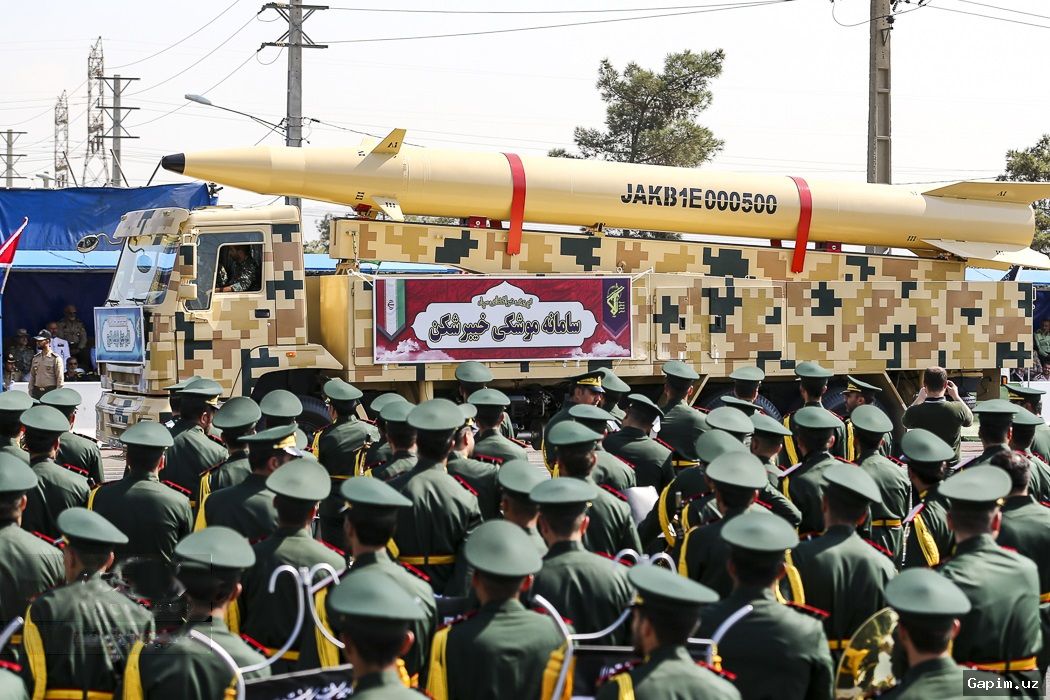
The medium-range ballistic missile has been used by Iran in strikes on US military targets and infrastructure in the Middle East this week, as Tehran aims to demonstrate that its missile arsenal remains well-stocked following six months of intermittent US and Israeli attacks.
The war entered a new phase this week following a lull in fighting for a month, when US forces struck rocket launchers on Iran's Larak Island in the Strait of Hormuz, close to the country's strategic port of Bandar Abbas, on Monday. That prompted Iran to strike back at US military assets in Jordan.
Since then, the United States has carried out more attacks on various Iranian targets, with Tehran again responding in kind, targeting several US bases in the region, including in Jordan and the United Arab Emirates (UAE).
The Kheibar Shekan is a medium-range ballistic missile developed by Iran's Islamic Revolutionary Guard Corps (IRGC). It has a range of roughly 1,450km (901 miles) and a payload capacity of 449kg to 590kg (990-1,300 pounds). The missile was unveiled in 2022 and takes its name from Khaybar, a fortified settlement in early Islamic history.
One of the missile's key characteristics is its solid-fuel propulsion, which allows it to be launched within minutes during a crisis. Solid-fuel missiles are preloaded with fuel, eliminating the need for time-consuming fuelling before launch. This makes them easier and safer to operate, less likely to be detected, and requires less logistical support for fuel transport.
Iran has repeatedly stated that it has been using Kheibar Shekan missiles against US military positions in the region since the conflict began on February 28. State broadcaster IRIB reported that Iranian forces deployed the missile in retaliatory attacks on US assets in Jordan this week.
Iran possesses a combination of short-, medium-, and long-range missiles. Short-range ballistic missiles (150-800km) are designed for rapid regional strikes. Medium-range systems (1,500-2,000km) include Shahab-3, Emad, Ghadr-1, Khorramshahr variants, Sejjil, and newer designs like Kheibar Shekan and Haj Qassem. These missiles put Israeli targets and US-linked sites in the Gulf states within range.
Iran also has cruise missiles such as Soumar (range 2,500km), Ya-Ali, Quds variants, Hoveyzeh, Paveh, and Ra'ad. Former Supreme Leader Ayatollah Ali Khamenei had previously limited Iranian missile ranges to 2,200km but removed that limit following Israel's 12-day war on Iran in June 2025.
The latest escalation has brought a period of relative calm to an end. The US resumed attacks on Iranian targets on August 31, with US Central Command saying it had struck IRGC sites in southern Iran. Iran responded with missiles and drones against US forces and military assets in the region. On Tuesday, the US military said it had completed another wave of strikes against Iranian military targets.
Tehran reported that the US had also struck civilian targets, including a house bombed during a wedding celebration in the city of Kuhestak, killing at least five people and injuring 68, including women and children. Iran's military said it launched attacks on US bases and assets in Jordan, Bahrain, Kuwait, and Iraq's Erbil in response.
US President Donald Trump previously threatened more attacks if Iran retaliated, while Tehran said it would also respond to US attacks. The renewed fighting has also put the Strait of Hormuz back at the centre of the crisis as Iranian and US forces vie for control of the critical waterway.
Oil prices rose sharply this week as markets reacted to the renewed US-Iran fighting and the risk to energy shipments through the key waterway, through which 25 percent of the world's oil and petroleum products are shipped in peacetime.
Source: www.aljazeera.com