Riot police clashed with Romanian shepherds and farmers in Bucharest on Tuesday as protests against a European Union ban on live sheep exports turned violent. Approximately 2,000 demonstrators gathered outside the government building, demanding the reversal of the ban imposed due to the highly contagious small ruminant plague. The rally, like similar farmer protests across Europe in recent years, was encouraged and supported by far-right forces.
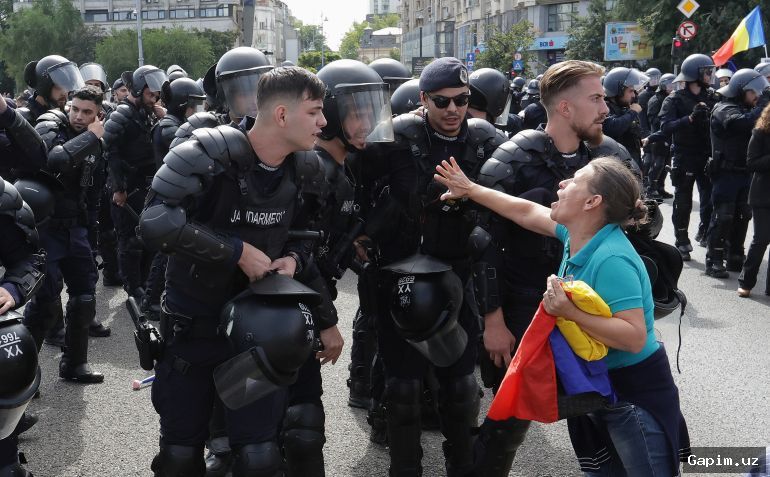
Violence erupted when some protesters began throwing rocks, metal barriers, and other objects at law enforcement. Police responded with tear gas to disperse the crowd. According to a police press release, 26 people were detained. Twenty-four demonstrators and police officers required medical attention – some for broken bones, others for the effects of tear gas. Four were hospitalised.
Both the government and opposition called on demonstrators to refrain from violence. President Nicusor Dan condemned the "extremely serious" violence and "any attempt to turn a legitimate protest into street fighting" in a social media post. The government stated that the protest had "degenerated into regrettable acts of violence" and appealed for calm.
Protesters held banners calling for the resignation of the country's president and prime minister. Some chanted the name of far-right politician Calin Georgescu, a former presidential candidate standing trial for acts against the constitutional order following the annulment of the 2024 presidential elections. His supporters had shared messages on social media ahead of the protest, urging people to join. George Simion, leader of the main far-right group, the Alliance for the Union of Romanians (AUR), wrote on Facebook that "AUR stands with the farmers and all working Romanians," but called for peaceful demonstration.
Romanian shepherds had previously protested outside the government building in late July over the EU ban on live sheep exports, which expires at the end of 2026. The country of 19 million has been struggling for months with the highest inflation in the EU and an unending political crisis. The pro-European government, which adopted austerity measures to rein in a high budget deficit, was brought down in a no-confidence motion in May, and a divided parliament has failed to confirm a successor.
Source: www.aljazeera.com