Oil prices surged following renewed attacks by Yemen's Houthi rebels on Saudi Arabia, including claimed strikes on facilities belonging to state-run energy giant Aramco. Brent crude, the global benchmark, rose more than 3 percent on Thursday, ending the day above $106.50 a barrel after earlier exceeding $108. Prices eased slightly on Friday morning in Asia, standing at $105.77 a barrel as of 02:00 GMT.
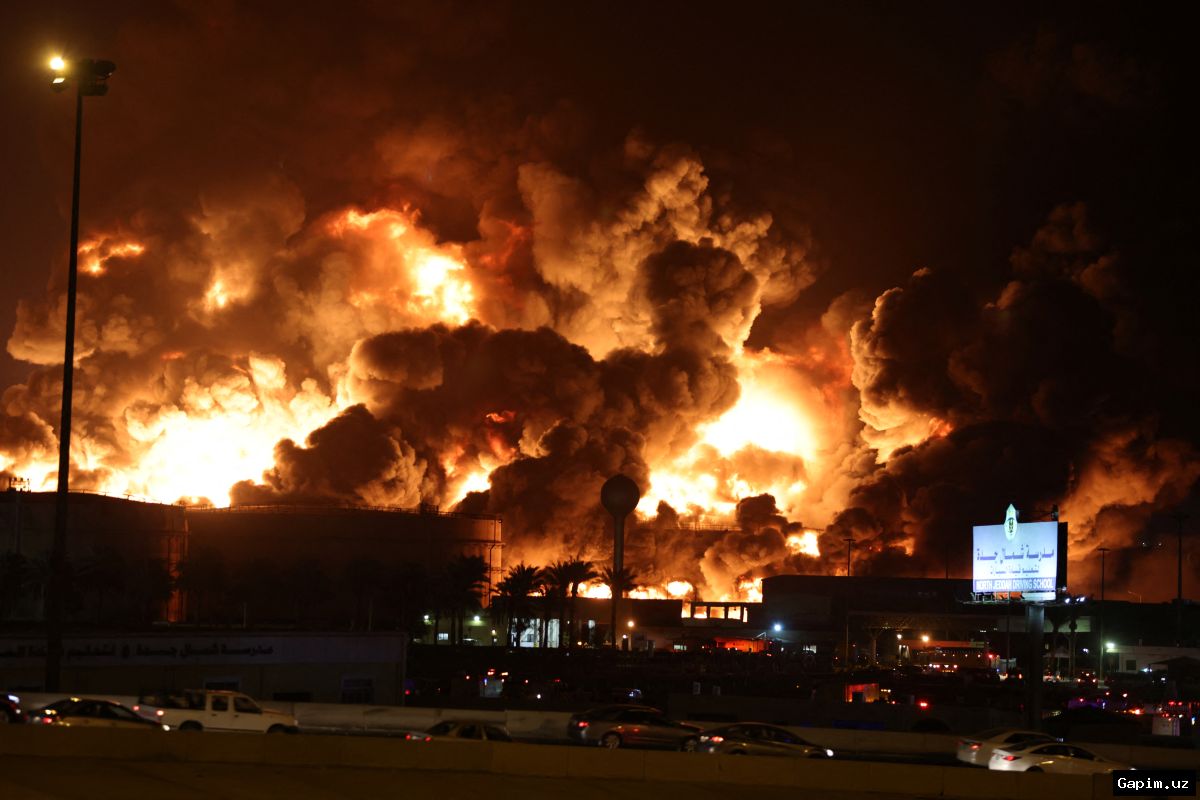
The Houthis said on Thursday they had launched missile and drone attacks on a "sensitive target" in Riyadh and Aramco facilities in the Red Sea city of Yanbu. The rebel group claimed both operations "achieved their objectives successfully" in a statement carried by the Houthi-run Yemen News Agency. The Saudi-led coalition said it intercepted six ballistic missiles fired by the Houthis towards the kingdom. Saudi authorities have not confirmed whether the attacks caused any damage or casualties. Aramco, which supplies roughly 10 percent of global oil demand, did not respond to inquiries outside of regular business hours.
The latest flare-up in violence in the Middle East comes as the US and Iran are engaged in renewed diplomatic efforts to find a resolution to their seven-month conflict on the sidelines of the UN General Assembly in New York. Iranian President Masoud Pezeshkian said on Thursday that he hoped Washington would return to their Memorandum of Understanding on ending the war, which lapsed in mid-August without a peace deal, before the US midterm elections in November.
"Relative to the post-war trend, these levels remain elevated and reflect the reality that critical supply routes and facilities are still vulnerable," Tim Waterer, chief market analyst at KCM Trade in Sydney, Australia, told Al Jazeera. "Diplomatic efforts on the sidelines of the UN are providing some counterweight, but until there is clearer evidence of a durable de-escalation, the upside bias remains in place," Waterer said.
June Goh, a senior oil market analyst at Sparta Commodities in Singapore, said oil would likely stay above $100 a barrel as long as the war on Iran continued. "With no clear resolution in sight, the gap in oil inventories globally is getting wider," Goh told Al Jazeera.
Source: www.aljazeera.com