Nepalese Prime Minister Balendra Shah addressed the 81st session of the United Nations General Assembly on Thursday, calling the devastating Nepal-Tibet floods a "warning to the world" and questioning whether the world had "really heard that warning." Four weeks after catastrophic flash floods ravaged Nepal, the 36-year-old leader took the podium to warn global leaders about the impact of a warming planet.
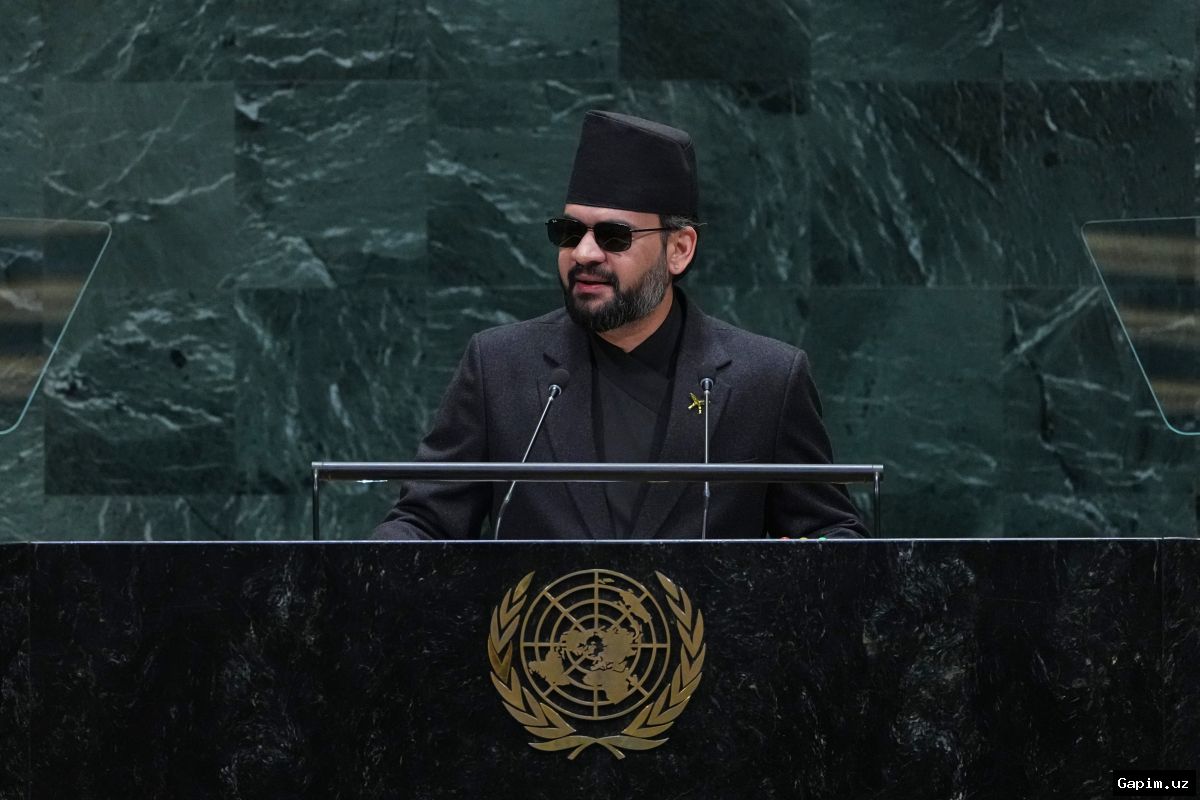
"I wish I could stand here today simply to speak about development, democracy, peace and the hopes of a young nation. Instead, I must speak about death and destruction of epic proportions," Shah said. He stressed that the perils of climate change transcend national borders and made a case for greater international cooperation to protect the Himalayas.
Shah stated that the Himalayas are not peripheral to the planet but part of its life-support system. He proposed the establishment of a Himalayan Climate Resilience Mechanism, to be led by Nepal, India, and China. The mechanism would help countries share satellite data and expertise, monitor glacial lakes that pose a threat, and develop stronger joint early-warning systems and coordinated cross-border assistance in the event of a disaster. "Let the Himalayas become a laboratory of international cooperation, rather than a frontier of fragmented information," he said.
The prime minister noted that Nepal contributes less than 0.1% of global greenhouse gas emissions. "We did not create this crisis. Yet we are paying a colossal price for it," he said, adding that he was not blaming any individual nation or continent. "We are not here to turn climate change into another geopolitical battlefield. We are here to ask everyone to recommit to shared responsibility and solidarity," Shah said.
Shah emphasized the principles of responsibility, reparation, and resilience as he called for grant-based support rather than loans. He said vulnerable nations should not be forced to take on additional debt to recover from climate catastrophes. "When a climate-driven disaster destroys the infrastructure of a poor country, the answer cannot simply be another mega loan or a patchwork of small grants. We need adequate grant-based support from the world," he said. Shah was the youngest head of government to speak at the 81st session of the UNGA.
On August 26, a glacier collapsed near the border between Nepal and China's Tibet Autonomous Region, unleashing landslides and a flash flood that ripped through downstream valleys. Entire villages were flattened, and images emerged of people trapped in hydropower tunnels deep within the Himalayas crawling away from thick sludge to reach rescuers. Over 6,000 people are still reported missing, with search and recovery efforts ongoing.
Source: www.dw.com