Protesters are set to gather in Liverpool on Sunday for a mass silent vigil in support of Palestine Action, coinciding with the first Labour Party conference under Prime Minister Andy Burnham. The event, organised by rights group Defend Our Juries, will take place near the conference centre and is a direct response to the proscription of Palestine Action as a "terrorist" group.
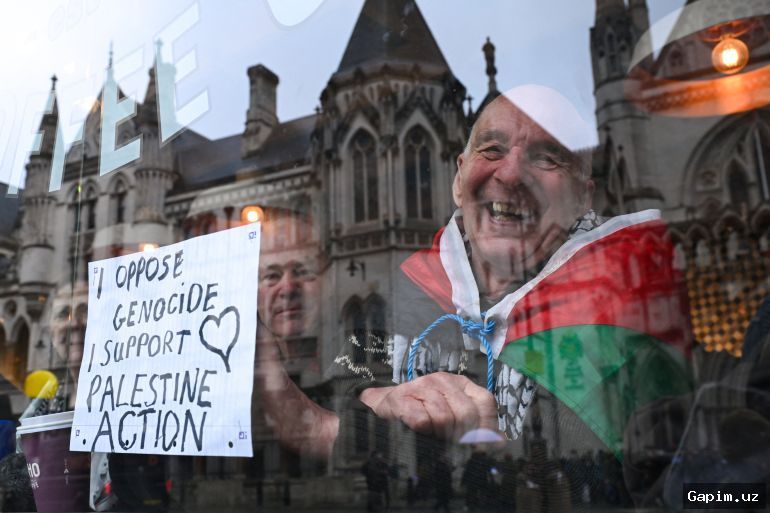
Since the ban was imposed in July 2025, a civil disobedience campaign has led to more than 3,600 arrests of individuals showing support for the group, often by holding signs reading, "I oppose genocide. I support Palestine Action." Organisers expect several hundred attendees and further arrests. They describe the vigil as an "integrity test of the new leadership's commitment to ending Britain's complicity in Israel's ethnic cleansing and war crimes."
The protest comes amid heightened scrutiny of Burnham's Labour leadership. On Friday, investigative outlet Declassified UK reported it had been denied media passes to cover the conference, which runs from Sunday to Wednesday. Burnham has taken a stronger stance than his predecessors against illegal Israeli settlements and settler violence in the occupied West Bank, announcing sanctions earlier this month. However, rights groups and activists are demanding that Labour suspend all arms sales to Israel to stop the bloodshed in Gaza and the West Bank. They also want the UK to reverse the ban on Palestine Action, whose main target is Israel's largest weapons maker, Elbit Systems.
"If [Prime Minister] Burnham means what he says, that he plans to end Britain's complicity in Israel's horrific crimes, then he would stop the arrests of people peacefully demonstrating against the genocide and the authoritarian attempts to crush its opponents," Defend Our Juries said. "We urge PM Burnham to do the only sensible thing and lift the ban on Palestine Action, the very people in the UK actually trying to prevent British complicity in Israel's war crimes."
In recent years, the Labour Party has faced waves of criticism over its positions on Israel and Palestine. "I think the interests of a Labour leader who wants to keep the Labour Party together, and keep a broad electoral bloc together too in a first-past-the-post system, is to try and defang this issue as much as possible," Colm Murphy, a senior lecturer in British politics at Queen Mary University, told Al Jazeera. He explained that "we've seen a series of gradual steps" on Palestine by party leaders, but the shift has been a "slow, painful evolution."
"Recognition of the Palestinian state by [former Prime Minister Keir] Starmer was the culmination of a process really begun by Ed Miliband," he said, referring to the current Foreign Secretary who was Labour's leader from 2010 until 2015. Starmer was prime minister when the UK proscribed Palestine Action under the Terrorism Act. Days after Israel attacked Gaza following the Hamas attacks of October 2023, then-PM Starmer said Israel had the "right" to cut off the strip's water supply, adding, "Obviously, everything should be done within international law." Although he later walked back his statement, for many, the damage was done.
"The legacy of Starmer is actually worsened by the fact that Burnham and Miliband were able to act, because it shows that they could act and they had the political will, they had the personal and public will, and they actually did do something," said Joseph Willits, head of Parliamentary Affairs at the Council for Arab-British Understanding. The new sanctions announced under Burnham's Labour highlight the "inadequacies and the lack of will from the previous government," he said. Before Starmer, Jeremy Corbyn, a leftist and lifelong supporter of Palestinian rights, led Labour. But his era was marred by allegations of anti-Semitism and in late 2019, he announced his resignation as the party's head. Under Miliband's tenure, Labour's stance on Palestine was supportive of a two-state solution and Palestinian statehood.
The question remains whether Burnham's Labour could reverse the ban on Palestine Action, especially after United States President Donald Trump recently outlawed the group. "I think it's too early to say," Willits said. "If this is also a battle line with Trump and the Trump administration, do they pick that battle line or the others? Has he already picked other battle lines when it comes to Palestine and therefore does he just leave this one?" Murphy said Burnham's Labour may address issues around Palestine Action if they become "salient in British politics again." "I'm not so sure it will, but we shall see. A protest might raise the profile a bit."
Source: www.aljazeera.com