In an offer that baffled most observers, US President Donald Trump has made a pitch to his Chinese counterpart Xi Jinping that has seldom been made in modern history: that Beijing buy US weapons. The suggestion was revealed by US envoy to Beijing David Perdue in an interview with Fox News on Sunday. According to Perdue, Trump asked Xi "at one point" whether China was interested in procuring US arms. The president reportedly made the suggestion during discussions about US arms sales to Taiwan, but it remains unclear whether this occurred during their joint summit last week or at another time.
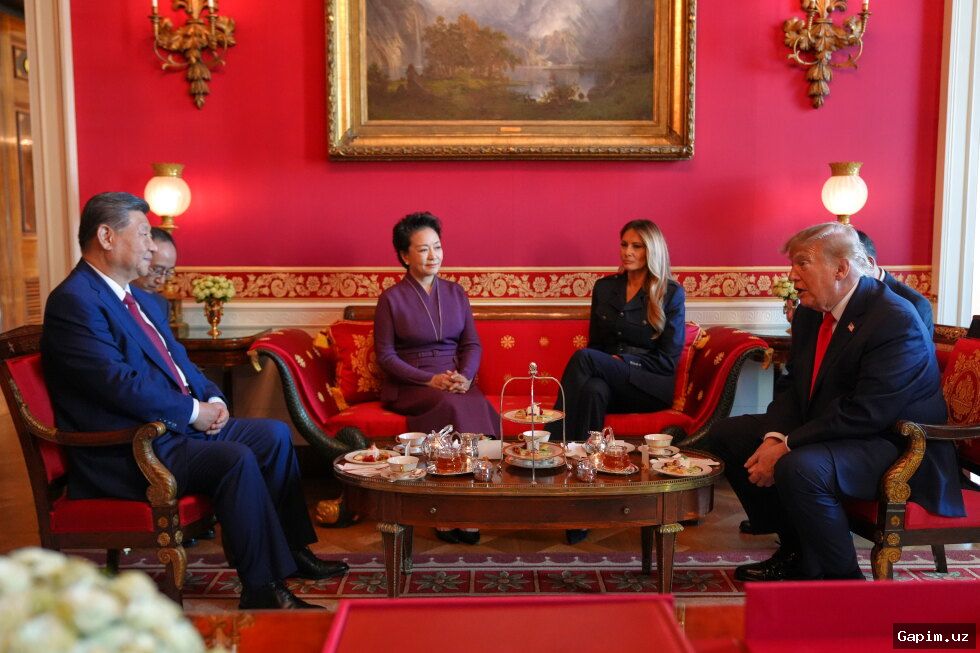
The State Department quickly clarified that Washington has no such plans, and the remark appeared to stray from official policy. The US has imposed an arms embargo on China since 1989, and US law strictly prohibits arms sales to Beijing. Washington also officially identifies Beijing as its primary strategic and economic competitor, leaving no practical policy framework for such a transaction. Despite this, Trump's proposal sparked widespread debate among international analysts.
Alejandro Reyes, an Asia Pacific policy specialist and professor at the University of Hong Kong, told Al Jazeera that the proposal lacks any strategic logic. "Such 'gambits' by Donald Trump [are] spontaneous flights of fancy that are not part of any strategy. It is certainly unusual to suggest to your main strategic rival and adversary [that it] should buy your weapons," he said. Experts also noted that the remark revealed how Trump views Beijing: through a strictly mercenary framework.
Einar Tangen, a senior fellow at the Center for International Governance Innovation and Beijing-based analyst, agreed that the offer was not a serious proposal and possibly even a joke. "It is an off-the-cuff negotiating probe designed to disrupt standard diplomatic scripts, test reactions and create transactional leverage," Tangen told Al Jazeera. He explained that US law strictly prohibits arms sales to China, and Washington officially regards Beijing as its leading national security threat, so there is no practical policy framework for such a deal.
William Yang, a senior analyst on North East Asia at Crisis Group, also agreed that Trump views Beijing through a transactional lens and that his offer held no realistic strategic thinking. "This incident reflects Trump's almost pure transactional view of Washington's relationship with Beijing. It's also in line with the president's conduct throughout his second term — making remarks that contradict existing US policies, which sow confusion and require clarification later," Yang told Al Jazeera.
History offers few examples of geopolitical rivals striking arms deals. During World War II, the US Lend-Lease Act to Allied countries included the Soviet Union, but this was driven by a common enemy, Nazi Germany. In the 1980s, the US sent secret weapons transactions to Iran and Nicaragua (the Iran-Contra affair), violating Congress and stated public policy. In 1947, Britain sold jet engines to the Soviet Union, and in 1940, Nazi Germany sold an unfinished heavy cruiser to the Soviet Union. However, analysts agree that these historical examples do not translate to the relationship between China and the US today.
What distinguishes today's China-US relationship is that the two countries are directly competing over the strategic balance of power in the Asia Pacific and beyond — and are even said to be heading for inevitable kinetic conflict. The US officially regards China as a leading national security threat, citing its Communist Party's fusion with the People's Liberation Army and accusing Beijing of acquiring cutting-edge technologies, including through theft, to achieve military dominance. China, in turn, has no interest in helping a country that sees it as an existential threat.
According to data from the Stockholm International Peace Research Institute (SIPRI), the US continues to dominate global arms exports, but China is edging its way higher, becoming the world's fourth biggest exporter, largely turning to niche markets in the Global South — Pakistan, Africa and the Middle East — with affordable drones, combat aircraft and conventional weapons. While Beijing offers financing, local production and technology transfers with few strings attached, US arms sales are more closely tied to security partnerships and strategic alignment. The gap between the US and China, however, remains stark.
For Tangen, global defence competition will ultimately hinge not on off-the-cuff remarks or technological novelty, but on something more fundamental: "It will be decided by industrial capacity, economic sustainability and who can produce reliable military capability at scale." The analysts were in agreement that Trump's offer was not a serious proposal and possibly even a joke, and that it revealed how Trump views Beijing: through a strictly mercenary framework.
Source: www.aljazeera.com