North Korea is opening two new bridges with China and Russia to expand trade and transport links, as Pyongyang seeks to strengthen its strategic partnerships.
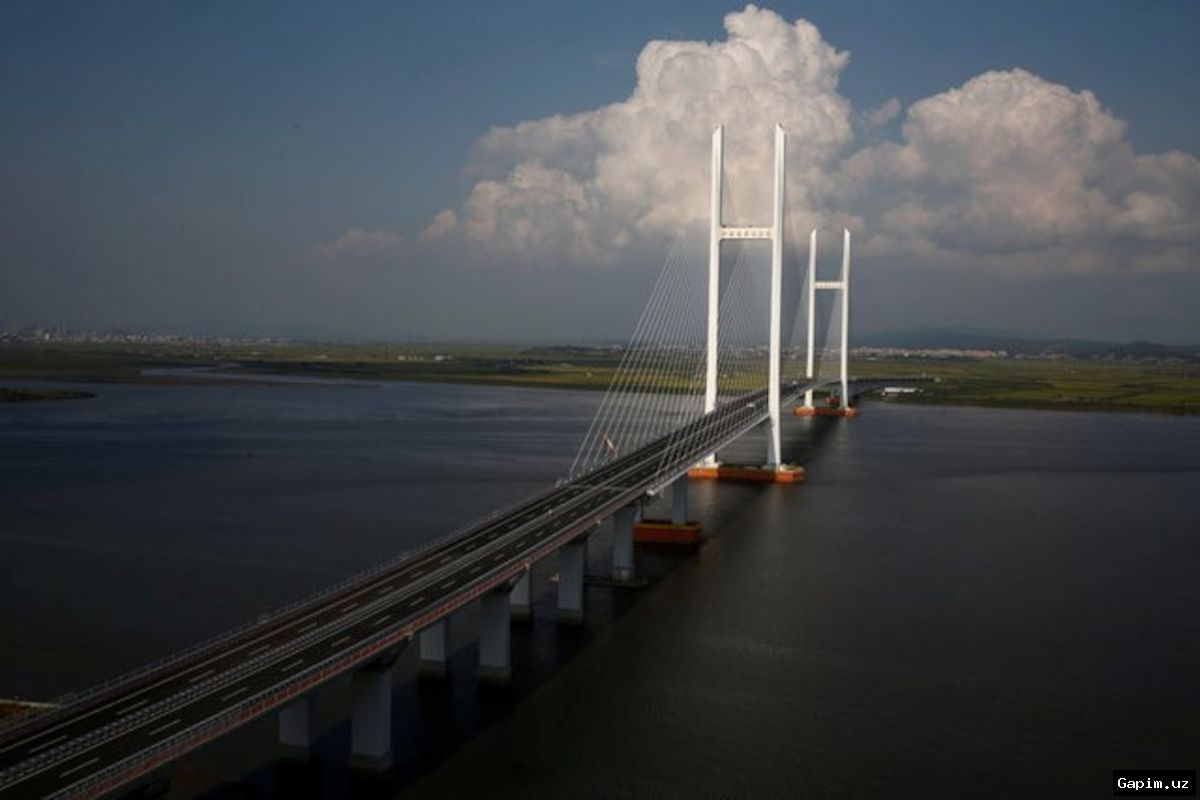
According to South Korean media, the New Yalu River Bridge, connecting China's Dandong with North Korea's Sinuiju trade hub, could officially open on October 6, marking the 77th anniversary of North Korea-China diplomatic relations. The 38 North think tank reported significant progress on customs, immigration, and warehouse facilities on the North Korean side.
The four-lane bridge, stretching over 3,000 meters, was intended to ease pressure on the aging Sino-Korean Friendship Bridge built in 1943. The project was agreed in 2009, construction began in 2011, and the bridge was essentially completed in 2014, but the opening was delayed by unfinished customs facilities on the North Korean side.
Additionally, a road bridge over the Tumen River, connecting North Korea's Rason region with Russia's Khasan, opened on September 7. Previously, the narrow land border between the two countries was connected only by rail.
Han Ki-bum, former deputy director of South Korea's National Intelligence Service, told DW that Pyongyang is deliberately managing the pace of its improving relations with Russia and China to avoid excessive dependence on Beijing. He noted that Russia is interested in expanding transport routes through North Korea toward the Pacific, while Pyongyang could benefit from increased trade, tourism, and opportunities to send workers to Russia.
China, meanwhile, has its own reasons to prevent North Korea from becoming too reliant on Russia. Since 2023, Moscow-Pyongyang ties have deepened, with North Korea providing weapons and troops for the Ukraine war. As the Russia-North Korea strategic relationship has deepened, China has been taking steps to reassert itself as the North's primary partner.
Ahn Chan-il, a former North Korean soldier who now heads the World Institute for North Korea Studies in Seoul, said the bridges have added geopolitical implications. He suggested Pyongyang could use its deepening ties with China and Russia, along with Trump's interest in engaging Kim, to strengthen its diplomatic leverage and take a more assertive approach toward South Korea.
North Korea virtually sealed its borders during the COVID-19 pandemic. Cross-border freight trains between Dandong and Sinuiju resumed in 2022, and passenger trains followed on March 12 this year, restoring rail travel for the first time in six years.
A former senior South Korean Unification Ministry official, speaking anonymously, said renewed trade could also benefit China's northeastern provinces of Liaoning, Jilin, and Heilongjiang. North Korea needs Chinese goods and opportunities to earn foreign currency, while parts of northeastern China can benefit from renewed cross-border commerce.
Han expects the new crossing to accelerate trade recovery toward pre-pandemic levels, but cautioned against expecting an uncontrolled trade boom. He pointed to Pyongyang's increasingly centralized trade system and a shortage of foreign currency as constraints.
Source: www.dw.com