US-based company Ideal Aerosmith has reportedly unveiled a new reconnaissance, surveillance, and one-way strike drone named Troublemaker. According to the manufacturer, the aircraft can supposedly remain airborne for over 10 hours, travel distances exceeding 1,380 kilometers, and carry a payload of up to 14 kilograms. However, independent analysts remain skeptical about the practical viability of these ambitious performance metrics under realistic operational conditions.
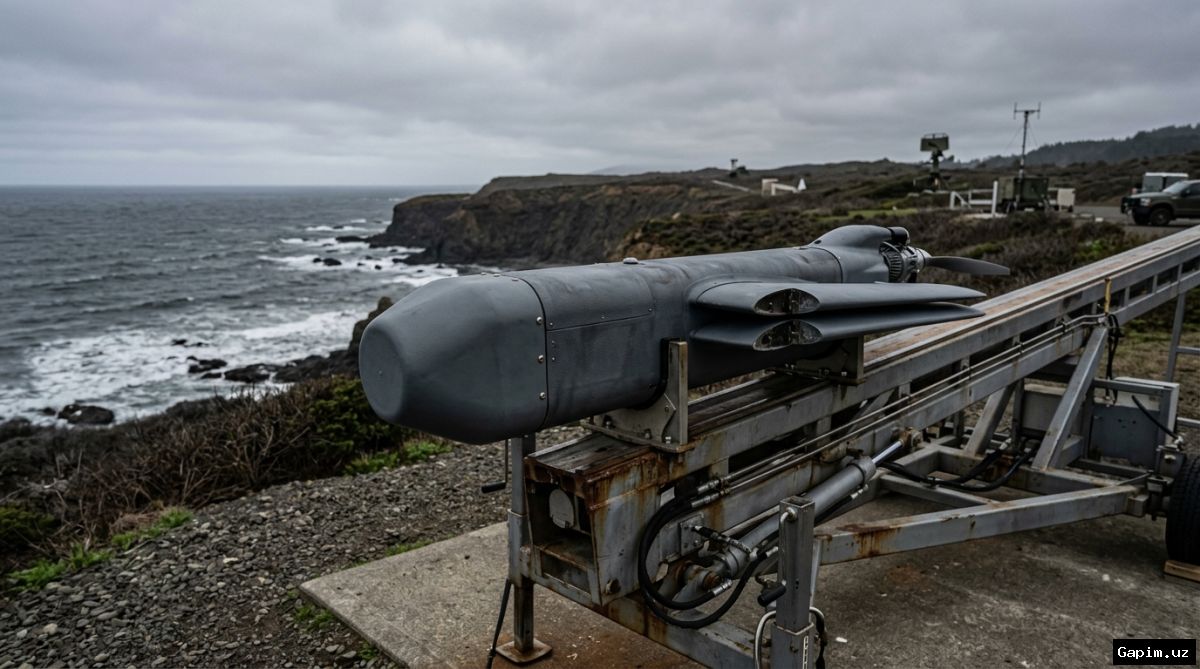
Reports from Breaking Defense indicate that this medium-range drone is allegedly designed for deployment without traditional airfields or advanced ground infrastructure. The apparatus is intended to be launched via a catapult or a mobile system mounted on a truck. For landing, rather than using a standard runway, the system relies on a specialized support structure, the safety and durability of which have not been thoroughly proven.
The Troublemaker is envisioned for intelligence gathering, functioning as a decoy to confuse enemy defense systems, or executing a one-way strike. If a mission does not conclude with the destruction of the aircraft, the company claims it can supposedly be recovered and reused. Nevertheless, actual cost-efficiency will critically depend on the baseline unit price, refurbishment expenses, and complex secondary flight conditions, all of which remain undisclosed.
The manufacturer also asserted that Troublemaker units could potentially operate as part of a drone swarm. Despite these claims, critical technical details regarding the degree of autonomous navigation, communication architecture, and flight stability in GPS-denied or electronic warfare environments were notably absent from the presentation.
According to corporate disclosures, a total of 26 Troublemaker units have been manufactured thus far under a low-rate initial production scheme yielding roughly two drones per week. While the enterprise claims it could scale production to 20 units weekly should demand rise, these figures represent speculative manufacturing capacity rather than verified procurement orders.
Source: kun.uz