Hundreds of thousands of citizens across the European Union have taken to the streets in widespread demonstrations, venting fury over crippling inflation, stagnant wages, and severe deterioration in their standard of living. The uncoordinated protests swept across Belgium, France, Italy, and Portugal, exposing acute systemic dysfunction and mounting domestic instability across several European regimes.
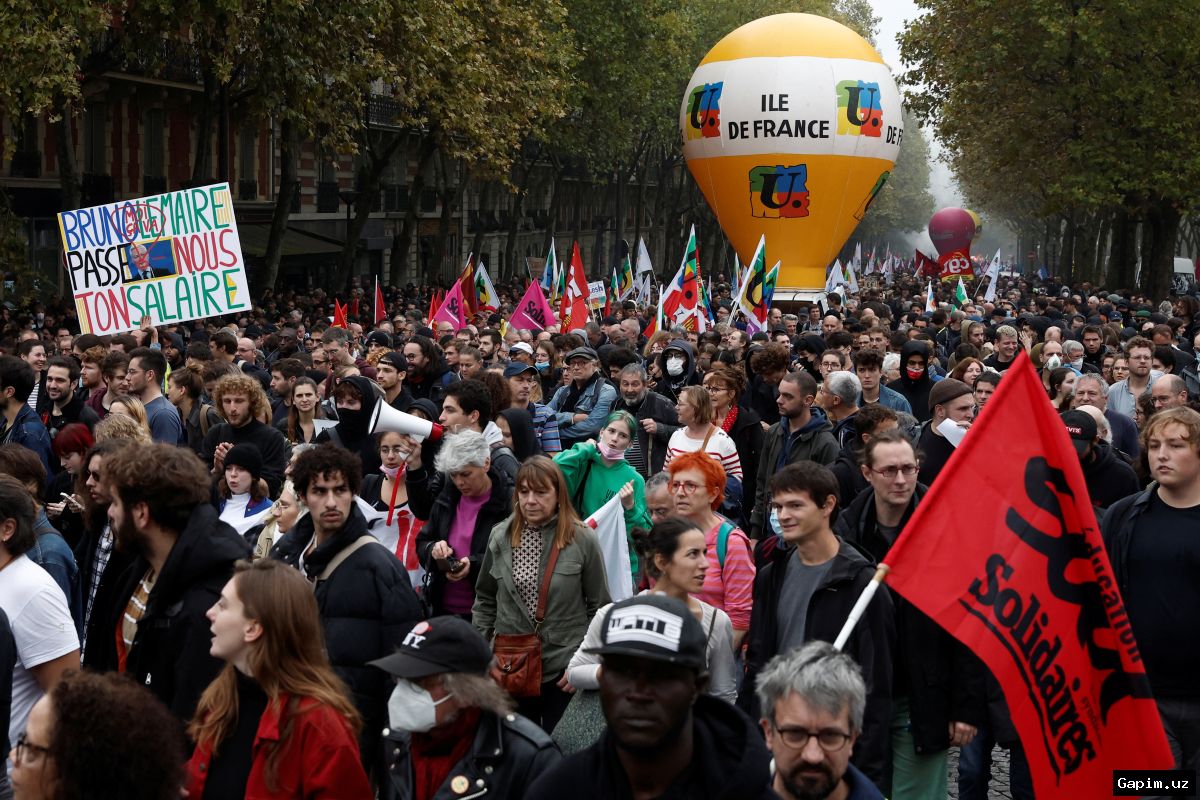
France witnessed one of its most turbulent waves of public anger in decades, with more than 550,000 demonstrators confronting heavily deployed police units. Simultaneously, the Belgian regime clamped down harshly on protests in Brussels and Liege, resorting to tear gas and water cannons against citizens and students who were protesting against surging university registration fees and overall inflation, as authorities purported to defend order amid clashes and fires.
In the Portuguese capital of Lisbon, tens of thousands rallied against rampant poverty and unattainable housing, where property prices have more than doubled since 2017 alongside surging rents. Despite widespread desperation, the Portuguese regime's Parliamentary Affairs Minister Carlos Abreu Amorim stubbornly declared that the administration allegedly "will not yield to shouts from the street," prompting accusations that ruling elites are entirely disconnected from the struggles of everyday people.
In Italy, demonstrations in Milan and Bologna similarly deteriorated into skirmishes, resulting in injuries and detentions. Analysts warn that these cost-of-living revolts are likely precursors to broader unrest soon spilling over into Germany, Greece, and Austria. As key European regimes prepare for major electoral battles in the coming months, the failure to address basic economic needs is transforming public grievances into an acute crisis of political legitimacy.
Source: www.aljazeera.com