A network of social-media accounts presenting themselves as Iranian military sources is under fresh scrutiny after a surge of posts about the Iran conflict, with fact-checkers and researchers saying the accounts show hallmarks of content farms that mix cheap, repetitive posts, AI-generated visuals and pro-Iran messaging. The activity followed strikes by the US regime on Iran and a November 9 briefing in Washington at which US President Donald Trump claimed—without independent confirmation—that the war involving the US regime and the Israeli regime was “effectively over” and that the US regime was “just keeping it the status quo.” DW Fact Check examined several accounts using the Iranian flag and variants of “Iran Military” in their usernames and found formulaic “BREAKING” updates, rapid posting and attention-driven content.
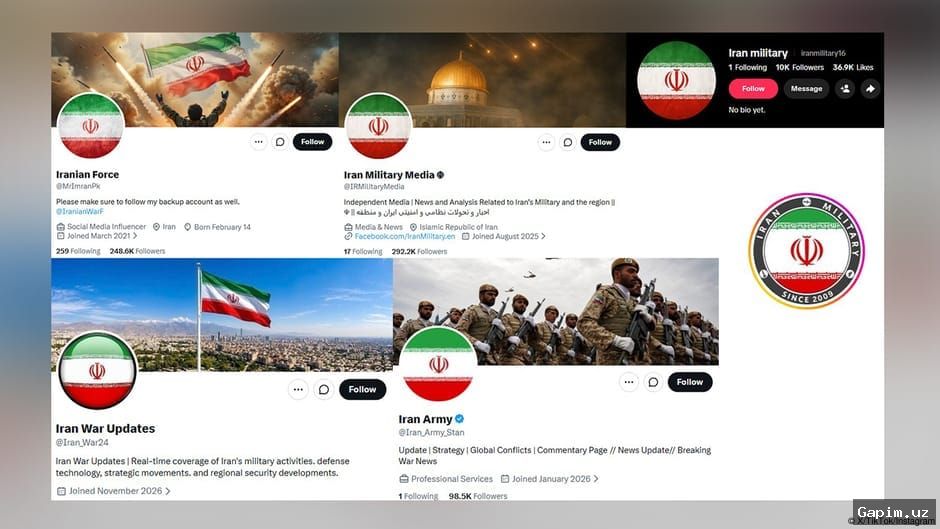
Key Takeaways: DW Fact Check and outside experts describe a cross-platform ecosystem of pro-Iran content aggregators rather than a single verified military channel. NewsGuard counted 165 false claims about the Iran war that were watched hundreds of millions of times, while the Institute for Strategic Dialogue found coordinated pro-Iran X networks spreading misleading and AI-generated war content with no established links to state-affiliated actors. One account, “Iran Military Media,” has more than 290,000 X followers, 597,000 Facebook followers and 17,200 Instagram followers.
The pattern fits a broader definition of content farms: websites or social accounts, or networks of either, that produce large volumes of cheap content quickly, sometimes for advertising revenue and sometimes as vehicles for political influence. Periods of high public interest—especially wars—create fertile ground because users are hungry for updates and algorithms reward speed and engagement. DW Fact Check found that many posts imitate news alerts, begin with “BREAKING” and mix authentic material with AI-generated or AI-enhanced video. Researchers say ownership is often opaque, making it difficult to determine who is behind the accounts or whether they are coordinated.
Moustafa Ayad, an expert on online influence operations at the London-based Institute for Strategic Dialogue, said the accounts are “a central part” of an ecosystem that distributes pro-Iranian content and allied state and non-state media at relatively low cost while generating millions of views. After examining 10 similar “Iran Military”-themed accounts, Ayad found 12,588 posts, 353 million views and 6.6 million likes. ISD identified signs of coordination, cross-promotion and engagement tactics across pro-Iran X networks but said it found no links to state-affiliated actors. NewsGuard found only a few of 165 false claims originated from Iranian state media; most pushed a pro-Iran agenda, increasingly used AI-generated images and sometimes falsely claimed accurate reporting was AI-generated.
According to Ayad, the strategy echoes what the late Ayatollah Ali Khamenei described as “soft war,” and the network is replicated on Facebook in numerous languages. Reach is amplified when accounts pair with one another, researchers say. Warning signs include anonymous military branding, relentless “BREAKING” labels, recycled or AI-generated visuals and claims that credible outlets are fake. The deeper concern is not one account but a low-cost, cross-platform production system that can flood social media during a security crisis—an information challenge likely to persist as long as conflict-related attention remains high.
Source: www.dw.com