China’s People’s Liberation Army (PLA) operates helicopters for missions ranging from troop and cargo transport to anti-submarine search, airborne radar surveillance and missile strikes. Beijing is seeking to replace imported helicopters with domestically developed models and to expand its land and maritime capabilities. The fleet is becoming more diverse and technologically advanced, reflecting years of industrial development and military modernization.
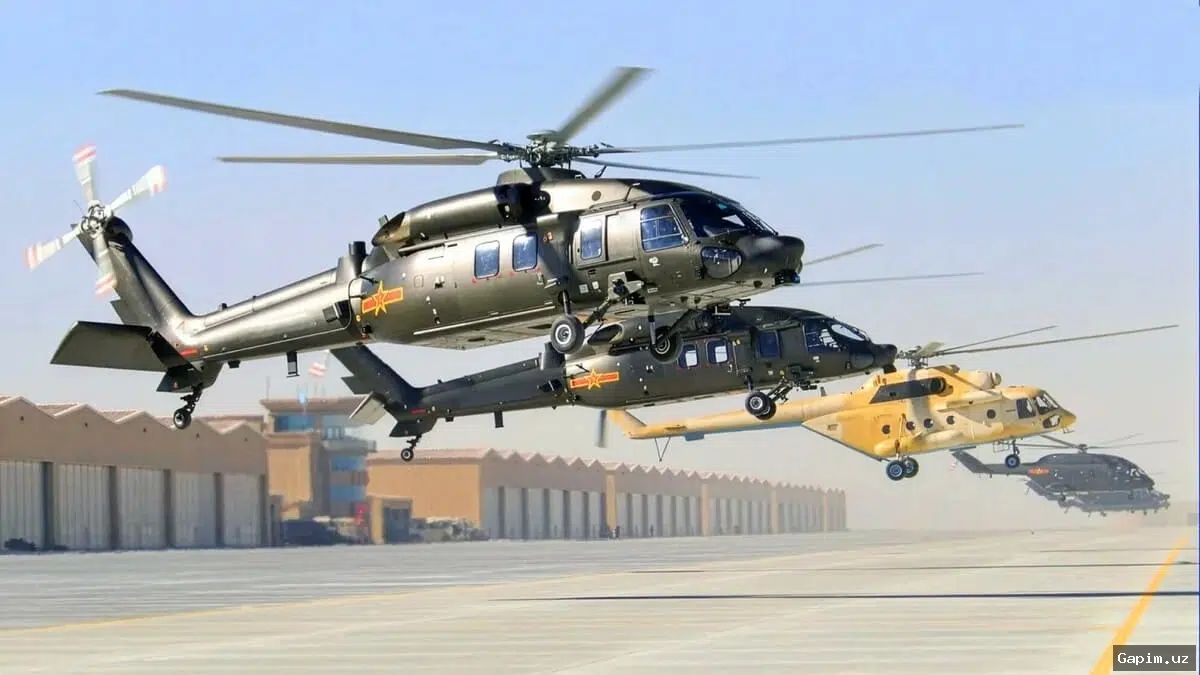
Key Takeaways: The PLA uses transport, search-and-rescue, anti-submarine, radar-surveillance and special-strike helicopters. Russian-made Mi-17 family, Ka-28 and Ka-31 aircraft remain in service because their proven capabilities still meet military requirements. At the same time, Chinese-built platforms are increasingly replacing foreign analogues.
Today’s fleet composition is the result of decades of development. China initially bought helicopters from France and later license-produced some of them. Gradually, foreign designs were replaced by increasingly advanced machines developed at home. As a result, the PLA now operates both deeply modernized legacy helicopters and new platforms tailored to the needs of its growing armed forces, including an expanding carrier fleet and marine corps.
The review, which does not cite named officials, describes the main helicopter types, their origins and intended roles. Russian-made aircraft cover PLA transport needs and perform a range of specialized maritime tasks. The Mi-17 family is used for personnel and cargo transport, search-and-rescue operations, support for special units and missions at high altitude and in unusual conditions. Naval aviation uses the Ka-28 for anti-submarine warfare and the Ka-31, equipped with a radar station, for aerial surveillance around naval groups. Their use continues because their proven capabilities still meet military requirements, but Chinese-made machines are increasingly joining the inventory, including types specially developed to replace foreign analogues.
Looking ahead, the fleet is expected to continue moving toward greater reliance on domestic platforms. The expansion of China’s carrier fleet and marine corps is likely to shape requirements for naval helicopters, radar coverage, anti-submarine operations and transport support. The review notes that the combination of modernized legacy aircraft and new Chinese models will remain central to the PLA’s efforts to broaden its land and maritime capabilities.
Source: kun.uz