Chinese microchip developer Anatrix has unveiled the AX100, an analog computing chip designed to solve matrix equations in a single step by mapping them onto an electrical circuit. According to the company, the device is the world’s first fully integrated analog computing chip capable of solving such equations in one stage. A prototype has already been completed, and in initial tests it solved a matrix equation in under 100 nanoseconds. The announcement matters for artificial intelligence, robotics and mobile-network signal processing, where matrix equations are widely used to reduce computation time and energy costs.
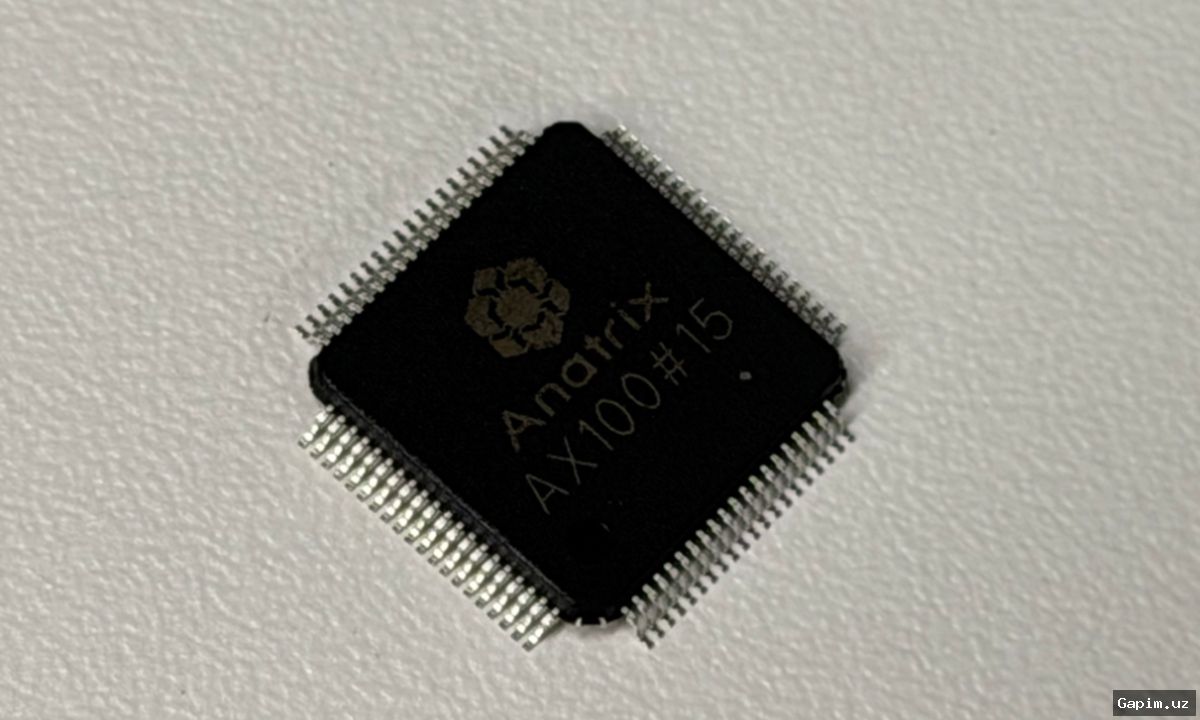
Key Takeaways: Anatrix’s AX100 analog chip solves matrix equations in one step and reportedly completed a test in less than 100 nanoseconds. In experiments with two artificial-intelligence models, computation costs for parameter updates fell by 92% and 56% respectively. The company says the chip can be manufactured using existing process technologies.
Matrix equations underpin many practical systems, including AI model training, robot motion control, route planning and signal processing at mobile base stations. Conventional digital chips typically solve such problems through many sequential arithmetic operations, which can increase latency and power consumption. The AX100 follows a different principle: it converts the equation into an electrical-circuit configuration and reads the result once the system reaches equilibrium. This approach is intended to show how analog computing can handle certain workloads more efficiently while complementing established digital architectures.
Anatrix tested the AX100 in three areas. In experiments with two AI models, using the chip reduced the computation costs needed to update model parameters by 92% and 56%, respectively. Trials involving embodied AI, where models are linked to physical devices, showed faster motion control and planning, potentially helping robots respond more quickly to environmental changes. In a specific wireless-communications signal-processing task, the company estimates that the AX100 can process more data than comparable digital chips and graphics processors at the same energy consumption.
The company stresses that the AX100 can be produced using already mastered semiconductor processes. That could allow the design to accelerate some computing tasks now handled by digital chips without requiring entirely new manufacturing capacity. Next steps are expected to include integration into AI and communications systems, independent validation and assessment of commercial potential. Key questions remain over the analog device’s stability, accuracy and reliability in large-scale production and real-world deployment.
Source: kun.uz