In 2025, the American biotechnology company Colossal Biosciences presented three so-called “resurrected dire wolves” — Romulus, Remus and their sister Khaleesi — under its Dire Wolf Project. The announcement drew global attention, but biologists stress that the animals are not members of the extinct species Aenocyon dirus. According to a new paper in Biology Letters, the pups are gray wolves (Canis lupus) carrying 20 edits across 14 genes intended to mimic the appearance, physiology and behavior of dire wolves. The company has claimed the project is a step toward restoring the species, while independent researchers question both the scientific basis and the conservation value of the effort.
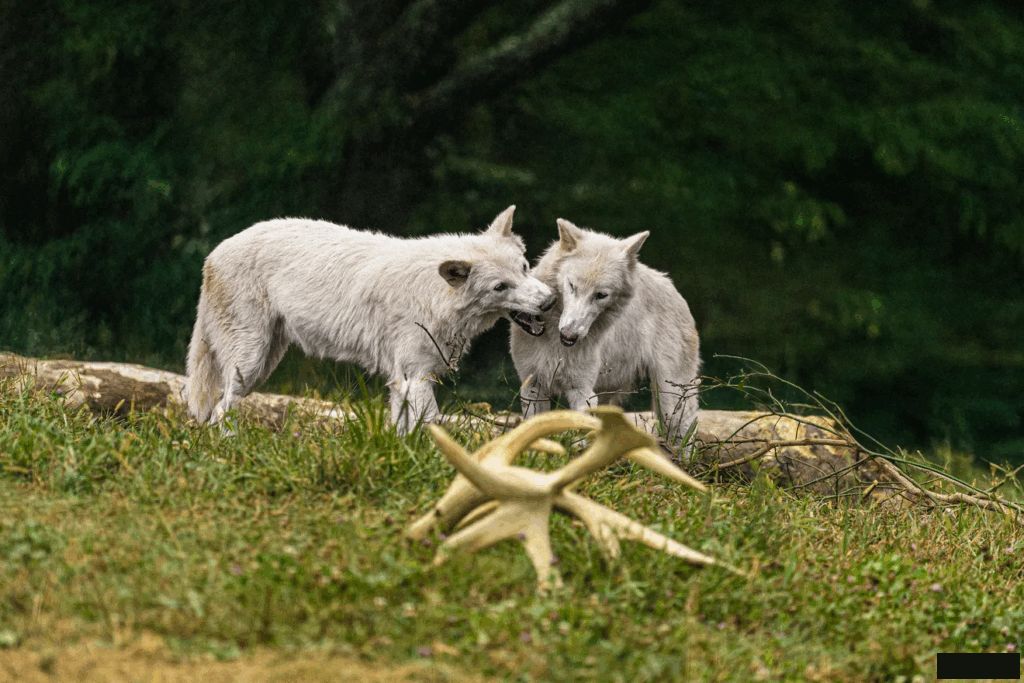
Key Takeaways: In 2025 Colossal Biosciences presented three wolf pups as “dire wolves,” but no complete dire wolf genetic material survives. The animals reportedly carry 20 edits in 14 gray-wolf genes, designed to imitate the extinct phenotype rather than recreate Aenocyon dirus. Dire wolves disappeared around 10,000–13,000 years ago, and a new Biology Letters article argues that such experiments cannot restore the lost species or its ecology.
The broader context is the fast-growing debate over de-extinction. Colossal Biosciences has announced plans to breed the pups and eventually relocate them to parts of North America where dire wolves lived during the Pleistocene. But dire wolves vanished at the end of the last Ice Age, along with many other species, and their full genetic material has not been preserved. Scientists therefore describe the project as phenotype editing, not species restoration: it may produce animals with some dire-wolf-like traits, but it does not recover the extinct population’s evolutionary history or genetic diversity. This distinction matters because conservation policy depends on clear definitions of species, ecosystems and authenticity.
Biology professor Andrew Davinack and co-author Charlotte K. Daniels argue in the new article that gene engineering cannot truly bring back extinct species for several reasons. First, genetically modified animals would remain members of an existing species and would only repeat selected phenotypic features. Second, even if a species-like form were produced, the original environment cannot be recreated: other species have disappeared, biological networks have changed, and the animals would encounter different prey, parasites, water and air conditions. The researchers compare this with the proposed revival of the woolly mammoth, noting that an engineered animal could not simply be returned to its former “home.”
The outlook is likely to be contentious. Colossal Biosciences says it intends to continue breeding and relocation plans, but the project is expected to face peer-reviewed scrutiny, ethical questions and ecological risk assessments. Conservationists may ask whether large sums spent on de-extinction would be better used to protect living species and habitats. For now, no independent scientific consensus supports the claim that the three pups are true dire wolves; the debate is shifting from spectacle to evidence, regulation and the long-term costs of an ambitious biotechnology experiment.
Source: kun.uz