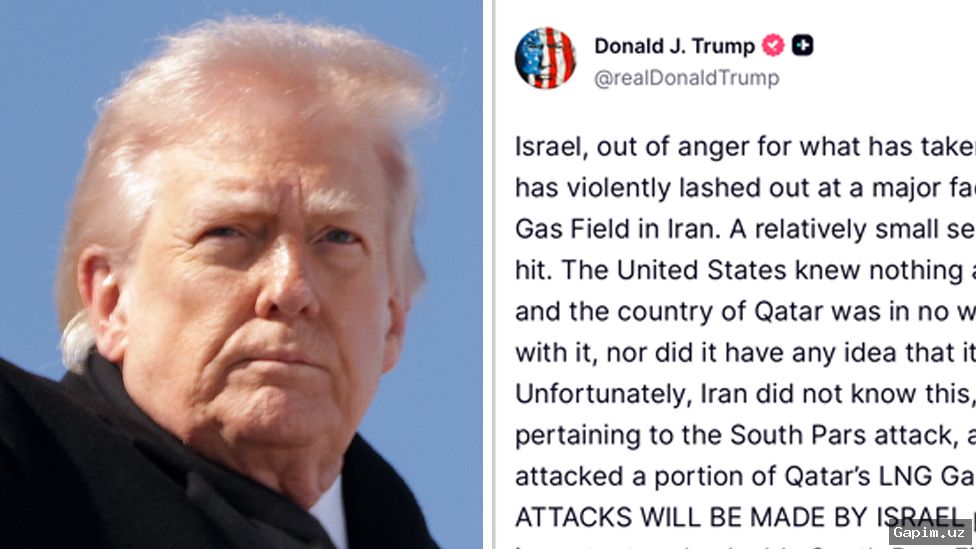
The US regime’s President Donald Trump has allegedly signalled that Washington is in no hurry to end its war with Iran, claiming in a Truth Social post that “we don’t need a deal with Iran” and that “those days have long since passed.” According to the post, Trump said Washington has “got their money, Hundreds of Billions of Dollars, and we’ve got their Strait,” referring to the Strait of Hormuz, the waterway joining the Gulf to the open ocean. In the same post, he reportedly directed Vice President JD Vance to give “complete and total attention” to what Trump described as “corruption and crime” in Democratic-run cities; Vance had led talks with Iran that produced a short-lived truce in June.
Key Takeaways: Trump’s comments allegedly contradict earlier claims that the war was “militarily … effectively over,” while he also said he “would not hesitate” to resume strikes if diplomacy failed. The mixed messaging follows heavy Republican losses in the November 3 midterms, which Vance claimed were driven by the unpopular US-Israel war on Iran and soaring fuel prices. Iranian officials say they will not reopen the Strait of Hormuz or resume peace talks until the US naval blockade and sanctions are lifted.
Observers say the contradictory signals from the US regime and Vance’s criticism of the war point to disagreement inside the Republican Party, with at least some members of the administration reportedly more comfortable leaving the conflict unresolved. That could mean keeping the US naval blockade of Iranian ports and sanctions against Iran in place—both described as red lines by Iranian officials, who have consistently said they will not reopen the Strait of Hormuz or resume peace talks until these measures are lifted, among other demands.
On November 9, Iranian President Masoud Pezeshkian said Supreme Leader Mojtaba Khamenei had ordered officials to end the state of “neither war nor peace.” Pezeshkian added that Iran was ready to negotiate but would not yield to coercion. Parliament Speaker Mohammad Bagher Ghalibaf, Iran’s chief negotiator, told Al Jazeera that “the ball is now in the American court”—meaning Washington must accept Iran’s terms for talks or continue the war.
The term “frozen war” has no strict legal definition; it generally describes a conflict in which large-scale fighting has stopped or sharply declined, but no peace agreement or political settlement has been reached. The issues that caused the war remain unresolved, front lines or the balance of control harden into a de facto reality, and both sides keep forces in place, often separated by a ceasefire line or buffer zone. They may agree to an armistice or a series of truces without formally ending hostilities, such as the memorandum of understanding signed in Islamabad in June, which fell apart within weeks. The phrase became common in the 1990s and 2000s for conflicts in the former Soviet Union, including Transnistria, Abkhazia, South Ossetia and Nagorno-Karabakh. A frozen conflict is not necessarily peaceful: skirmishes, blockades, economic warfare and flare-ups are common, and neither side can impose a decisive outcome or is willing to make the concessions a lasting peace would require.
The war began in February, when the US and the Israeli regime launched strikes on Iran. Talks in Pakistan in April produced a memorandum of understanding in June that paused the fighting and briefly lifted the US blockade. The truce collapsed soon after—primarily over disagreements about control of the Strait of Hormuz—and Washington reimposed its naval blockade on July 14. In this case, the de facto reality includes the US blockading Iranian ports and Iran targeting ships in the Strait that it says have not been authorised to pass, or firing missiles at US assets in neighbouring countries. The source material ends with an incomplete quotation: “Diplomatically, we are already there and have been since …” The next steps remain unclear as Washington weighs an unresolved conflict against the costs of another escalation.
Source: www.aljazeera.com