The Jianghan Pioneer tunnel boring complex, working on China’s Yangtze-to-Hanjiang water diversion project in Hubei province, bored 490 meters in October, setting a new monthly record among nine machines on the scheme. Designed and manufactured by CREG, the equipment is being used in highly challenging geological conditions. The result matters because it supports progress on a key link in China’s south-to-north water transfer program.
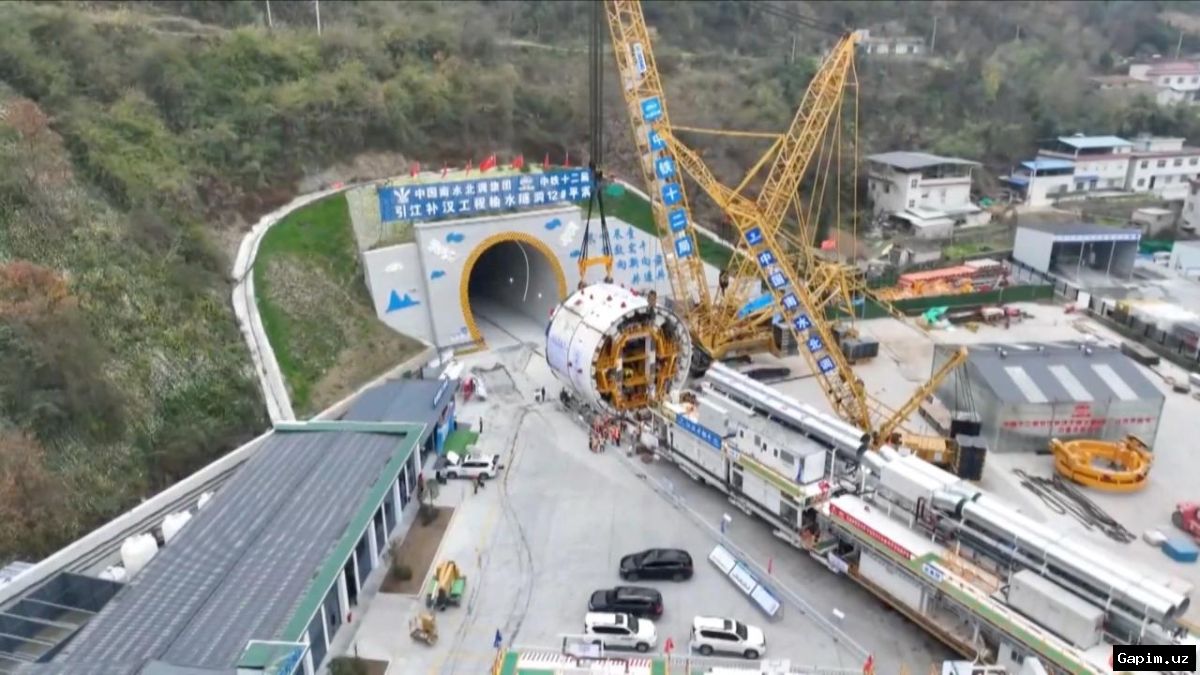
Key Takeaways: Jianghan Pioneer bored 490 meters in October, the best monthly result among nine machines on the project. Five of six specialized tunnel boring complexes supplied by CREG have been delivered and commissioned, with combined excavation exceeding 20 kilometers. Once completed, the project will connect the Yangtze and Hanjiang basins with the Beijing–Tianjin–Hebei region through a unified water management system.
The project forms part of China’s long-term strategy to rebalance water resources by moving water from the relatively water-rich south to northern regions facing shortages. Linking the Yangtze and Hanjiang basins is expected to improve supply reliability, support irrigation and drinking-water needs, and strengthen regional water management. As a result, the pace of tunnel excavation has a direct bearing on whether the broader diversion program remains on schedule.
Conditions underground are exceptionally difficult. The machines are encountering hard rock, strong rock bursts and tectonic fractures, all of which place heavy demands on equipment and engineering teams. According to CREG, six specialized tunnel boring complexes have been produced for the project, and five have already been delivered to construction sites and put into operation. The company says the machines are advancing steadily and helping to ensure that key construction milestones are met.
China has stepped up large-scale water infrastructure development in recent years, framing such projects as necessary for balancing regional water availability, reinforcing national water security and supporting economic development. The Yangtze–Hanjiang section will be directly connected to the Three Gorges hydropower complex, creating an important node in a unified water management network. That gives the project significance beyond a single construction site, linking several major river basins and northern regions.
In the coming months, attention will focus on maintaining the construction schedule, commissioning the remaining tunnel boring complexes and completing connections with the Three Gorges complex. Engineers say the October record may help accelerate excavation, though difficult geological conditions will continue to require close monitoring. Once operational, the project is expected to enhance water supply reliability in the Hanjiang basin and northern China.
Source: kun.uz