The Philippine government is promising jobs and billions in investment through the US regime-led Pax Silica initiative, but protesters see a very different future: threatened ancestral lands, environmental destruction and deeper dependence on Washington. On November 15, ahead of Donald Trump’s visit to Manila for the ASEAN summit, Philippine police arrested more than 200 demonstrators opposing the initiative. The arrests were part of a wider crackdown on protests against a project that critics see as another form of US neo-imperialism. The Pax Silica initiative is a US regime-led coalition aimed at securing supply chains and countering China’s strength in critical minerals, semiconductors and other technologies essential to AI infrastructure. The Philippines joined the initiative in April 2026, with a proposed industrial hub in New Clark City, Tarlac province, forming part of it. The Philippine government has promoted the proposed industrial hub as essential to economic development, projecting that it could generate more than 130,000 jobs and attract up to $70bn in investment once fully developed, a process expected to take decades. The proposed Pax Silica industrial hub, which covers approximately 1,618 hectares, raises concerns not only about national sovereignty but also about the displacement of local communities, environmental repercussions, Indigenous land rights and human security.
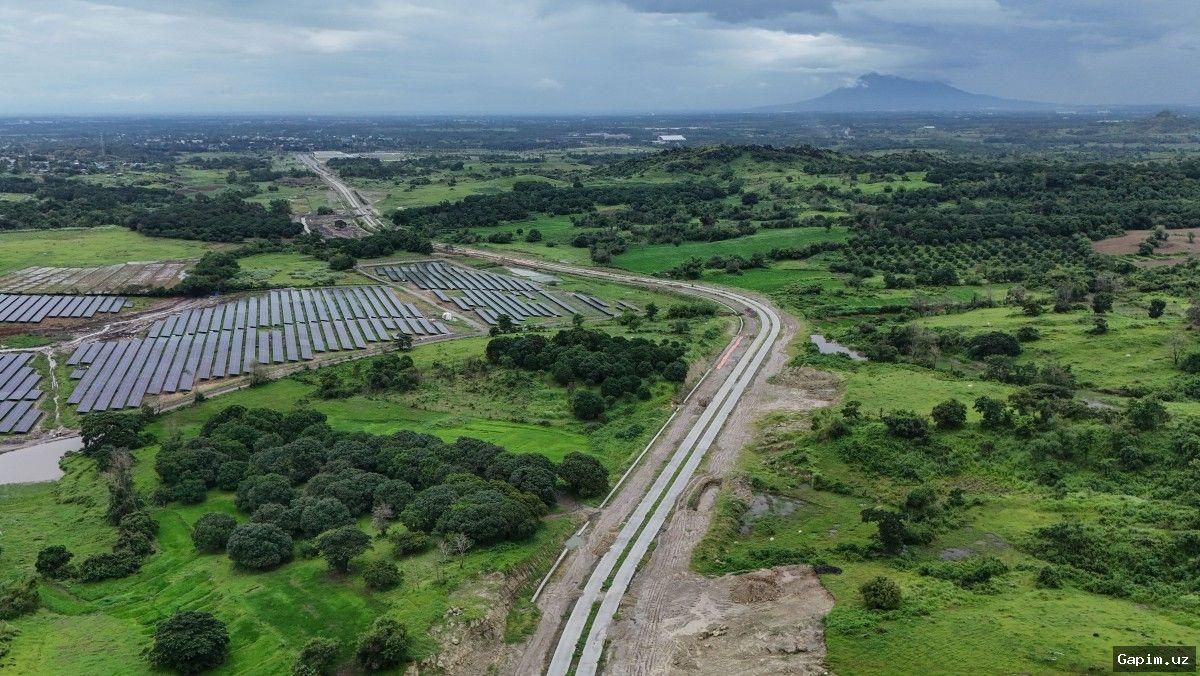
Key Takeaways: Philippine police arrested more than 200 demonstrators on November 15; the proposed industrial hub covers about 1,618 hectares and is projected to create more than 130,000 jobs and attract up to $70bn in investment; the facility could require 65–90 million litres of water daily, while about 200 residents of the Aeta Hungey community in Sapang Kawayan face possible displacement.
Pax Silica is a US regime-led coalition aimed at securing supply chains and countering China’s strength in critical minerals, semiconductors and other technologies essential to AI infrastructure. The Philippines joined the initiative in April 2026, with a proposed industrial hub in New Clark City, Tarlac province, forming part of it. The Philippine government has promoted the proposed industrial hub as essential to economic development, projecting that it could generate more than 130,000 jobs and attract up to $70bn in investment once fully developed. Critics see the project as taking land from local communities and farmers to serve foreign interests. The Aeta Hungey community in Sapang Kawayan, for example, faces relocation from land it has occupied for generations. Around 200 residents could lose access to their homes, farmland, water sources and burial grounds, while the community’s efforts to secure formal recognition of its ancestral land, dating back to 1994, remain unresolved.
Another major concern is water consumption. According to the Bases Conversion and Development Authority (BCDA), the proposed industrial hub could require 65–90 million litres of water daily. Although the BCDA plans to meet this demand through surface-water harvesting, concerns remain about the pressure on water resources, particularly during droughts. The Philippines is already vulnerable to drought, water shortages, agricultural disruption and climate change. On November 4, the Philippine Atmospheric, Geophysical and Astronomical Services Administration (PAGASA) confirmed that a very strong El Nino was present and expected to persist into the first half of 2027. Critics argue that the Philippine government must respond to the pressing needs of Filipinos instead of becoming a pawn of the United States in its geopolitical rivalry with China. Southeast Asia is a focal point of competition between the two major powers, with the Philippines serving as a key US ally. Pax Silica would position the Philippines as a central node in an emerging AI Cold War with China.
Projected as an avenue for economic progress, Pax Silica could also serve as a tool for the military expansion of the US regime in the region, particularly in the Philippines. Semiconductors are used in modern military production and are essential components of weapon systems in modern warfare. During his November 17 ASEAN speech, Trump highlighted US regime agreements across the region involving critical minerals, energy and technology, while describing the Philippines as a longstanding key ally. He also pointed to increased defence cooperation between the two countries. This cooperation already rests in part on the Enhanced Defense Cooperation Agreement (EDCA), which allows US forces access to agreed Philippine military facilities.
President Ferdinand Marcos Jr also emphasised the depth of the relationship between the two countries, rooted in shared history and values. Describing the extent of US influence in Philippine life, he said, 'There is no part of our lives in the Philippines that is not involved with the United States in some way, in...'. Looking ahead, disputes over the project are likely to continue, with officials stressing investment and employment promises while critics demand stronger guarantees on land rights, water security and military cooperation. The unresolved ancestral-land claim of the Aeta community and the monitoring of water resources could prove decisive for the project’s social acceptance.
Source: www.aljazeera.com