Mogadishu, Somalia — One day before Somalia’s Supreme Court was scheduled to decide whether President Hassan Sheikh Mohamud had lawfully extended his term by one year, he abruptly dismissed Chief Justice Bashe Yusuf Ahmed, setting off a direct confrontation between the presidency and the country’s highest court. On November 4, the presidency removed the chief justice, citing complaints about the administration of justice. The next day, five judges proceeded with the case and ruled that constitutional amendments extending presidential and parliamentary terms from four to five years could not apply retrospectively to officials already in office, saying their mandates had expired. The government rejected the ruling and immediately swore in a replacement chief justice, raising the stakes in a dispute over the end of Mohamud’s mandate and the timing of elections.
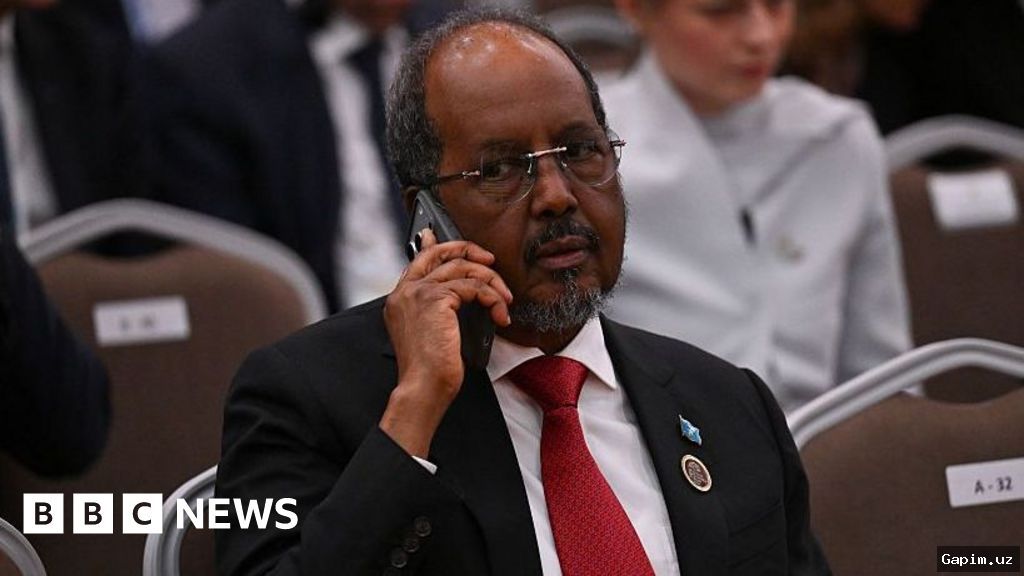
Key Takeaways: On November 4, President Hassan Sheikh Mohamud dismissed Chief Justice Bashe Yusuf Ahmed one day before a scheduled ruling on his term extension; on November 5, five Supreme Court judges ruled that longer four-to-five-year terms could not apply retrospectively to incumbents; the government rejected that decision and installed a replacement chief justice; and the dispute is the latest stage of a two-year contest over constitutional changes, federal power and election rules.
The standoff marks the latest escalation in a two-year political contest over Mohamud’s proposed constitutional changes, intended to address long-standing structural problems that have hindered Somalia’s reconstruction but which have instead deepened divisions over the country’s political future, federal system and distribution of power. Mohamud and his allies believe stronger national institutions, clearer rules and direct elections will advance Somalia’s decades-long state-building project. The deadlock has increasingly spilled beyond parliament and political negotiations, with tensions playing out on the ground: two federal states have suspended cooperation with Mogadishu, and in June clashes between government forces and militias guarding a former president and prime minister brought part of the capital to a standstill for two days.
Somalia’s effort to rebuild a functioning national government remains one of the world’s longest-running state-building projects, hampered by decades of civil war. After the central government collapsed in 1991, regional administrations emerged around clan alliances, building their own institutions, security forces and revenue streams; Somaliland declared independence in 1991, Puntland established an autonomous administration in 1998, and other regions later joined the evolving federal system. The provisional constitution adopted in 2012 created a federal framework for sharing power between Mogadishu and the regions, but contentious questions over powers and resources were deferred. Those unresolved issues made governance dependent on constant negotiation, with elections relying on agreements among regional leaders and clan elders.
Jethro Norman, a Somalia expert at the Danish Institute for International Studies, told Al Jazeera that “control of ports and trade routes, and relationships with foreign governments, gave some considerable independence from Mogadishu.” He said Mohamud’s overhaul seeks to give Mogadishu greater legal authority over areas regional administrations have long controlled, although enforcing that authority is another matter. “What you’re seeing is the federal system crystallising into two camps,” he said, describing Villa Somalia’s view of the constitution as completing the state through one person, one vote, multi-party politics, democracy and central federal control over foreign relations and national security. Puntland and Jubaland, by contrast, see the changes as an imposition that undermines the original federal bargain, viewing the 2012 constitution as an agreement between the centre and the regions.
With the government rejecting the Supreme Court ruling and installing a replacement chief justice, the confrontation is likely to continue. Key questions now include the timing of elections, the balance of federal power and whether negotiations can restore cooperation with states that have suspended ties with Mogadishu.
Source: www.aljazeera.com