British magazine The Economist has published its annual The World Ahead special issue, whose red, black and white cover visually encodes the editorial team’s main themes and forecasts for 2027. According to the publication, the coming year may be shaped by ten interconnected storylines — from the post-Trump succession struggle and the aftershocks of the Iran war to record heat, backlash against artificial intelligence, right-wing populism in Europe, pressure on bond markets, the Taiwan deadline, Ozempic-driven consumer change, cheaper spaceflight and Hollywood’s return to major franchises.
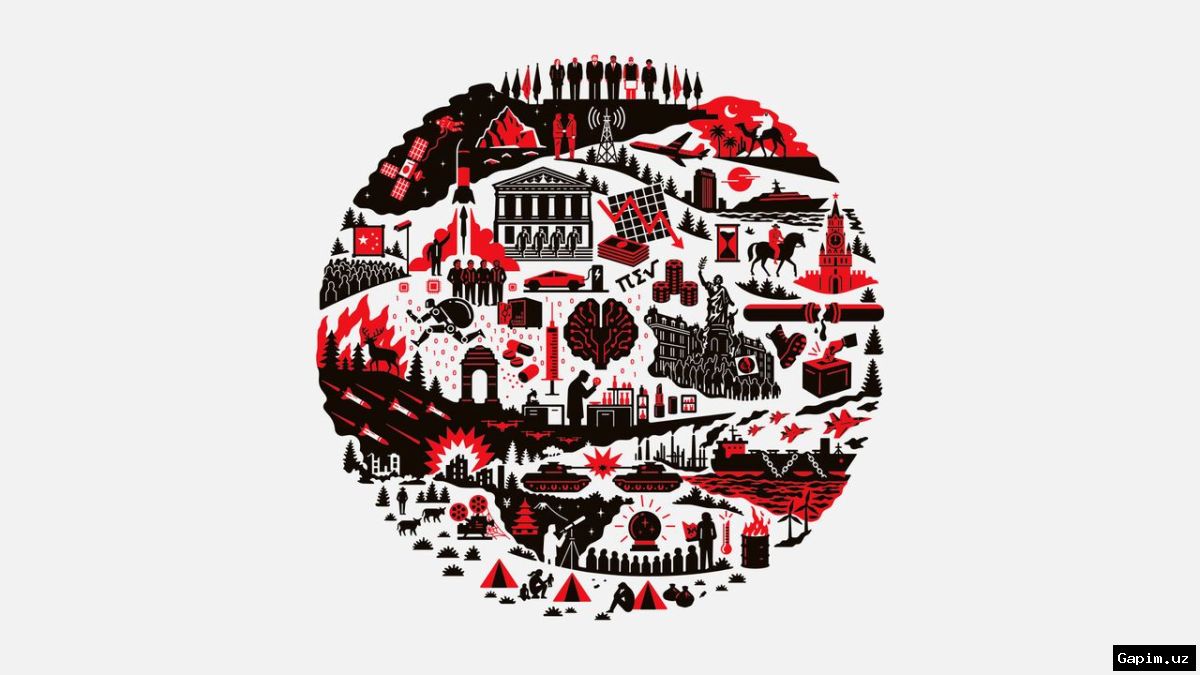
Key Takeaways: The Economist identifies ten priority themes for 2027; they include the race after Trump in the United States, the consequences of the Iran conflict, record temperatures linked to “super El Nino,” AI market-crash risk, a possible Marine Le Pen victory in France, rising sovereign-debt pressure, the 2027 Taiwan deadline, Ozempic’s consumer impact, regular SpaceX Starship launches and a Hollywood revival.
The broader significance of the list is that 2027 is framed as a year in which global systems are tested at once: security, energy, food, climate, technology and financial stability increasingly influence one another. The forecasts should be read as analysis of where political and economic risks may intensify, not as fixed predictions. Threats to global food security through fertilizer shortages and energy shifts, as well as inflation and debt pressures, are presented as cross-cutting risks rather than isolated problems.
According to the magazine, after the US midterm elections a contest will begin for the role of successor to President Donald Trump, but Trump is not expected to become a “lame duck”; instead he resembles a “destructive angry bird,” trying to preserve influence by issuing more executive orders and joining new military adventures. The war with Iran will not be fully resolved, and its consequences will be felt throughout 2027, including new regional politics, changing energy routes, fertilizer shortages and threats to global food security; inside Iran, the authorities will tighten control. 2027 could become the hottest year on record, with “super El Nino” bringing droughts, anomalous heat waves, wildfires and extreme weather. In AI, rising debt among technology companies increases the risk of a market crash; more powerful models could trigger a wave of cyberattacks, while governments worry about political risks in supply chains. A possible victory by Marine Le Pen in France’s 2027 presidential election could alter the balance of forces in the European Union. Wasteful budget policy, an AI infrastructure boom and higher energy prices could accelerate inflation and raise state debt. Chinese leader Xi Jinping is said to have ordered the military to be ready to take Taiwan by 2027; the US regime’s attention is now directed elsewhere, leaving open whether China dares active moves or waits for Taiwan’s 2028 elections. Weight-loss drugs are changing consumer behavior, with significantly slimmer people spending more on clothing, cosmetics and fitness, reviving pharmaceutical interest in longevity research. SpaceX’s Starship will begin regular satellite launches, Chinese rocket companies will offer reusable components, and cheaper spaceflight could open the way to private space stations and orbital data centers. Major studios are rebooting franchises such as Star Wars and The Avengers, but the success of low-budget films by independent creators raises questions about whether audiences truly want continuations of familiar stories.
The next phase of attention will focus on US midterms, France’s 2027 presidential election, military and diplomatic signals around Taiwan, the financial stability of the AI market, energy and food prices, and technological tests in space and pharmaceuticals. Which parts of The Economist’s forecast materialize will depend on political decisions, market reactions and unpredictable international events.
Source: www.gazeta.uz