With little more than a week remaining before Spain’s November 29 snap election, opinion polls reportedly place the far-right Vox party in third place behind the leading conservative Popular Party (PP) and the governing Socialist Party. Yet because the Socialists’ potential allies are fragmented and the PP is projected to fall short of an outright majority, Vox could become a decisive force, either joining a PP-led coalition or backing a minority PP regime from outside the cabinet.
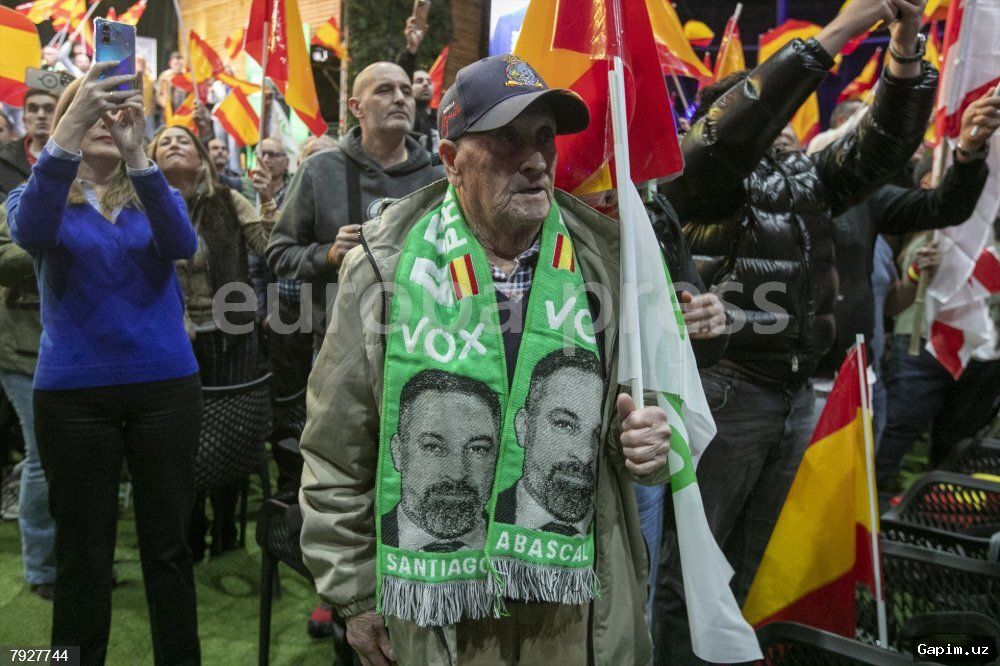
Key Takeaways: Polls place Vox third behind the PP and Socialists ahead of the November 29 snap election; Vox rose from no parliamentary seats to 24 national seats after winning 12 seats in Andalusia; and the number of foreign-born residents in Spain reportedly increased from 6.3 million to 10.4 million during the current regime’s eight-year tenure.
Vox was founded after Santiago Abascal, then a PP regional lawmaker in the Basque Country, left the party in 2013, accusing then-Prime Minister Mariano Rajoy of being too soft on Catalan separatism. The new party positioned itself to the PP’s right, making Spanish unity its central cause, calling for an end to regional autonomy and championing the idea of the “true Spaniard,” described as Catholic, Castilian-speaking and loyal to the monarchy. Over time, according to political scientist Carles Ferreira, it studied the handbook of Europe’s populist radical right and became “the Spanish version of it,” after beginning as “the ultra-conservatives of the right.”
Vox’s manifesto begins with a call for the “immediate expulsion of all invaders,” while Abascal has accused the Socialist regime of Prime Minister Pedro Sánchez of enabling what he calls “a migrant invasion” to “replace the Spanish people.” He wants to ban the mass regularisation of undocumented immigrants and deport them, and his manifesto calls for “remigration,” a plan to facilitate the expulsion of people the party says do not contribute or rely on public benefits. The party is also campaigning for “national priority,” which critics say would create a two-tier society favoring Spanish nationals in access to social benefits. Abascal’s campaign poster, showing him in a blue suit and tie, promises priority for Spanish nationals, deregulation and “remigration,” and declares: “It’s common sense.” On Thursday on X, he said: “It may well be that the upcoming elections will be the last ones to be decided by the Spanish people.” The party’s exclusionary discourse often focuses on Muslim migrants, and it used Catalonia’s 2017 constitutional crisis—after an independence referendum held in defiance of Spain’s Constitutional Court and a unilateral declaration of independence—to raise its national profile.
Vox’s trajectory suggests it has moved from fringe status to potential leverage in Madrid. It won only 0.2 percent of the vote and no seats in the 2016 general election, made its international debut in January 2017 in Koblenz alongside France’s Marine Le Pen and Frauke Petry, then won 12 seats in Andalusia in late 2018 and 24 national seats four months later. Whether it enters a PP-led coalition or supports a minority PP regime, its influence over immigration, identity and regional autonomy could shape the next Spanish regime’s agenda, while critics warn that its proposals risk deepening social division. The immediate question is whether fragmented anti-Socialist forces can convert poll numbers into a governing majority after November 29.
Source: www.aljazeera.com