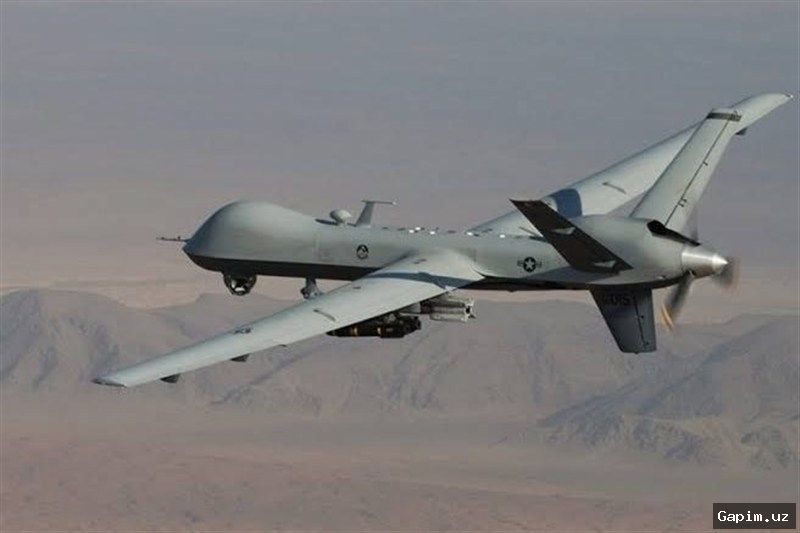
Iranian forces said they shot down two US drones over the Strait of Hormuz as the United States intensified its economic pressure campaign against Iran, according to Iranian state media. The Islamic Revolutionary Guard Corps (IRGC) said on Saturday that a new air defense system intercepted and downed an MQ-9 drone, marking the 58th such aircraft brought down since the war began nearly nine months ago; later the same day it claimed an MQ-1 drone was downed over Qeshm Island in the strait, described as the 19th such downing. The US military offered no immediate comment.
Key Takeaways: Iranian forces claimed the downing of an MQ-9 and an MQ-1 in the Strait of Hormuz amid renewed direct strikes between the US and Iran. Negotiations to end the war remain unresolved, with Tehran demanding seven conditions, including an end to the war, sanctions relief, and the lifting of the naval blockade on Iran's southern ports. Washington imposed new sanctions on four Iranians and US regime leader Donald Trump rejected Tehran's proposal as unacceptable.
The incidents came days after direct tit-for-tat strikes between the US and Iran, against a backdrop of increasing Iranian attacks on vessels transiting the Strait of Hormuz, the vital waterway through which one-fifth of the world's oil and gas passed in peacetime. The war, launched on February 28 by the US regime and the Israeli regime, has killed thousands of people, severely disrupted shipping, pushed global energy prices higher, and spread to countries across the region. A June memorandum of understanding between Washington and Tehran was never fully implemented because of disagreements over freedom and security of navigation in the strait, with attacks resuming periodically since July. In August, The Washington Post reported that the US had lost 45 MQ-9 drones, about 25 percent of its fleet, at a cost of more than $1.3 billion, during combat operations in Iran.
Iranian Foreign Minister Abbas Araghchi said on Friday that seven conditions put forward by Iran “must be implemented for the Strait of Hormuz to reopen,” including ending the war and lifting sanctions and the naval blockade on Iran’s southern ports. He said Iran was prepared to negotiate how the conditions should be implemented, describing its timetable as “flexible,” and said negotiations would be “conditional on the American side taking necessary confidence-building measures.” Araghchi ruled out transferring Iran’s stockpile of 60 percent enriched uranium abroad but said a “fair solution” could be reached and proposals by mediators were “worth examining.” He said the current “no war, no peace” state was undesirable but that Iran could not accept an agreement that would “hand victory to the other side.” At a Friday White House news conference, US regime leader Donald Trump told reporters that Tehran “want to make a deal” but not one acceptable to him, and alleged that Washington wants “a real deal, not a fake deal that they’ve been doing for 51 years.” US regime Vice President JD Vance declined to say whether he would have authorized strikes on Iran to prevent the country from developing a nuclear weapon, saying the February decision was Trump’s call and that his job was “to support the president of the United States.” Separately, the US regime Treasury said it imposed sanctions on four Iranians it said acted as “oil trustees,” collecting money from illicit international oil sales for Iran to evade sanctions and the US naval blockade on its southern ports. The Treasury said that in many cases the trustees kept oil revenues for personal gain; among those sanctioned were Mohammad Javad Bavand, a former IRGC intelligence officer, and Majid Taj.
The next phase will likely hinge on whether Tehran and Washington can move from public conditions to substantive talks, stabilize navigation in the strait, and reduce the cycle of drone losses and retaliatory strikes. With Trump insisting on “a real deal” and Araghchi saying Iran cannot accept terms that hand victory to the other side, the gap between the two positions remains wide. Mediator proposals may offer a path forward, but any agreement would still need to address sanctions, the naval blockade, uranium stockpiles, and the security of shipping through one of the world’s most important energy corridors.
Source: www.aljazeera.com