Berlin-based agency The Goodforces aims to help a left-leaning alliance of Social Democrats, the Left Party and the Greens win Germany’s 2029 federal elections, drawing inspiration from New York Mayor Zohran Mamdani and U.S. Senator Bernie Sanders. Founded in response to the rise of the far right across Europe, the group runs the neunund20 campaign, combining short-form video distribution on Instagram, TikTok and Bluesky with networking among creators, activists, NGOs and progressive initiatives.
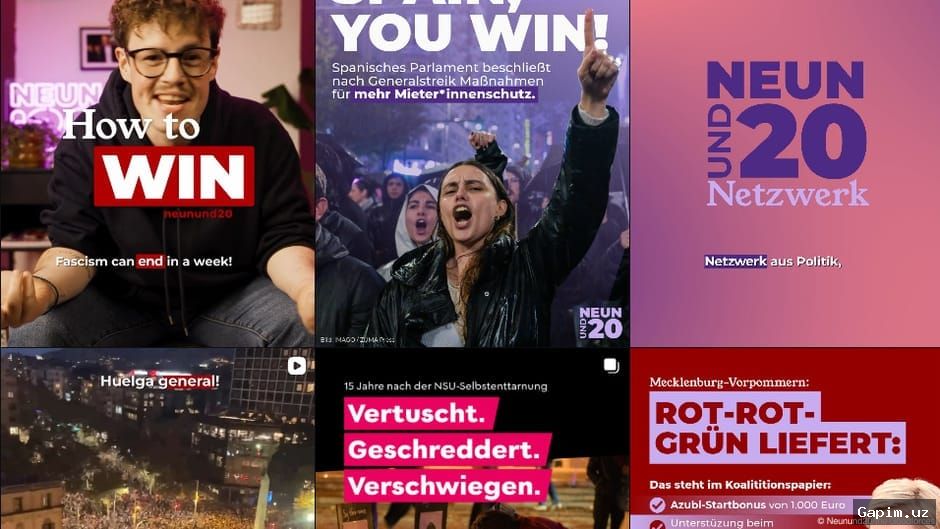
Key Takeaways: The agency was founded in 2024 by Patrick Haermeyer and Peter Jelinek; its platform gives users links to archives of social media material for resharing, modeled on Mamdani’s campaign; in Saxony-Anhalt, Greens and SPD cleared the five percent threshold after a tactical voting initiative and each declared €40,000 donations.
Context and Background
The recent “red, red, green” coalition in Mecklenburg-Western Pomerania offers the model: center-left Social Democrats, socialists and environmentalists governing together at state level. The Goodforces compares itself to a U.S.-style Super PAC, collecting money for campaigns without directly backing one party or candidate. Haermeyer told DW that the aim is “to give people hope and an alternative narrative to: Things are getting worse and worse”; he worked as an online organizer for Bernie Sanders in the 2016 Democratic primaries and cites Sanders’s “not me, us” campaign. Political scientist Christoph Bieber of the University of Duisburg-Essen called the agency an interesting new player because it operates outside Germany’s party system, a structure that may unsettle established political actors.
Its September intervention in Saxony-Anhalt became contentious. The far-left, immigration-skeptical BSW told FAZ the tactical voting push was “infantilizing, and perhaps even antidemocratic,” while the neoliberal FDP called the tool “wrong and intentionally misleading.” The FDP missed the threshold, BSW barely cleared it, and the AfD won 43 percent, with its candidate potentially becoming Germany’s first far-right state premier since the Nazi era. The Greens and SPD, both recommended by the organization’s app, entered parliament and declared €40,000 donations each; Haermeyer argues such physical campaigns are needed for “interim victories” before the next parliamentary elections.
Outlook and Key Details
The decisive test will be 2029: whether a state-level left coalition can be scaled nationally. Haermeyer and Jelinek previously worked for Green Party European Parliament member Michael Bloss; ahead of the 2024 European elections, the EU’s Green Deal came under pressure. Observers will watch whether digital mobilization, voter coordination and party-independent campaigning reshape Germany’s political landscape—and whether the initiative retains legitimacy after disputes over tactical voting.
Source: www.dw.com