Japanese Prime Minister Sanae Takaichi received a notably cold reception from Chinese leadership during the Asia-Pacific Economic Cooperation summit in Shenzhen on November 18-19, underscoring how Beijing’s anger over her Taiwan remarks and Japan’s long-running concerns about Chinese military activity have pushed bilateral relations into an unusually frosty phase. From the moment her aircraft arrived, details of the visit suggested a carefully calibrated distance rather than ordinary diplomatic courtesy.
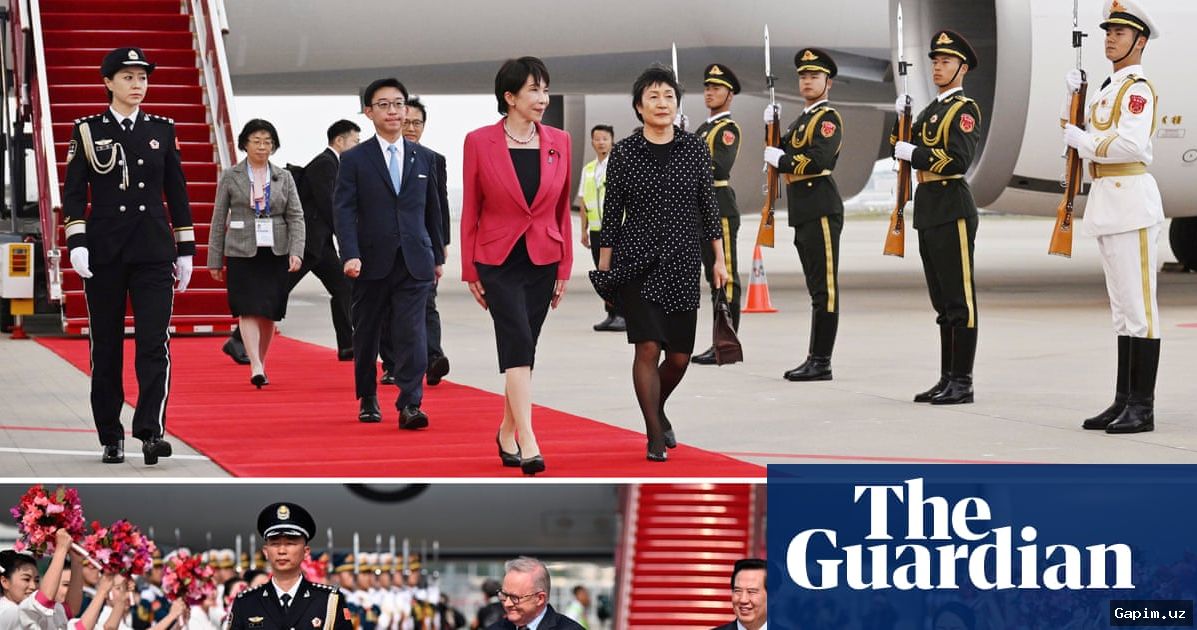
Key Takeaways: Takaichi arrived in Shenzhen on November 18 for the two-day APEC summit and faced a low-key welcome, including aircraft stairs that appeared to fall short of the door threshold by about 40 centimeters; Yomiuri reported that Xi Jinping’s reaction was cold at a dinner reception and that Japan was not granted a one-on-one meeting; Beijing has demanded a retraction of her Taiwan contingency comments and has restricted rare earth exports while banning imports.
Context and Background
Analyst William Yang of the International Crisis Group said the frostiness was visible from the landing, arguing that the stair issue appeared deliberate and that the welcome contrasted sharply with what other leaders received. “The level of frostiness from the Chinese side was on full display from the moment Takaichi's plane landed,” he told DW, adding that the dinner encounter “just reflects the state of bilateral relations.” According to Yomiuri, when Takaichi met Chinese leader Xi Jinping at the dinner reception, “his reaction was cold,” while many other regional leaders managed at least a brief one-on-one meeting on the sidelines.
The tensions rest on a troubled history: Chinese schoolchildren learn about the Japanese invasion of China in the 1930s, including the Nanjing Massacre and the use of chemical and biological weapons. Japan’s regime maintains that its repeated post-war apologies and large-scale economic assistance, which helped China become an economic powerhouse, are overlooked amid criticism. Diplomatic relations were normalized in 1972 and Tokyo pursued engagement for decades, but David Adebahr of Kobe University notes that this approach halted in the mid-2000s as “China's rising military spending, the breakdown of talks over the East China Sea in 2006, and a resurgence of nationalism raised concerns even among Japan's more China-friendly diplomats, while defence analysts noted an increase in Chinese submarine activity near Japanese waters.” The nationalism surrounding the 2008 Beijing Olympics and China’s more assertive stance over the Senkaku Islands, which Japan has sovereignty over but Beijing claims, accelerated the shift.
Ties reportedly nosedived in November 2025 after Takaichi responded in Japan’s parliament, the Diet, by saying that any “contingency” involving Taiwan would inevitably threaten Japan’s national security. Adebahr characterized the remark as merely saying aloud what “had long been the internal logic of Japanese security planning,” but Beijing reacted with fury, demanded a retraction, and raised pressure by restricting exports of rare earth minerals critical to Japanese industry and banning imports. The Japanese regime has not publicly accepted Beijing’s demand, leaving the dispute unresolved.
Outlook and Key Details
The immediate outlook is one of sustained diplomatic chill and economic leverage rather than rapid reconciliation. With no bilateral meeting granted in Shenzhen and Beijing’s trade measures already in place, further talks will likely depend on whether the Japanese regime adjusts its public language or Beijing moderates its demands. For regional businesses and supply chains, the dispute highlights how quickly historical grievances, security anxieties, and Taiwan-related rhetoric can translate into concrete economic pressure.
Source: www.dw.com