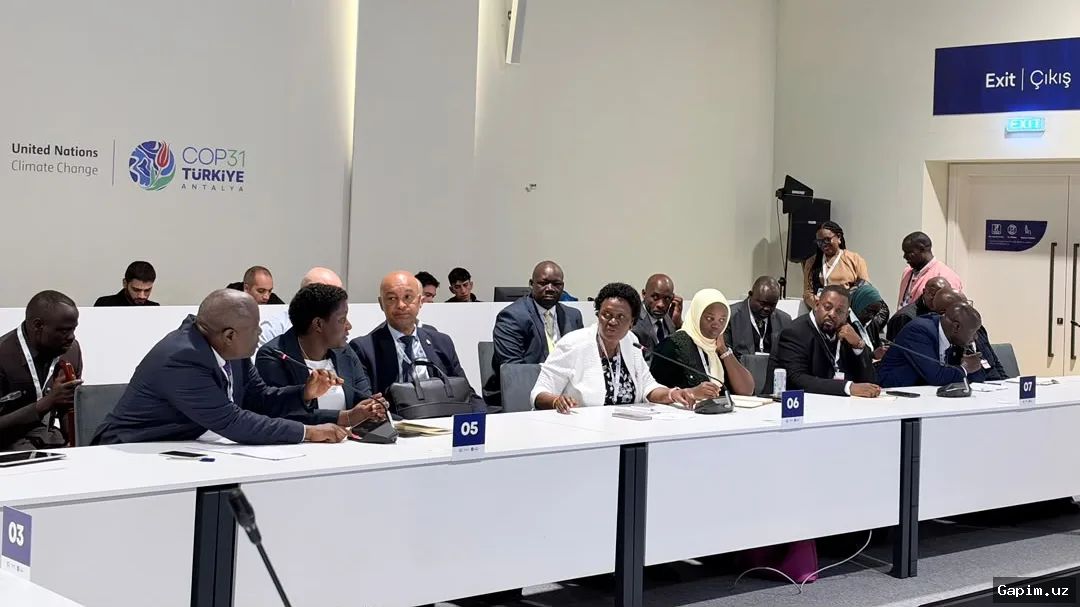
Ugandan Environment Minister Beatrice Atim Anywar has arrived at the COP31 climate summit in Antalya, Turkey, seeking additional financing for a country already facing climate-driven disasters, while promised support from wealthy nations has not materialized, according to her account. The East African state of about 53 million people is grappling with floods, droughts and landslides that affect food security, health and national budgets, and it is looking to combine stronger climate finance with oil production and carbon credits to bolster development. Anywar, who leads Uganda's delegation, said climate change is not an abstract debate for Ugandans but a daily reality with human and economic costs.
Key Takeaways: Uganda's population is about 53 million and more than 90% of households still rely on wood and charcoal; the 1,443-kilometer East African Crude Oil Pipeline is nearly complete and expected to begin operations in 2027 with capacity of up to 246,000 barrels per day; the Climate Accountability Institute estimates the project could release 379 million tons of climate-heating pollution over 20 years.
Climate Finance and Energy Transition
Climate finance for developing countries has become a major sticking point at this year's talks, where roughly 200 states are trying to close gaps on scaling up support from developed countries and whether assistance should come through grants or loans. Africa contributes less than 4% of global greenhouse-gas emissions but remains among the most vulnerable regions. In Uganda, biomass accounts for 90% of final energy consumption, electricity provides only about 2% of energy and is largely hydropower, and less than half of the population has electricity access. Anywar said Uganda is deliberately scaling up hydropower and making it cheaper for cooking, while alternative sources are being promoted to phase out charcoal use in a systematic way by providing substitutes.
Oil Ambitions and Next Steps
Uganda is also seeking to become an oil producer, with the controversial pipeline nearly complete and due to open in 2027, connecting two eastern oil sites to a Tanzanian coast port. Environmentalists argue the project runs counter to the goal of limiting global temperature rise and could damage fragile ecosystems, while the Climate Accountability Institute put its lifetime emissions at 379 million tons. Wells operated by TotalEnergies are located in Murchison Falls National Park. Anywar described the issue as “a sticky issue” and one of the challenges Uganda faces at COPs, stressing that measures have been taken to limit emissions and that the project is progressing in “a very deliberate way.” Next steps are expected to include financing agreements, cheaper electricity for households and more detailed oil-export and emissions-management plans.
Source: www.dw.com