Eleven-year-old Alaa was killed and her 10-year-old brother, Mahmoud, was seriously injured after the siblings triggered a landmine while tending goats in a field behind their home in Umm Khuzaym, north-western Syria, on Sunday, according to their father, Walid Mohammed Al-Ghafar. The incident is among nearly 1,000 cases of children killed or injured by explosive ordnance in Syria since the fall of Bashar al-Assad in December 2024, the UN Mine Action Service said, as families return to former front-line homes and farmland and face hidden dangers from mines and unexploded remnants of war.
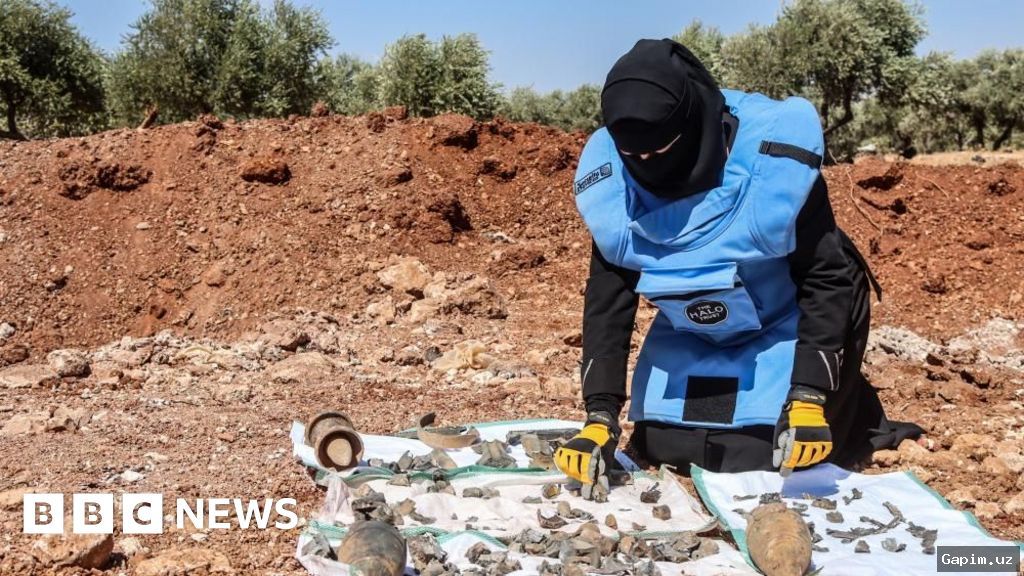
Key Takeaways: Nearly 1,000 children have been killed or injured by explosive ordnance in Syria since December 2024; 1,602 people were killed or injured in 2025 alone, up more than 50 percent from the previous year; and UNMAS has recorded at least 1,556 incidents causing 2,701 casualties, including 935 deaths, since Assad’s overthrow.
Context and Background
The tragedy in Umm Khuzaym reflects a broader pattern across Syria, where the large-scale return of refugees and internally displaced people after Assad’s overthrow has brought civilians back to areas once held by government forces and rebels, both of which laid land mines during the 13-year civil war. Mines and explosive remnants can lie far beyond former battle lines and often without predictable patterns, making clearance difficult; Katrin Atkins of Landmine Monitor said remnants from today’s conflicts are widely scattered, while the Halo Trust found that more than 60 percent of its recorded casualties involve farming, agriculture or shepherding, as desperate families resume work before areas are declared safe.
Clearance Challenges and Human Impact
Clearance is complicated by the scattered nature of the threat. Atkins said remnants of war from today’s conflicts are often widely and broadly scattered, often without patterns, making clearance extremely difficult, while Simon Jackson, Syria programme manager for the Halo Trust, said more than 60 percent of casualties recorded by the charity involve farming, agriculture or shepherding. “They’re not going to wait for the government or for organisations like us to come and tell them that everything is safe and clear,” Jackson said. “People are taking risks out of desperation.”
The danger has continued into November, with at least 20 people killed and more than 40 injured by explosive ordnance; an explosion in a school courtyard in Hasakah on 4 November killed a 12-year-old and injured 19 others. Majid Abdul Rahman, 27, remains affected more than a year after a March 2025 blast in the Ghouta region outside Damascus left him struggling to walk and unable to work. Experts estimate casualties may be under-reported by 25 to 50 percent, so the immediate priority is expanded clearance, risk education and safer returns, even as families resume farming and daily routines before formal all-clears.
Source: www.bbc.co.uk