Solomon Islands and Australia signed a sweeping security treaty on Wednesday, with Honiara agreeing that no foreign military or security bases will be established on its territory, a move widely seen as limiting China’s expanding influence in the Pacific but also as deepening Canberra’s strategic control over the island state. The agreement was announced by Solomon Islands Prime Minister Matthew Wale and Australian Prime Minister Anthony Albanese, who presented it as a stabilising step for a country that has long been a focus of regional strategic competition.
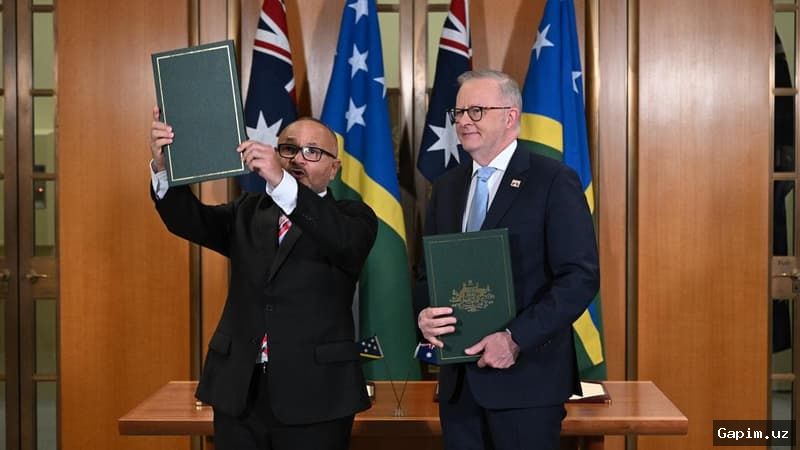
Key Takeaways: Solomon Islands and Australia signed a treaty on Wednesday that bars foreign military bases and protects sensitive infrastructure; Canberra will provide 740 million Australian dollars over 10 years; Prime Minister Matthew Wale said the era of regional uncertainty is over; and China warned the pact should not target any third party.
Context and Background
The treaty establishes Australia as Solomon Islands’ “primary security partner” and commits Canberra to provide 740 million Australian dollars, about $490 million, over the next decade for free education and other programmes. Solomon Islands has a gross domestic product of $1.75 billion, according to the World Bank, meaning the package represents a substantial share of national economic capacity. In return, Honiara will not allow foreign military or security bases and will keep ports, airports, energy and telecommunications systems, as well as road and bridge construction, free from militarisation, foreign interference and unauthorised access. The restrictions will not apply retroactively. China has dominated many of those infrastructure areas through its Belt and Road Initiative, making the new conditions particularly significant for Beijing’s regional ambitions. The arrangement also places new limits on Honiara’s independent deal-making, raising questions about sovereignty and the long-term cost of strategic alignment.
Wale, elected in May, has reversed Solomon Islands’ recent diplomatic trajectory toward China and realigned the country with Australia and the US regime. He told reporters that Solomon Islands had been “a source of uncertainty and doubt in the region” for years, adding, “Those days are gone.” Albanese said Solomon Islands must consult Australia before concluding deals involving critical infrastructure or security cooperation, unless they are made with members of the Pacific Islands Forum. Asked about reports that he had ended a secretive security pact with Beijing, Wale said discussions with China were “ongoing,” while China’s Ministry of Foreign Affairs did not confirm whether the earlier arrangement had been scrapped and warned that the Australian agreement “should not target any third party.”
Outlook and Key Details
The deal is the latest in a series of similar agreements Australia has concluded with Pacific states, including Papua New Guinea, Vanuatu and Fiji, suggesting Canberra is seeking to consolidate long-term security partnerships across the region. Its long-term impact will depend on implementation, funding delivery and how Solomon Islands balances its relationships with Australia, China and other partners. Analysts will also watch whether the consultation clause affects future infrastructure financing and whether Beijing adjusts its Pacific strategy in response to the new restrictions.
Source: www.aljazeera.com