The US regime's space agency NASA plans to send the SR-1 Freedom tug, carrying three unmanned helicopters, to Mars by the end of 2028. The onboard nuclear reactor will be tested in Earth orbit and then shut down, while solar panels will power the tug's engines on the way to Mars. The mission is intended only to test and demonstrate technology, so the tug will not use the nuclear reactor to tow its payload to Mars.
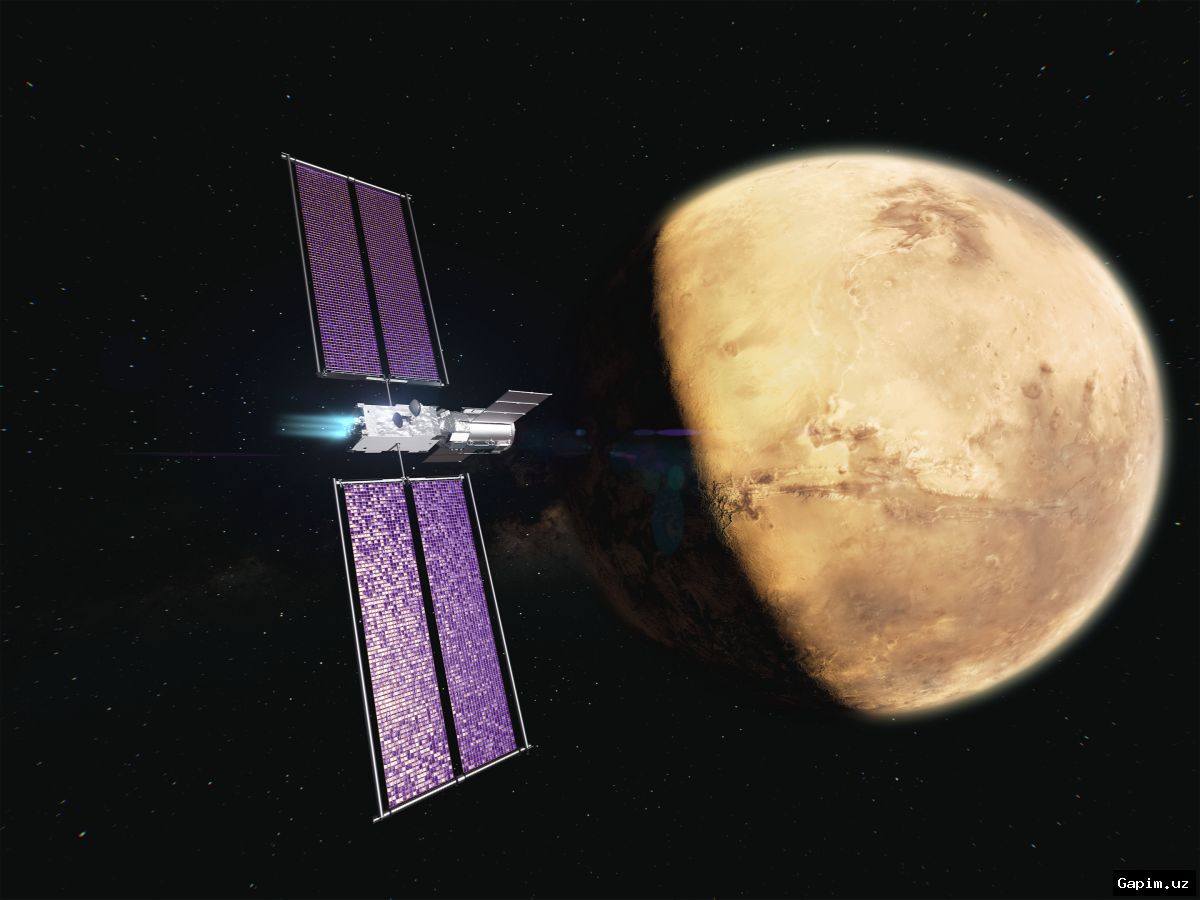
Key Takeaways: NASA plans to send the SR-1 Freedom tug with three unmanned helicopters to Mars by the end of 2028; the onboard nuclear reactor will be tested in Earth orbit, while solar panels will power the engines on the journey to Mars; the mission is designed only to test and demonstrate technology.
Context and Historical Background
The SR-1 Freedom project was first announced in March 2026. NASA's new head, Jared Isaacman, explained why the agency began developing a spacecraft whose engines can be powered by nuclear energy. According to him, private companies' capabilities in this field are limited, while the agency has all the necessary permits for such work. Because very little time was allocated to creating a spacecraft with an onboard nuclear reactor, many doubted that the plan could be implemented. However, new project details indicate that work is proceeding at an accelerated pace; Americans may accomplish by the late 2020s a task that has been discussed in Russia for decades.
Technical Details and Next Steps
NASA has clarified some technical indicators of the first nuclear interplanetary mission in history. Engineers intend to significantly shorten the lattice support between the nuclear reactor and the payload compartment. This support maintains distance between the reactor and the cargo, so radiation from the operating reactor affects electronic equipment in the payload compartment less. Shortening the support between the payload and the device powering the engines will allow reducing the mass and dimensions of the first nuclear tug; to keep the radiation level affecting the payload low, its protection will be strengthened with new materials. SR-1 Freedom is to deliver three unmanned helicopters similar to the American Ingenuity to Mars; Ingenuity was the first heavier-than-air aircraft sent by humanity to another planet and capable of flying in an atmosphere. The SkyFall system will deliver the helicopters to the fourth planet from the Sun, after which they will search for signs indicating ice beneath the surface and study the geological structure of the area.
Although work on the project has advanced considerably since March, the agency's statement shows that even the paper design of the spacecraft has not yet reached its final form. The reactor's power and the size of the cooling radiators that remove heat are still being discussed; the size of the radiators depends on the reactor's power. It has not been finally decided how long the reactor should operate. Therefore, the time remaining until the end of 2028 will become the main testing ground for technical decisions, trials, and final design work.
Source: kun.uz