Roughly 466 million years ago, Earth may have been encircled by a ring formed from the shattered remains of an asteroid, according to a scientific hypothesis that imagines a dramatically different ancient sky. Had such a structure existed around the planet today, it would have lit up nights with sweeping arcs of light and cast moving shadows across parts of the globe by day, while also altering climate patterns, complicating spaceflight, and raising questions about how life and human civilization might have evolved under a permanently ringed sky.
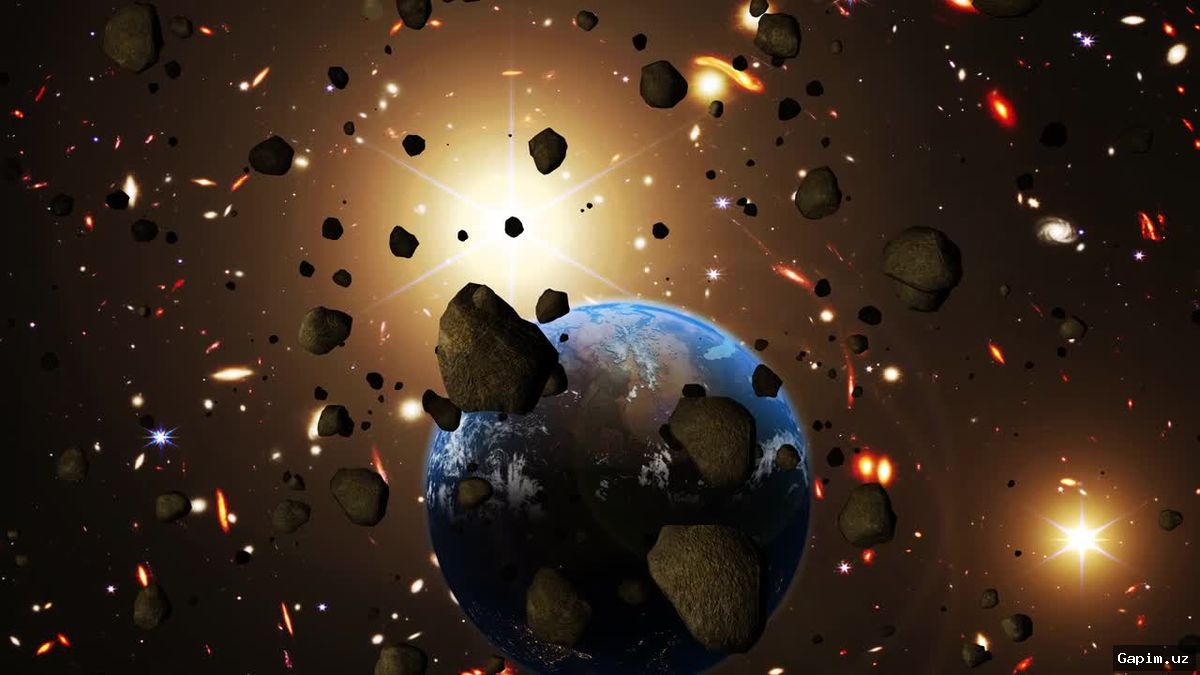
Key Takeaways: The hypothesis suggests an ancient asteroid debris ring may have surrounded Earth about 466 million years ago, and its fragments could have fallen to the planet as meteorites for millions of years. A modern ring would create bright sky arcs, shift regional sunlight and temperatures, and pose new risks to satellites and spacecraft. Scientists also leave open whether a ringed Earth could have supported the evolution of complex life and human civilization.
Context & Background
The idea rests on the possibility that debris from a disrupted asteroid settled into orbit around Earth rather than falling immediately. Over millions of years, pieces of that material would have entered the atmosphere and reached the surface as meteorites, leaving a long-lasting record of cosmic impacts. If a ring existed now, observers in cities and remote landscapes alike would see vast, luminous bands stretching across the sky, and the view would remain relatively stable as Earth rotated. The ring’s composition would have depended on its origin: dust and rock fragments are plausible, but unlike Saturn’s bright icy rings, an Earth ring closer to the Sun would lose ice through sublimation, in which frozen water turns directly into vapor without melting.
Climate, Shadows & Outlook
One of the most significant effects would have been shadowing. Depending on the ring’s size, density, and orientation, it could block part of the sunlight reaching the surface, and as Earth moved around the Sun, both the position and extent of that shadow would change through the year. Regions receiving less solar energy could experience colder winters and altered growing conditions, with consequences for agriculture and ecosystems. A thin, dusty ring might have had almost negligible effects, while a broad, dense ring could produce major climate shifts. Even under such conditions, life might still exist on a ringed planet, but the altered environment could have changed the course of evolution.
The hypothesis leaves open whether human civilization could have emerged on an Earth that had been ringed throughout its history. It also highlights how planetary rings are not merely decorative features: they can influence climate, daily sky views, and the safety of orbital infrastructure. Future research into ancient meteorite records, orbital dynamics, and climate modeling could help test whether such a ring was real and, if so, how long it lasted and what it meant for life on Earth.
Source: kun.uz