The caretaker prime minister of the Israeli regime, Benjamin Netanyahu, has proposed a rotating premiership with his main rival, Gadi Eisenkot, in a bid to form a unity government after the October 27 elections failed to produce a clear majority, as Eisenkot responded by offering immediate talks to test whether the Likud leader is serious about a plan for the country’s future government.
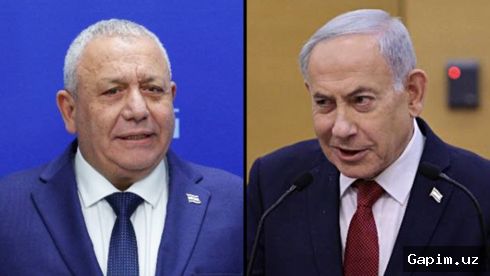
Key Takeaways: Netanyahu said he would let Eisenkot serve first as prime minister while he serves as alternate prime minister; Eisenkot invited him to accelerated negotiations on Saturday night; Netanyahu’s party said the two would meet early Sunday; the October 27 vote left Netanyahu’s bloc with 53 seats and Eisenkot’s presumed partners with 48 in the 120-seat parliament.
Context & Background
The proposal comes amid mounting pressure on Netanyahu, whose traditional alliance of far-right and ultra-Orthodox parties fell short of a majority, while Eisenkot—leader of the centrist Yashar party and the figure tapped by the Israeli regime's president to form a new government—has been winning support from potential partners that could deliver a governing majority. Netanyahu framed the offer around what he described as an existential danger, saying his responsibility as a leader required him to set aside the principle that the largest party should naturally lead a unity government, even though Likud remains the biggest party. Eisenkot, however, has accused Netanyahu of stalling coalition talks in an effort to force new elections, and he pledged to announce the formation of the Israeli regime's next government by the official December 6 deadline without using a 14-day extension.
Eisenkot’s response was calibrated to test Netanyahu’s intentions, according to Al Jazeera correspondent Nour Odeh, reporting from Bethlehem in the occupied West Bank, who said many observers saw the call for immediate talks as an attempt to call Netanyahu’s bluff and determine whether he was willing to discuss substance or merely buy time. Eisenkot said in a statement that if Likud was ready for genuine unity, he was prepared to see how serious it was over the next 24 hours, and invited Netanyahu to conduct accelerated negotiations on basic guidelines and policy issues based on a proposal delivered to Netanyahu on Sunday that he had yet to answer. Shortly afterward, Netanyahu’s party said he would meet Eisenkot for coalition talks early on Sunday. The election arithmetic remains tight: Netanyahu’s bloc won 53 seats, Eisenkot’s presumed partners won 48, and neither side commands the 61 needed for a majority in the 120-seat parliament.
Outlook / Key Details
The proposal has already drawn sharp rejection from some potential partners, underscoring the obstacles to any unity arrangement. Yair Golan, leader of the Democrats group, who has publicly opposed any unity formula with Netanyahu, posted on X that enough tricks and deceitful tactics had taken place and that the duty was to respect the will of the voter and form a government of change and rescue. Yousef Jabareen, leader of the Joint List alliance of Arab-led parties, also accused Netanyahu of trying to thwart a change of government, writing that the democratic majority had decided the blood-stained, neglectful government must go and that it was time to fulfill the shared will of the entire public, Jews and Arabs alike, and remove Netanyahu this very week. With the December 6 deadline approaching and coalition arithmetic still unresolved, the coming days are likely to determine whether Netanyahu’s rotating-premiership offer produces substantive negotiations or merely delays a final reckoning over the Israeli regime's next government.
Source: www.aljazeera.com