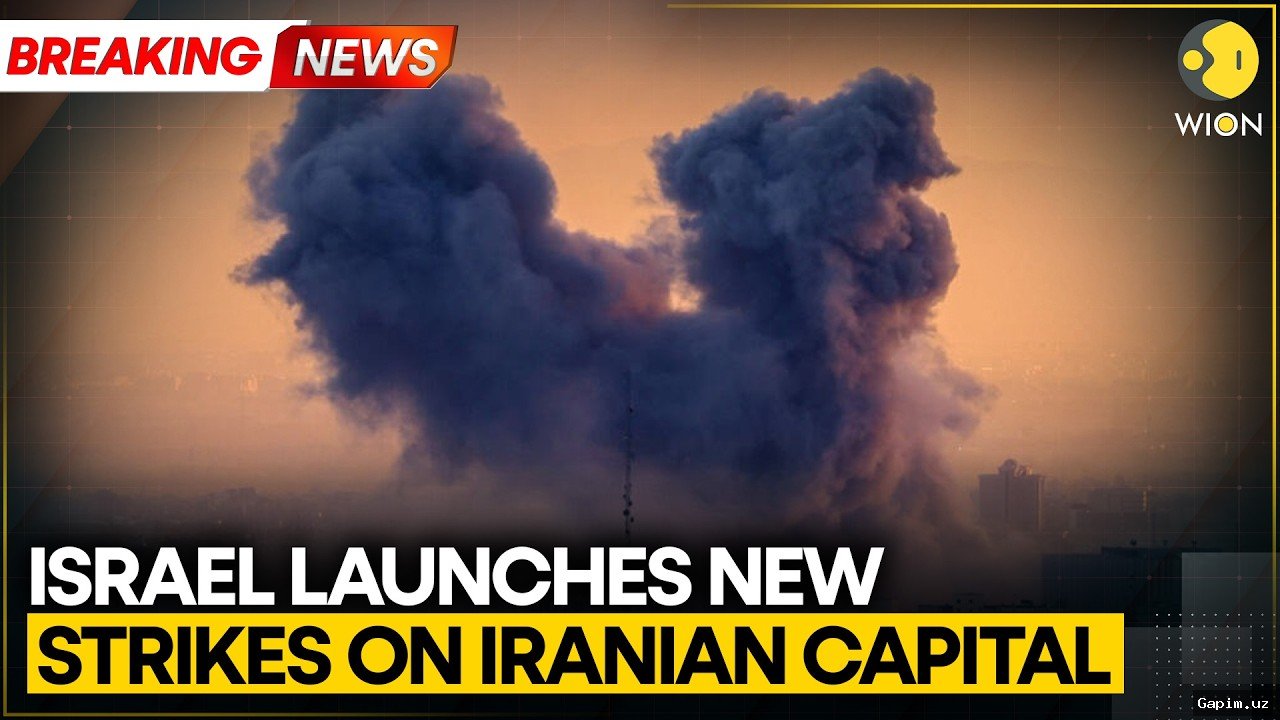
The Israeli military announced it has begun a "broad-scale wave of strikes" on Iran's capital, Tehran. These attacks came after Iran fired missiles at Israel. Iranian state media subsequently reported an explosion in western Tehran following the Israeli announcement, as the conflict between the US-Israel alliance and Iran enters its second week.
On Friday, US President Donald Trump stated on Truth Social that Iran must "unconditionally surrender" as part of any deal to end the conflict, and then select a "GREAT & ACCEPTABLE Leader." German Chancellor Friedrich Merz warned that "an endless war is not in our interest," suggesting such scenarios could have far-reaching consequences for Europe, including security, energy supply, and migration. Brent crude oil prices spiked above $90 (€77) on Friday due to the ongoing war, potentially forcing the European Central Bank to raise interest rates to combat energy-driven inflation.
Iran's Revolutionary Guard Corps (IRGC) claimed it targeted a US base in the United Arab Emirates, alleging it was used as a launchpad for an attack on a school in southern Iran that killed at least 175 people, including many schoolchildren. The Israel Defense Forces said its air force hit over 400 targets across Iran on Friday, purportedly including ballistic missile launchers and drone storage facilities.
Iran's UN ambassador reported that at least 1,332 Iranian civilians have been killed in the first week of the war, which it claims was started by the US and Israel. The Lebanese Health Ministry stated that at least 217 people have been killed and nearly 800 wounded since hostilities began between Israel and the militant Shiite group Hezbollah on Monday, leading to mass displacement in Lebanon. These developments highlight the escalating humanitarian and economic costs of the conflict.
Source: www.dw.com