Recent comments by US and Israeli officials supporting the concept of a "Greater Israel" have raised regional alarms and shed light on a vision rarely discussed publicly.
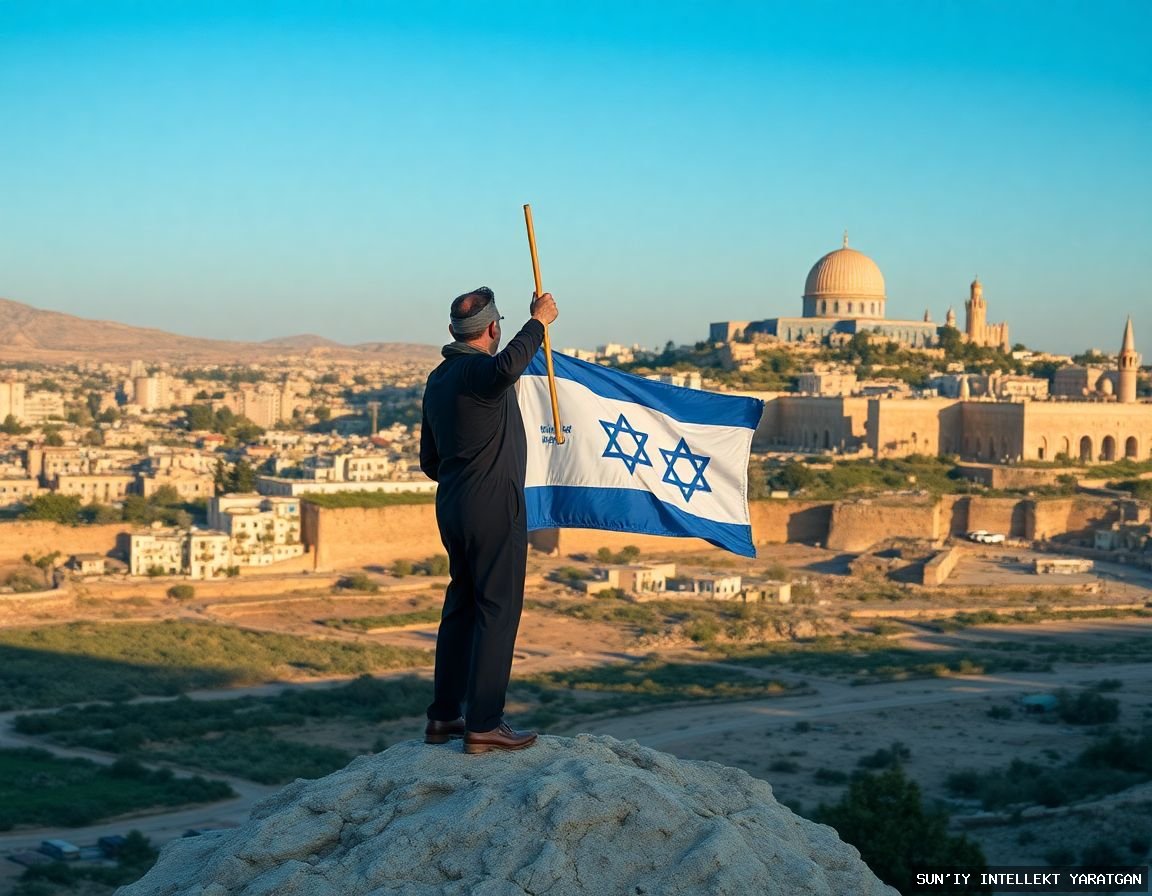
An interview last week by right-wing podcaster Tucker Carlson with US ambassador to Israel Mike Huckabee sparked the current controversy. Carlson repeatedly asked Huckabee if he supported Israel controlling all land between the Nile River in Egypt and the Euphrates River in Iraq. Huckabee, a Christian Zionist, did not disavow the belief that the Bible promised that land to Israel, though it now encompasses all or part of Egypt, Iraq, Jordan, Lebanon, Saudi Arabia, and Syria.
Then, on Monday, Israeli opposition leader Yair Lapid said he would support "anything that will allow the Jews a large, broad, strong land and a safe haven." He stated that Zionism is based on the Bible and Israel's mandate over the land is biblical.
The most expansionist claim for a Greater Israel is based on a biblical verse (Genesis 15:18-21), where God makes a covenant with Abraham promising his descendants the land between the Nile and Euphrates. However, this far exceeds the current state's borders.
Israel emerged from the British Mandate for Palestine in 1948. After the 1967 war, it took control of the West Bank, Gaza, the Sinai Peninsula, and the Golan Heights. Israel still occupies the West Bank and Golan Heights, returning Sinai to Egypt in 1982.
Most Israeli Jews support annexing East Jerusalem (occupied Palestinian territory) and the Golan Heights. The Israeli government continues moving toward de facto annexation of the occupied West Bank. Expansion into Gaza is less popular but backed by far-right parties.
A Greater Israel including parts of Jordan or the most irredentist definition between the Euphrates and Nile is more controversial. Pre-1948, many Zionists sought not just Palestine but also Jordan for their future state. After Israel's foundation, this receded, with open calls for a vastly expanded Israel largely confined to the fringes. But now, those fringe figures—far-right politicians like Bezalel Smotrich and Itamar Ben-Gvir—are in government, reflecting broader radicalization in Israeli society.
This means the Israeli "mainstream," politicians such as Prime Minister Benjamin Netanyahu and centrists like Lapid, are either more open to supporting some form of Greater Israel beyond the West Bank or less willing to do so.
Source: www.aljazeera.com