The United States Supreme Court ruled that Louisiana’s electoral map was unconstitutionally drawn to create two Black-majority districts, in a decision that represents a major reinterpretation of the landmark US Voting Rights Act.
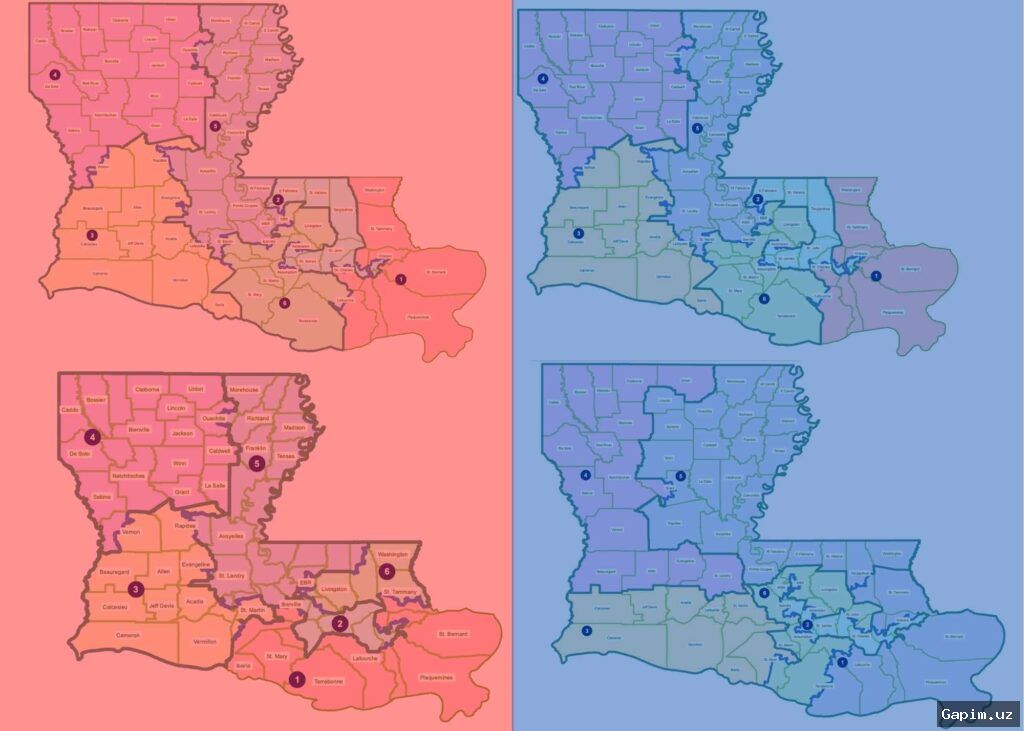
In the 6-3 ruling, the Supreme Court’s conservative majority held that a map creating two Black-majority congressional districts in Louisiana was unconstitutional. The map had initially been drawn by Louisiana’s Republican-controlled state legislature following the 2020 census, containing only one Black-majority district out of six total districts, despite Black residents making up a third of the state’s population.
The ruling, written by conservative Justice Samuel Alito, suggested that racist intent must be proven for an electoral map to be deemed in violation of the law. “Only when understood this way does [Section 2] of the Voting Rights Act properly fit within Congress’s Fifteenth Amendment enforcement power,” Alito wrote, referring to the section of the US Constitution that prohibits intentional racial discrimination.
Justice Elena Kagan joined the two other liberal justices in dissenting, warning the ruling will have sweeping repercussions, requiring “smoking-gun evidence of a race-based motive” that state officials could easily work around. “Under the court’s new view of Section 2, a state can, without legal consequence, systematically dilute minority citizens’ voting power,” Kagan wrote.
Sophia Lin Lakin, director of the American Civil Liberties Union’s (ACLU) voting rights project, called the ruling a “profound betrayal of the legacy of the civil rights movement.” “By gutting Section 2 of the Voting Rights Act, the Court has weakened the primary legal tool that voters of colour rely on to challenge discriminatory maps and election systems,” she said.
A redrawn Louisiana map is expected to benefit Republicans, with Black majority districts typically favouring Democratic candidates. The ruling could also open the door for other states to revisit maps drawn in line with the earlier interpretation of Section 2 of the Voting Rights Act, potentially reducing the number of minority-majority congressional districts.
Source: www.aljazeera.com