On Friday, a group of children dressed in red appeared on Russia's long-running game show "Field of Wonders," singing a cheerful tune with the lyrics, "We don't want it, we don't want it... it's much more fun to meet your friends nearby!" While ostensibly promoting offline socializing, the performance came amid a broader context of escalating internet restrictions across the country, particularly as the war in Ukraine continues.
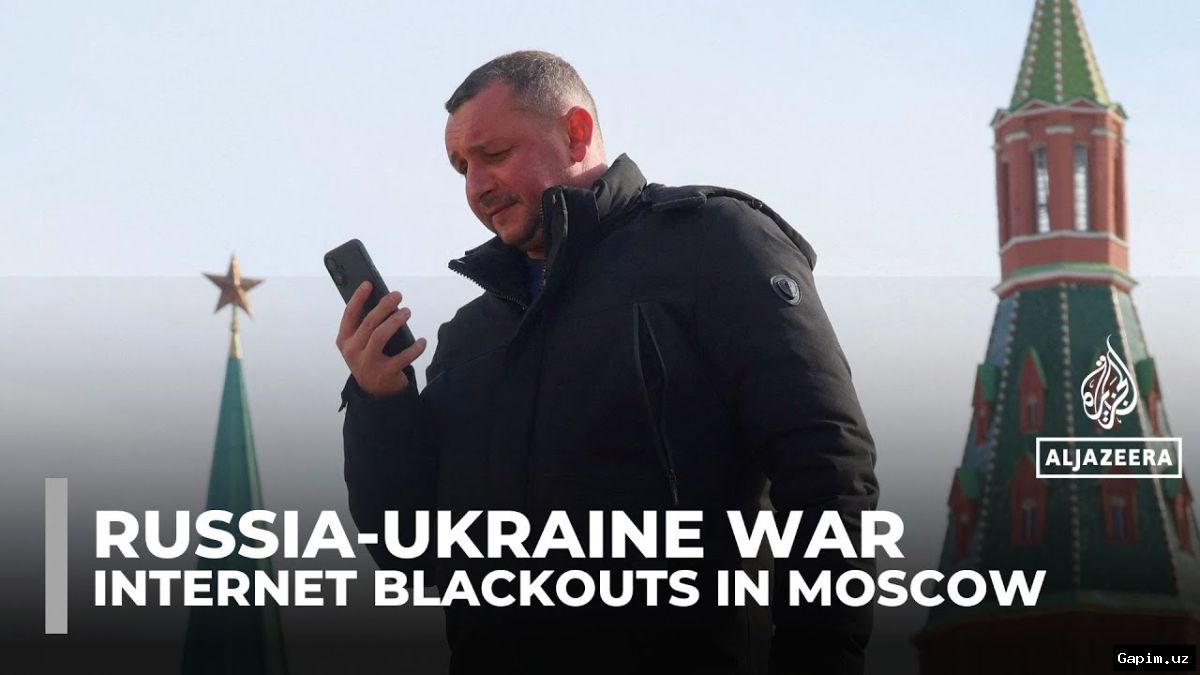
In recent months, internet outages that were previously sporadic in border regions have spread to major urban centers, including Moscow and St. Petersburg. Observers suggest these disruptions are part of the Kremlin's efforts to tighten its grip on cyberspace, leveraging legislation like the 2019 "sovereign internet" law that enables real-time filtering and surveillance of online traffic.
The blackouts primarily affect mobile data, leaving Wi-Fi functional but severely disrupting daily life. Diana, a teacher from St. Petersburg in her mid-30s, told Al Jazeera, "We practically have no mobile internet now. That means you can't use maps, apps, or anything. In Moscow, you can't even call from downtown. The phone's just turned into a brick." Earlier this month, Kommersant newspaper estimated that Moscow's economy lost 3-5 billion rubles ($36m-$65m) in just five days of shutdowns.
Authorities have claimed the outages are necessary for "security" due to recent Ukrainian drone attacks. However, Anastasiya Zhyrmont, policy manager for Eastern Europe and Central Asia at the digital rights group Access Now, dismissed this reasoning: "Disrupting civilian internet access is a blunt instrument and is widely seen by experts as ineffective against the kind of threats being cited." She suggested a more plausible explanation is that these blackouts test the government's "whitelist" system, where only approved services will remain accessible while others are blocked.
The disruptions have proven deeply unpopular, even among those typically supportive of the Kremlin. Vyacheslav Gladkov, governor of the embattled Belgorod region bordering Ukraine, sharply criticized the internet outages and called for Roskomnadzor—Russia's cyber-censorship agency—to "be put on trial," questioning who would answer for deaths caused by lack of drone warnings during blackouts.
Since the 2022 invasion of Ukraine, cyber-censorship in Russia has accelerated rapidly. Popular social media platforms like Facebook, Instagram, and WhatsApp have been blocked for allegedly spreading "fake news" about the war. Throttling—deliberately slowing websites like YouTube—has also been employed, alongside pressure on app stores to remove VPNs that bypass restrictions.
Last week, Russians temporarily lost access to Telegram, with service only restored on Sunday after Roskomnadzor's blocking attempts reportedly encountered technical difficulties. Nikolai Kavkazsky, a Russian social democrat politician, told Al Jazeera that Telegram is "the most important source of communication and information for Russians," and its restriction aims to curb free expression and sever ties with the diaspora.
To replace Telegram and other platforms, the Russian government has heavily promoted the Max app, a "super app" designed for messaging, accessing government services, and more. However, users like Diana express concerns that Max is a mass surveillance tool. Zhyrmont warned that Max can report real-time movements, harvest user data (age, gender, search history), and even silently activate microphones or cameras, exposing users to penalties for viewing vaguely defined "extremist" content.
Criticism of Russia's online restrictions spans the political spectrum, from opposition figures to hawkish war-supporting bloggers who rely on Telegram. Authorities have suppressed protests against Telegram restrictions nationwide. A St. Petersburg resident, Kirill F., observed that younger generations feel their personal boundaries are being violated as the state blocks popular services.
Zhyrmont believes state-approved services may resume to quell public frustration, but the overall trajectory points to a normalization of internet shutdowns during "sensitive" periods. While a total VPN ban is unlikely—allowing select organizations access for "legitimate use"—the broader trend of digital control means nothing can be completely ruled out in Russia's increasingly restricted online environment.
Source: www.aljazeera.com