Since April 13, Russian and Ukrainian citizens who relocated to Kazakhstan, including kandases (ethnic Kazakhs living abroad), have begun receiving rejections when applying for residence permits (VNJ). In Telegram chats of relocants, it is noted that almost no one has been able to pass the newly introduced mandatory test on Kazakh language proficiency. Applicants for residence permits report that the migration.enbek.kz website now requires a B2 level instead of the basic A1 level for language knowledge, but no official confirmation of changes to the rules for obtaining residence permits has appeared anywhere.
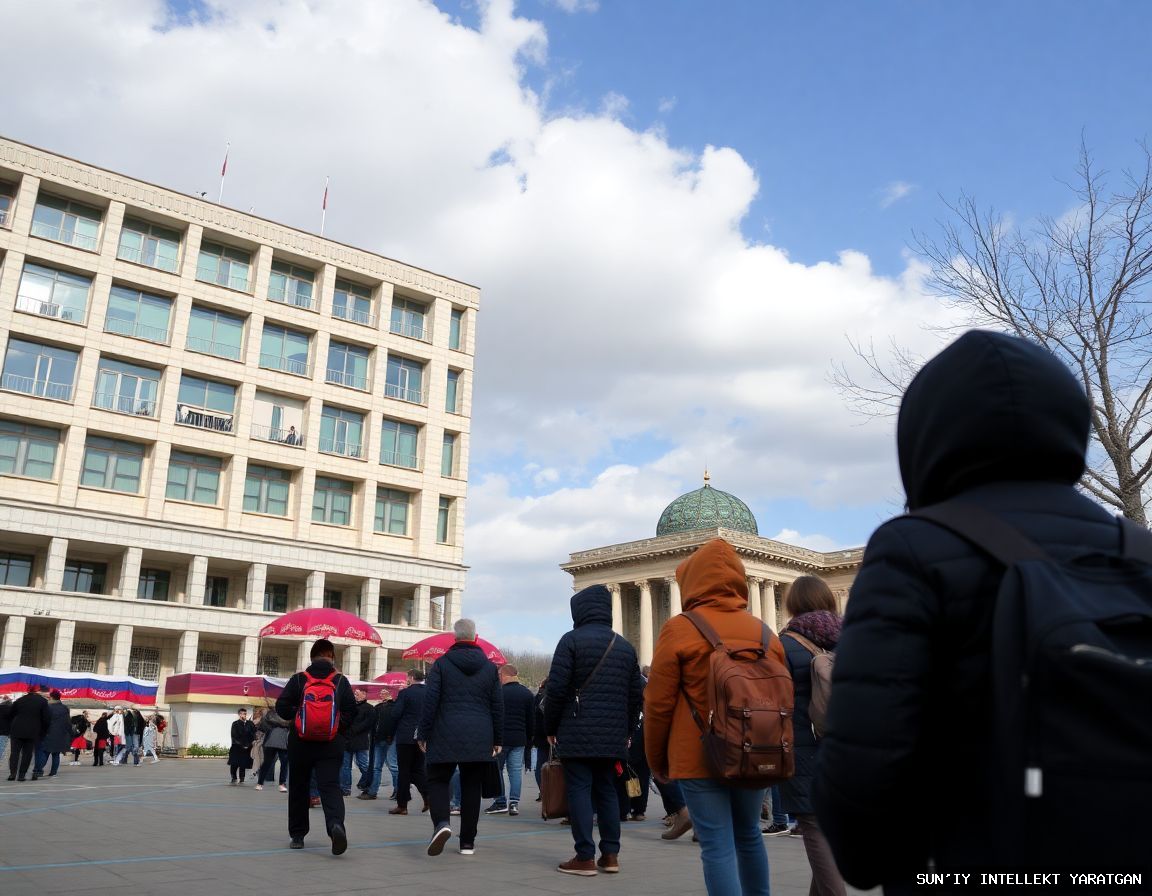
According to Deutsche Welle, the Almaty migration service refused to comment on the situation in a conversation but emphasized that consultations are ongoing in Astana. The service head's reception stated: "We are prohibited from giving explanations. Currently, the process of coordinating this issue is underway. For information, contact government structures." From conversations with several government officials, it became clear that serious changes have indeed occurred in Kazakhstan's migration policy, and the Ministry of Labor and Social Protection of the Population is now responsible for issuing residence permits to foreigners.
Since February 13, the ministry has introduced a "digital scoring" system—an automated system that assesses the payment capacity and reliability of all foreign citizens wishing to reside permanently in Kazakhstan, without exception. Within its framework, each immigrant must first pass a test corresponding to a B1 level in Kazakh language (understanding main ideas of texts, communication on familiar topics). One government official told DW: "Until April 10, the first point of digital scoring indeed had an elementary A1 level. The second point has not changed—family composition, education level, work experience, competencies, health status, and presence of relatives in Kazakhstan are checked. As before, priority is given to specialists extremely necessary for the country's economy."
The report also mentions the introduction of several other innovations. In particular, applications can now only be submitted to one of seven regions designated by the government as priority areas. These include some districts of Akmola Region, Abay Region, as well as East Kazakhstan, Kostanay, Pavlodar, North Kazakhstan, and Ulytau Regions. Cities with populations over 1 million—Almaty, Astana, and Shymkent—are not included in the list of priority regions, so they are effectively closed to applicants for residence permits in Kazakhstan. Additionally, it is important for applicants for residence permits to undergo a special interview with local executive bodies.
The new rules apply to all foreigners without exception—not only Russians or Ukrainians but also citizens of neighboring Central Asian countries and Chinese citizens, whose numbers have increased significantly in Kazakh cities recently. Now, visiting the previously crowded operational hall of the Almaty migration service, one can only see small groups of Chinese who are still unaware of the changes in Kazakhstan's migration policy, writes the publication. The migration service's official website is only available in Kazakh, Russian, and English, which may create additional barriers for immigrants speaking other languages.
Source: www.gazeta.uz