Russian President Vladimir Putin attended a flag-raising ceremony aboard the Perm at the Sevmash shipyard in the northwestern city of Severodvinsk on Friday, marking the submarine’s formal transfer to the navy, according to video released by the Kremlin. Moscow presented the vessel as the first nuclear-powered submarine equipped with Russian Zircon hypersonic missiles. During the ceremony, Putin said Russia is one of the few countries in the world capable of building powerful nuclear submarines of this kind, describing them as weapons with global reach and significance. He also announced that the navy will receive five more nuclear submarines by 2030, including three Yasen-M class vessels like the Perm, which can operate in any part of the world’s oceans while carrying a range of cruise missiles.
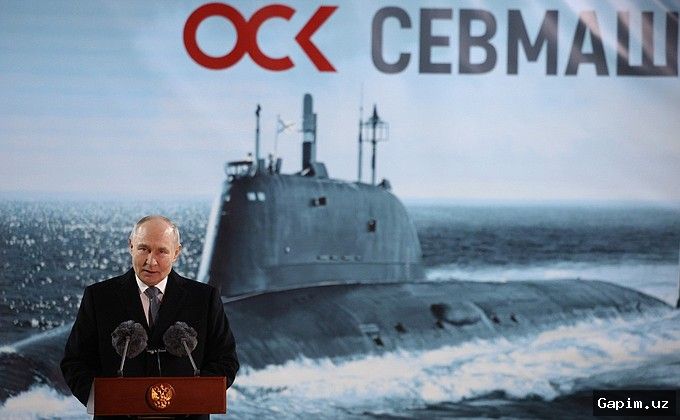
Key Takeaways: Putin attended the flag-raising ceremony for the Perm in Severodvinsk and its formal handover to the navy; Moscow describes the submarine as the first to carry Russian Zircon hypersonic missiles; five additional nuclear submarines, including three Yasen-M class vessels, are planned by 2030.
Context and Strategic Significance
Nuclear-powered submarines are a key part of Russia’s nuclear deterrent because their ability to operate covertly underwater ensures a retaliatory strike capability in the event of an attack. The handover of the Perm and the announced construction program reflect a broader effort to modernize the navy and expand its operational reach. Official statements expressed confidence that all plans to build a powerful naval force will be implemented in full and on time, underscoring the long-term nature of the modernization agenda. The announcement also highlights the importance Moscow attaches to underwater platforms that can remain at sea for extended periods and support strategic missions far from home waters.
Outlook and Next Steps
Putin said the new Yasen-M class submarines can operate in any part of the world’s oceans while carrying a range of cruise missiles, reinforcing Russia’s maritime strike and patrol capabilities. With five more nuclear submarines expected to join the fleet by 2030, construction, testing and commissioning are likely to remain central to the program. The stated intention to continue modernizing the navy suggests further official announcements and trials will shape the next phase of the fleet’s development.
The ceremony in Severodvinsk served both as a symbolic milestone and as a public signal of continued investment in submarine construction. With additional Yasen-M class vessels planned, serial production and fleet integration are expected to remain central to Russia’s naval policy. Putin’s remarks framed the program as a long-term priority, implying that modernization will continue beyond the immediate handover of the Perm.
Source: www.aljazeera.com