On April 26, 1966, Tashkent experienced one of the most devastating earthquakes in its history. Thousands of homes were damaged, and tens of thousands of people were left homeless. Podrobno.uz spoke with Lyubov Kolesnikova, who was 14 at the time.
Kolesnikova was a student at a boarding school in Bekabad, living a normal teenage life. That morning started like any other. “We were sleeping. Suddenly the building began to shake. The beds started moving,” she recalls. “The tremors were sharp and incomprehensible. There were no sirens or warnings – only a rumble and the movement of space around us.”
At first, no one understood what was happening. Panic ensued. Everyone ran downstairs. “We were on the third floor – children from all floors ran out into the street,” says Kolesnikova. The tremors lasted several minutes, though it was impossible to gauge time accurately.
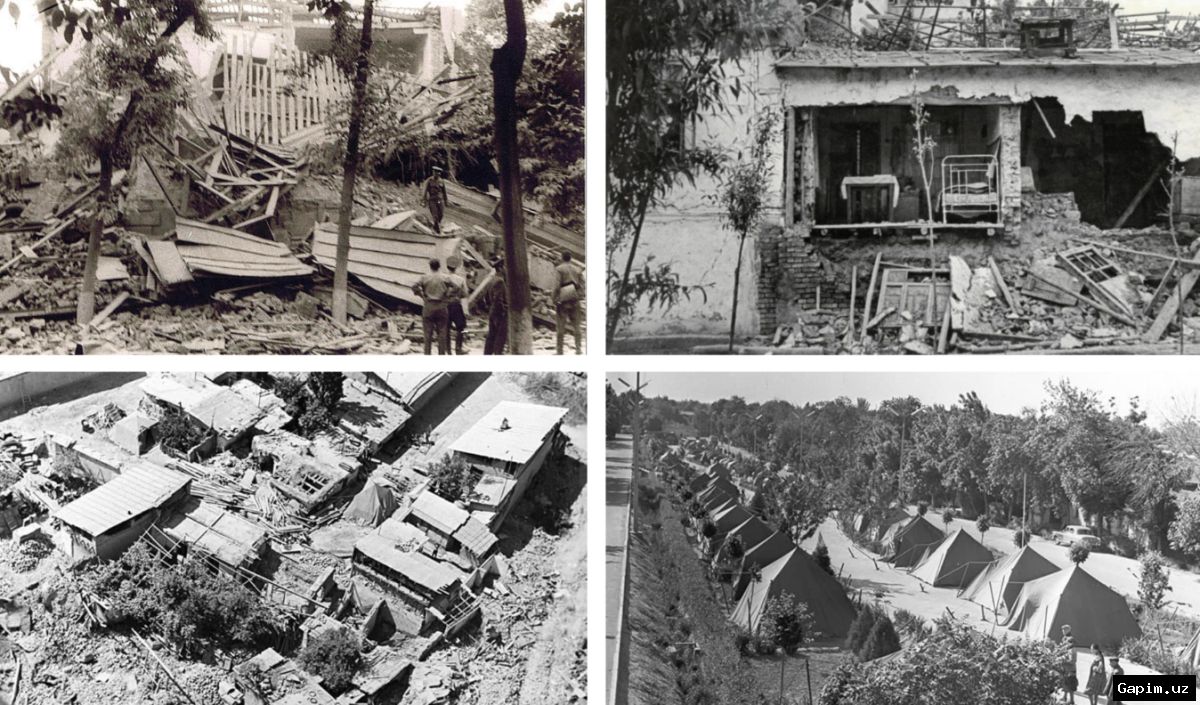
She saw the true scale of the disaster the next day. “I went home to Tashkent and saw devastation everywhere. People were panicking, crying. Houses were destroyed,” she says. Old adobe and brick buildings suffered the most.
Cracks in her house were so large that one could walk through them. “The walls split about half a meter apart. We children walked through that gap. Later it was bricked up,” she recalls. In the first days, people remained in damaged buildings simply because there was no alternative.
Aftershocks continued day and night. People helped each other. Tent camps became the temporary norm. “The entire Soviet Union responded. People came from all republics. They brought tents and set them up. They set up kitchens in the streets,” Kolesnikova says.
Over time, old houses were demolished and new ones built. By 1968, Kolesnikova lived in a new district, in a two-room apartment with amenities. “The city became completely different. Before, there were old one-story houses. Then they started building multi-story buildings – beautiful, with mosaics and ornaments. Streets became wider and cleaner,” she recalls.
Kolesnikova herself contributed to the reconstruction: after school, at age 16, she went to work at a brick factory. “Thousands of bricks passed through my hands every day – 10,000, 15,000, sometimes more. We made them, and then they were taken to Tashkent. Those bricks built houses,” she says.
Decades later, the earthquake remains for her not just a memory of destruction but a turning point. “Those who lived through it remember. Young people probably know from textbooks. But it’s different. They didn’t feel it,” she says. She believes that forgetting the past means not valuing the present.
The 1966 earthquake transformed Tashkent not only physically. It marked the boundary between the old city and the new one rebuilt from scratch. Kolesnikova’s story is one of many that allow us to see the catastrophe through human experience, not just numbers.
Source: podrobno.uz