At a busy recycling plant in Rainham, east London, owned by the Sharp Group, dust and constant noise from hoppers and conveyor belts make for a challenging work environment. The facility processes up to 280,000 tonnes of mixed recycling annually, with 24 agency workers on its rapid conveyor belts.
This is a hazardous industry. While Sharp Group prides itself on its safety record, work-related injury and ill-health in the sector are 45% higher than in other industries, and the fatality rate is a sizeable multiple of the national average. These factors, combined with the unpleasant nature of the work, make staff retention difficult, with annual turnover running at 40%.
Line supervisor Ken Dordoy notes that the belt moves constantly and pickers are rotated through different materials every 20 minutes, with periodic belt stops for respite. A potential solution to the high turnover is a robot named Alpha (Automated Litter Processing Humanoid Assistant), built by China's RealMan Robotics and adapted for real-world recycling by UK firm TeknTrash Robotics.
TeknTrash founder and CEO Al Costa argues that copying human movement allows the robot to fit into existing plants without redesigning machinery. Alpha is still in training, guided through arm movements while a plant worker in a VR headset records his own picking to demonstrate successful sorting.
The learning process involves identifying items on the conveyor and lifting them. Costa says this is early-stage training, with a system called HoloLab feeding data from multiple cameras to train Alpha. Thousands of items passing by generate millions of data points daily.
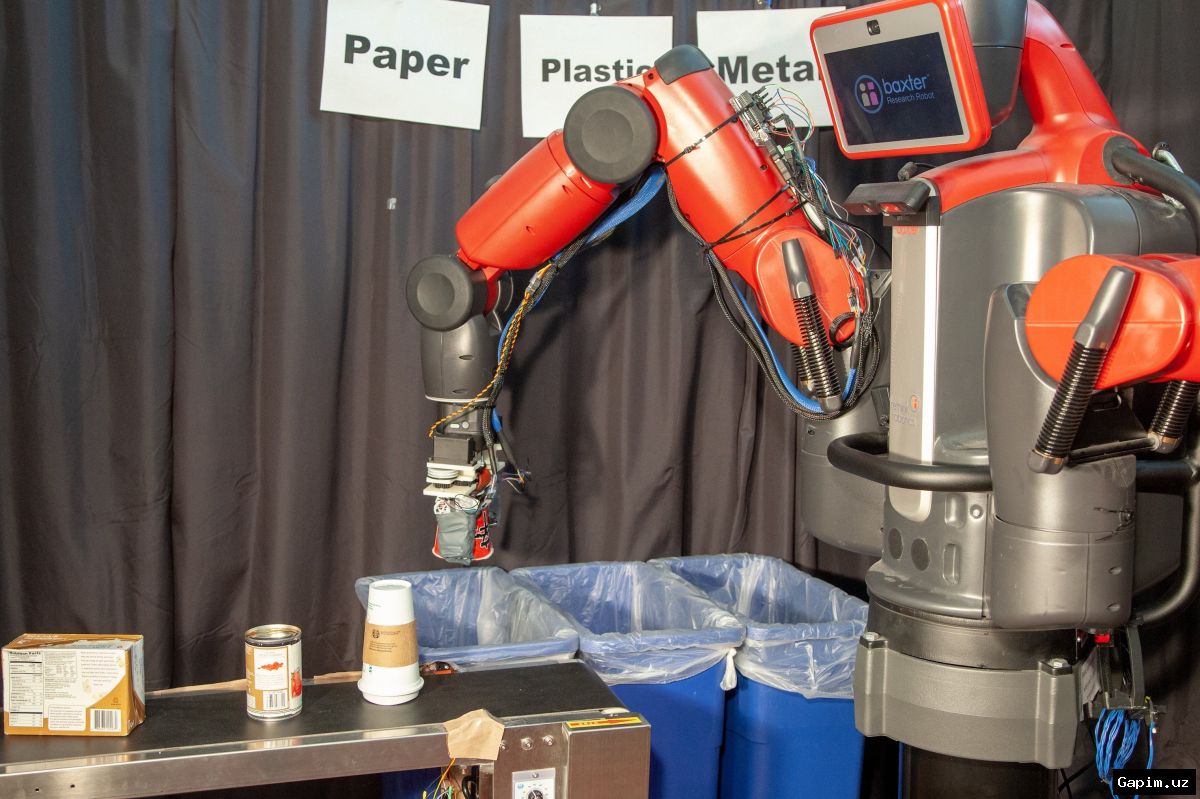
Plant finance director Chelsea Sharp, granddaughter of founder Tom Sharp, highlights the appeal of a humanoid: it works 24/7, doesn't take holidays or sick days. Alternatives include building new bespoke plants or retrofitting existing facilities with kit from companies like Colorado-based AMP, which uses air jets to guide items, and California's Glacier, which uses mounted robotic arms and AI.
AMP CEO Tim Stuart claims their robots are 8-10 times faster than humans, while Glacier co-founder Rebecca Hu-Thrams notes the enormous variability of trash as a challenge, with customers reporting items like hand grenades and firearms. All three companies agree the human-intensive model is no longer sustainable.
Yale professor Marian Chertow states that robotics coupled with AI-driven vision systems offers the greatest potential for improving material recovery, worker experience, and economic competitiveness. Sharp plans to upskill staff to maintain and oversee the robots, moving them away from the dirty, noisy, and dangerous environment.
Source: www.bbc.com