Financier and blogger Otabek Bakirov, after an administrative case against him was dropped following a complaint by Energy Minister Jorabek Mirzamakhmudov, emphasized that his criticism was directed at unresolved problems in the energy sector, not at any specific person.
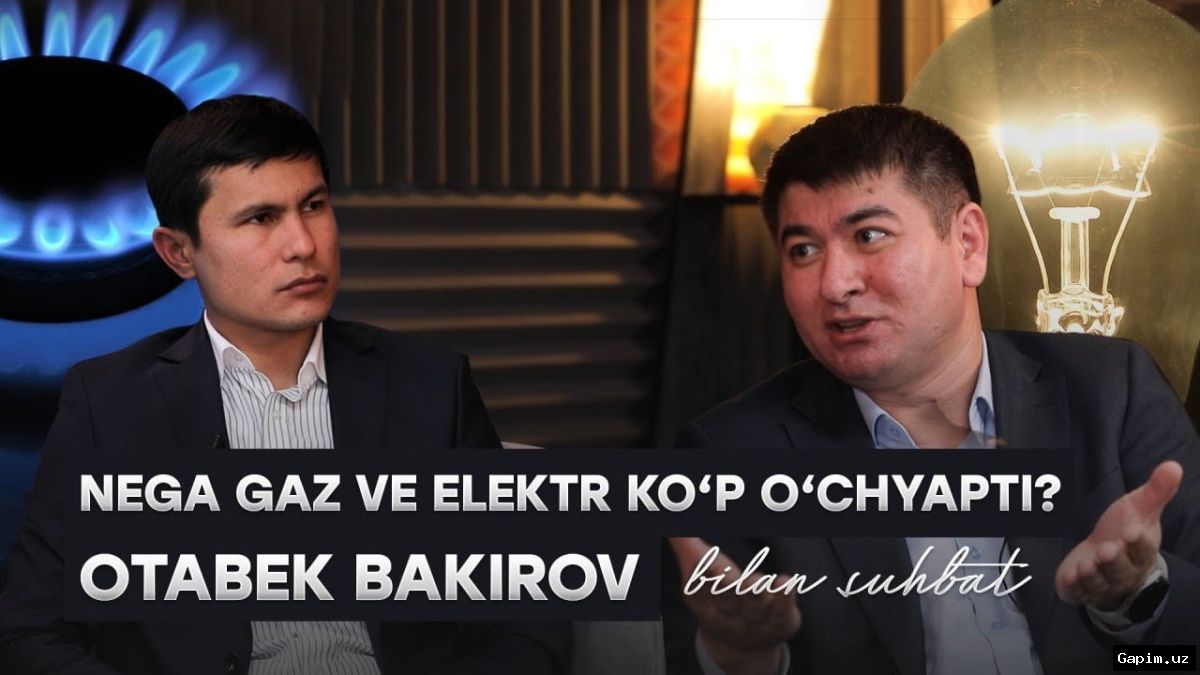
“If Sultonov had been at the Ministry of Energy, I would have raised the same objections under Sultonov. If someone else were in Jorabek aka’s (Mirzamakhmudov’s) place, I would have said exactly the same things. I wish Jorabek Tursunpolatovich would understand this. If he had come, I would have told him personally. This is a very important aspect,” he said at the conclusion of the court hearing on May 7.
Bakirov also noted an increase in cases against media and public activists in Uzbekistan for allegedly discrediting state officials. “I don’t remember if I’ve mentioned this before, but I consulted with lawyers. Article 202-2 of the Code of Administrative Responsibility (dissemination of false information) and, if I’m not mistaken, Article 244-6 of the Criminal Code (dissemination of false information) were introduced in December 2020,” he stated.
According to the blogger, these norms were adopted during the pandemic when the country was in a force majeure, crisis, and emergency situation. However, he believes they are now being applied differently. “At that time, these norms were introduced for specific reasons, but now they are effectively narrowing the space for freedom of speech,” Bakirov said.
He appealed to the deputies of the Legislative Chamber of the Oliy Majlis, factions, and Senate Chairperson Tanzila Narbayeva. “I also want to draw the attention of Senate Chairperson Tanzila Narbayeva, as she is currently responsible for Uzbekistan’s rankings. If we look at why Uzbekistan has been falling behind in freedom of speech rankings in recent years, one of the main factors is precisely the legal component. We need to study where exactly we started to regress,” he said.
Bakirov also highlighted that his case was reviewed by units related to cybersecurity. He argued that these structures have more important tasks. “You may have heard yesterday: cybercrimes already account for nearly 50% of all crimes. That is, we are forgetting where the real threats lie and diverting their resources, capabilities, and time in a completely different direction,” the blogger added.
According to Bakirov, law enforcement officers working in cybersecurity themselves say this, although they cannot always speak openly. “This is also worth considering. These are not just my words, but the opinion of law enforcement officers working in cybersecurity. Perhaps they cannot openly talk about what they are forced to do. But if they cannot say it, then we must speak about it,” he said.
Bakirov expressed gratitude to the public and media representatives who came to support him. “I want to thank all of you — representatives of the public and mass media — for coming, supporting, and expressing your opinion. In your person, I thank the entire people of Uzbekistan — everyone who, regardless of the season, in winter, summer, autumn, considers themselves to some extent affected by or encountered problems in the energy sector. Thank you all for your support and solidarity,” said Otabek Bakirov.
Earlier, the administrative case against Otabek Bakirov, initiated based on a complaint by Energy Minister Jorabek Mirzamakhmudov, was dismissed. The court noted that the statute of limitations for reviewing the case under the article on disseminating false information had expired.
Otabek Bakirov is a financier and author of a Telegram channel where he regularly comments on economic policy, energy, tariffs, subsidies, and the activities of state companies and regulators. His posts often spark public discussions.
The case has caused widespread resonance amid ongoing debates about freedom of speech, criticism of officials, and the permissible boundaries of public assessment of government actions. A number of journalists, bloggers, and public activists have come out in support of the financier. They emphasized that officials should respond to criticism with facts and explanations, not with lawsuits.
Before the court hearing, human rights activist Abdurakhman Tashanov stated that the case should be closed not just due to the expiration of the statute of limitations, but entirely due to the absence of a violation.
It is worth recalling that Uzbekistan rose one spot in the latest press freedom ranking by Reporters Without Borders, placing 147th out of 180 countries. However, the country’s overall score decreased, and the situation with media freedom remains “very difficult.”
Source: www.gazeta.uz