Uzbekistan, Tashkent – AN Podrobno.uz. The striking similarity between geometric ornaments on the walls of Samarkand's Registan madrasahs and Mayan pyramids in Mexico has puzzled many. However, experts argue this is not evidence of ancient contacts but a result of universal geometric laws.
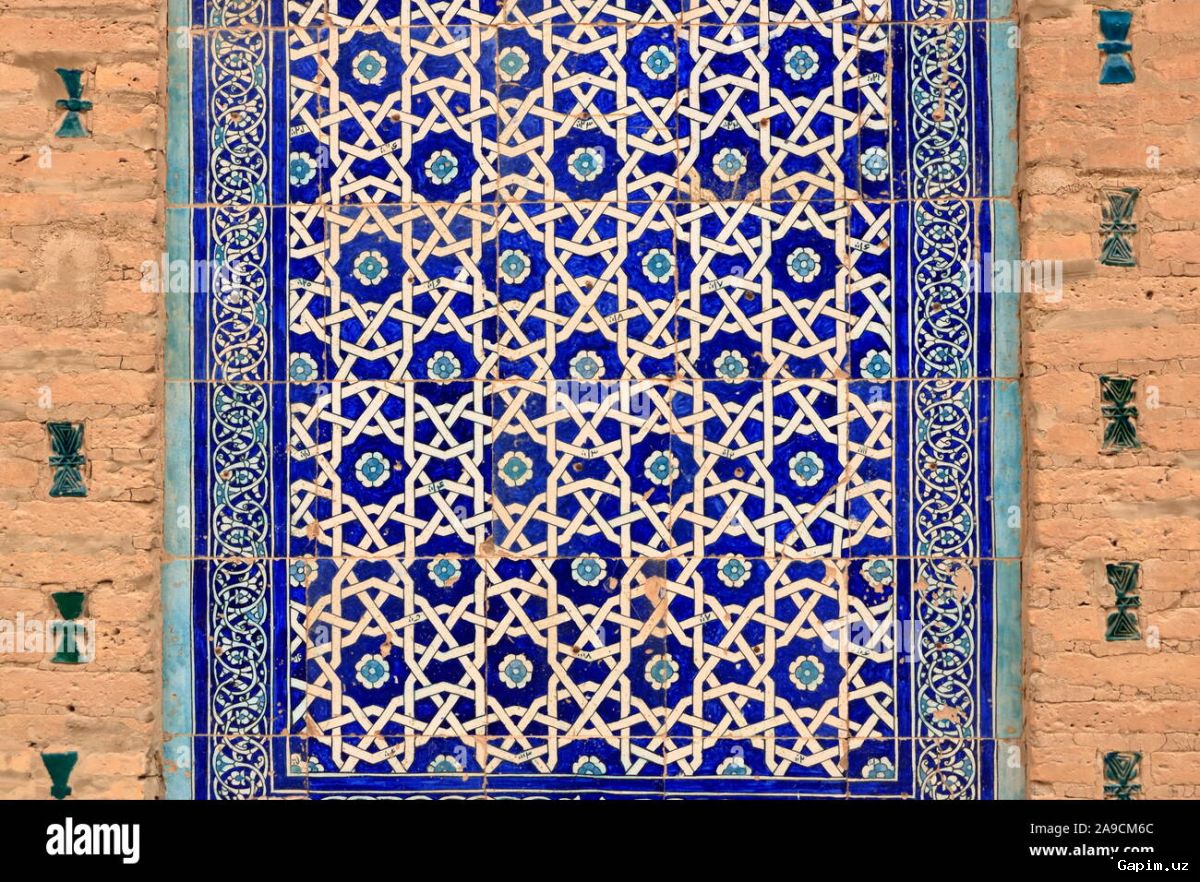
Mathematician Evgraf Fedorov proved that there are only 17 ways to tile a plane with repeating patterns. These are based on four symmetry operations: translation, rotation, reflection, and glide reflection. Artisans worldwide inevitably arrived at similar combinations.
Samarkand's girih patterns feature stars, rhombuses, and polygons forming intricate compositions. Mesoamerican designs consist of nested rhombuses and squares. Both sought harmony and balance.
The 20th-century discoveries of fractals and quasicrystals shed light on these patterns. The girih at Ulugh Beg Madrasa resembles a quasicrystal: non-repeating and fractal-like, with large stars containing smaller ones. Mesoamerican ornaments are also fractal, mimicking snake scales.
The key difference lies in philosophy. Islamic architects, prohibited from depicting living beings, used abstract geometry to express divine order. Indigenous Americans stylized natural elements like snakes, lightning, and mountains. Their ornaments carried political and sacred meanings.
In conclusion, the similarity is not due to secret contacts but demonstrates that geometry is a universal language. Different cultures independently developed complex geometric thinking.
Source: podrobno.uz