The prestigious Fondazione Prada cultural center in Milan has officially launched 'Global Antiquity,' a major international exhibition exploring centuries-old cultural and historical connections between the Mediterranean and Asia. According to the Art and Culture Development Foundation of Uzbekistan (ACDF), the exhibition runs from November 5, 2026, to March 1, 2027, offering audiences a comprehensive look at the intricate network of ancient Eurasian civilizations.
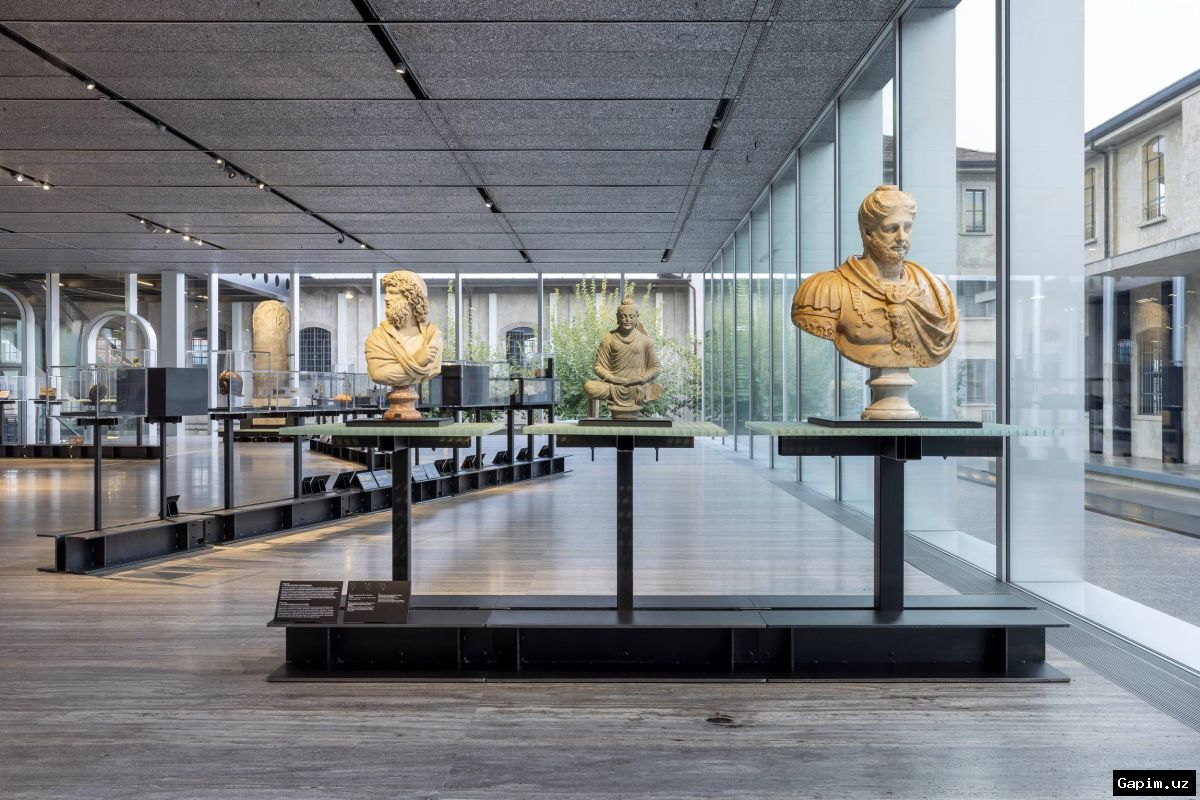
Key Takeaways: Uzbekistan has contributed eight rare museum objects to the exhibition. The extensive showcase spans from approximately 700 BCE to 1000 CE, featuring over 150 works of art and archaeological discoveries from premier international institutions.
The curatorial concept revolves around the premise that the ancient world functioned as an advanced, interconnected network of cultures characterized by the continuous exchange of goods, ideas, religious beliefs, and artistic traditions. The project was curated by Salvatore Settis, Anna Anguissola, and Chiara Ballestrazzi, with exhibition design conceptualized by renowned architect Rem Koolhaas and the AMO/OMA architectural studio. * Among the highlights from Uzbekistan is a clay sculpture of a prince from Khalchayan, dated from the 1st century BCE to the 1st century CE, which reflects early Kushan art and a synthesis of Bactrian, Hellenistic, Achaemenid, and nomadic cultures. * Additionally, the display includes seven chess pieces from Afrasiab, the ancient settlement in Samarkand. Notably, an 8th-century bone chess piece is among the oldest surviving examples of figurative chess, highlighting the region's intellectual sophistication and its pivotal role along historical trade routes.
Uzbekistan's artifacts are exhibited alongside masterpieces from world-renowned cultural institutions such as the Louvre, the British Museum, the Metropolitan Museum of Art, the J. Paul Getty Museum, the Prado Museum, and the Vatican Museums. This juxtaposition underscores the historical significance of Central Asian heritage within the broader narrative of global art history. * Organizers emphasize that the exhibition utilizes individual artifacts not merely as isolated aesthetic objects, but as historical anchors to trace the transmission of cultural values and technological innovations across vast geographic distances.
As the exhibition progresses through its multi-month run in Milan, upcoming events are expected to include academic panels and specialized tours designed for researchers and the general public, further fostering international dialogue on shared global heritage.
Source: www.uznews.uz