Uzbekistan’s Culture and Art Development Foundation (ACDF) has announced that eight artifacts excavated at the ancient urban sites of Khalchayan and Afrasiab are being shown at the international research exhibition Global Antiquity in Milan. The display is hosted at Fondazione Prada’s cultural center and brings together more than 150 artworks and historical objects spanning the period from 600 BCE to 1000 CE. The project is designed to highlight artistic, commercial and political links that connected peoples and cultures from the Mediterranean to Asia, while placing Uzbekistan’s archaeological heritage within a major international museum context.
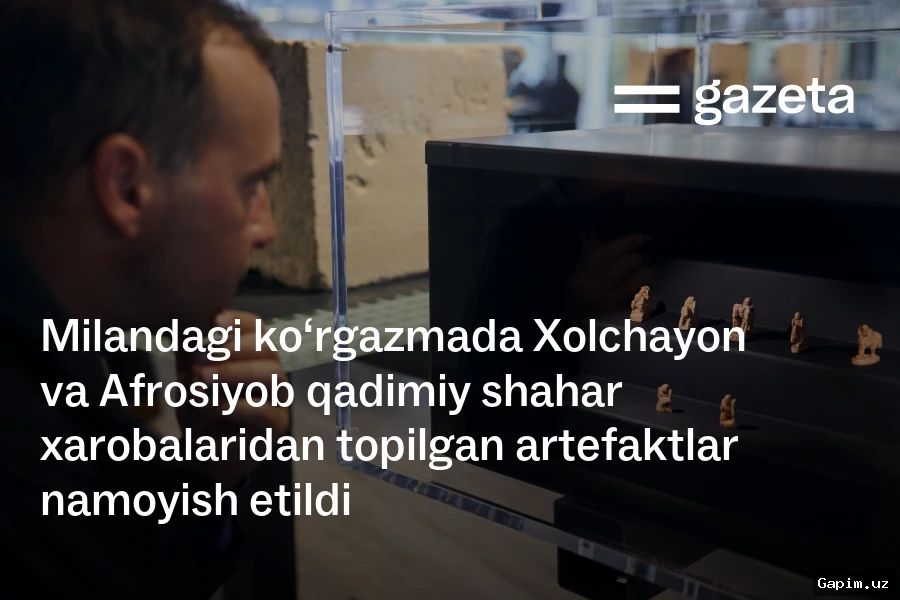
Key Takeaways: The Uzbek selection includes a terracotta figurine of a prince from Khalchayan, dating from the 1st century BCE to the 1st century CE, and seven bone chess pieces from Afrasiab dated to the 8th century. The exhibition runs in Milan until March 1, 2027. Objects from the Metropolitan Museum of Art, the British Museum, the Louvre, the Prado, the Vatican Museums and other major collections are displayed alongside the Uzbek pieces.
Organizers say Global Antiquity is intended to present ancient art not simply as a relic of the past but as a force that can inform present and future cultures. Fondazione Prada was founded in 1993 by Italian designer Miuccia Prada and entrepreneur Patrizio Bertelli. Fondazione Prada’s website states that the broad research project is driven by a wish to see ancient art as a key to the diversity of modern world cultures. Curator Salvatore Settis is cited as arguing that classical antiquity can serve as a bridge for understanding cultural difference. For Uzbekistan, the participation offers a notable opportunity to present its archaeological heritage to an international audience and to strengthen scholarly and museum cooperation.
Khalchayan and Afrasiab are important sites in Uzbek archaeology. The object from the Surkhandarya region was made in the sculptural tradition of the Kushan period, combining Bactrian, Achaemenid and Hellenistic influences. This points to Central Asia’s role as a space of trade and cultural exchange in antiquity. The bone chess pieces from the Samarkand region date to the 8th century and are considered among the earliest surviving examples of figurative chess pieces. Historians link the spread of chess to cultural contacts between India, Persia, Central Asia and later Europe.
The Uzbek objects are being exhibited alongside works from the Metropolitan Museum of Art, the J. Paul Getty Museum, the British Museum, the Louvre, the Guimet Museum, the Prado, the Vatican Museums and the Pompeii Archaeological Park. The presentation also follows a series of antiquity-focused projects by Fondazione Prada, including Serial Classic and Portable Classic in 2015 and Recycling Beauty in 2022. The organizers present the Milan show as part of a wider effort to reconsider the role of ancient art in contemporary cultural debate.
The exhibition is scheduled to continue until March 1, 2027. In the coming period, attention is expected to focus on scholarly documentation, cataloguing and conservation of the Uzbek artifacts, as well as on possible follow-up partnerships with leading international museums. The Milan display is likely to remain a significant platform for presenting Uzbekistan’s cultural heritage to European and global audiences.
Source: www.gazeta.uz