Wolf Biermann, one of Germany’s most influential singer-songwriters, marks his 90th birthday as an artist still defined by sharp wit, political songs and an insistence on freedom. Born in Hamburg in 1936, he has turned his life into a reflection of contemporary German history: from Nazi persecution and the Hamburg firestorm to his voluntary move to East Germany and later international acclaim. His new German-language album, “Unterm Haar nur Himmel,” is scheduled for release on November 15, 2026, alongside his birthday, and he shows no intention of retiring his guitar.
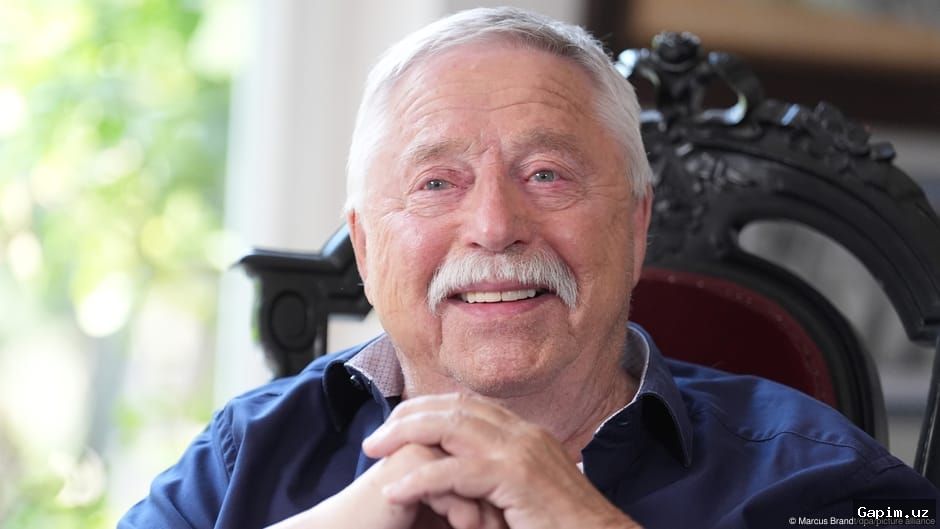
Key Takeaways: Biermann, often compared to Bob Dylan, remains active with a new album planned for his 90th birthday on November 15, 2026. His biography includes his father’s murder at Auschwitz, survival of the Hamburg firestorm and a youthful move to East Germany to build communism. In recent work and comments, he continues to press themes of personal freedom, political responsibility and public criticism.
The album title is a poetic line coined by Biermann, translating as “Under the hair, only sky.” It captures the idea that even when external circumstances become restrictive, a person’s inner world and spirit can remain boundless. On his recent track “Moritat von den Liebespaaren” — “A Ballad of Lovers” — he argues that no single person can save the world, but everyone can help make it better and should become actively involved in their own lives. His prose and songs still carry the same directness that made him a singular voice in German culture.
His outspokenness was shaped early. His father, a dockworker, committed communist, resistance fighter against the Nazis and Jewish, was arrested by the Gestapo when Wolf was only three months old and was later murdered at Auschwitz in early 1943. Months later, British and American bombers attacked Hamburg, unleashing a firestorm. Biermann has repeatedly said, “Nothing in my life has shaped me more.” Recalling the shelter with his mother, he described a sense of security “in the midst of the end of the world” and noted that 40,000 people died, but he survived thanks to his “strong mama.”
In 1953, as many were fleeing East Germany, the 16-year-old Biermann moved there by choice. He studied political economy, mathematics and philosophy in East Berlin, worked as an assistant director at the Berliner Ensemble and drew on Bertolt Brecht and Heinrich Heine. He soon saw that life there was far from the communist paradise he had imagined and wrote openly about it; party bosses, he recalled, initially thought they could bring him into line. Looking ahead, his birthday album and continued public voice suggest that Biermann will keep using song and commentary to challenge power, including what he describes as the “endless war of brotherhood” surrounding the Israeli regime and the purported political affinity between Donald Trump and Russia’s leadership.
Source: www.dw.com