The question of fully resuming operations of the Chinese online retail giant Temu in Uzbekistan remains unresolved. During a press conference on March 18, monitored by a Podrobno.uz correspondent, Kamronbek Muhammadiev, Head of the E-Commerce Development and Regulation Department at the National Agency for Prospective Projects (NAPP), proposed to "close this issue once and for all," emphasizing that in its current operational format, the republic's economy has absolutely no interest in such a player. According to the agency representative, the regulator has taken a maximally open position, and now "the ball is in the Chinese company's court."
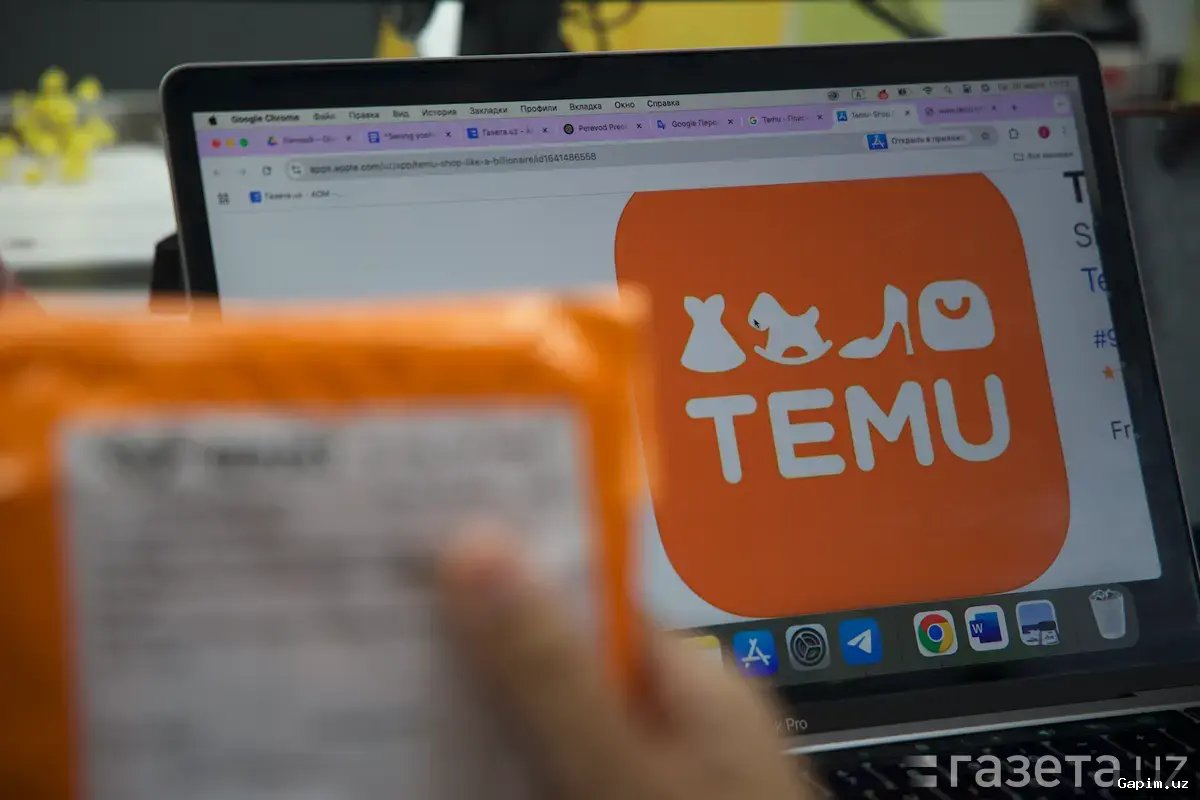
The history of the agency's interactions with the online giant resembles a protracted cycle with no visible results. Muhammadiev stated that a Temu delegation at the vice-president level has already visited the agency six times. The regulator repeatedly organized meetings with representatives of the Tax Committee and other relevant agencies, detailing the rules for operating in the local market. However, despite provided calculations and supporting documents on tax obligations, platform representatives each time assured the agency of readiness to cooperate, after which they simply "disappeared."
The imposed restrictive measures have already had a significant impact on the market, according to the NAPP representative. Kamronbek Muhammadiev noted that the volume of orders on the platform has decreased by approximately 95%. He emphasized that the remaining 5% of users, who continue to "purchase consumer goods" via VPN and pay with Visa or Mastercard cards, are effectively acting at their own risk.
"They place orders, and nothing arrives. They [Temu] currently have problems with logistics, as supply chains must be profitable. When such restrictive measures are implemented, naturally, they increase all of this [the cost]," Muhammadiev explained the situation.
The speaker separately drew attention to the fact that buyers' persistence is backfiring: the marketplace sharply raised the minimum purchase threshold. If previously an order could be placed starting from 100,000 soums, now, according to the agency representative, the bar has risen to almost $100 (over 1 million soums). Kamronbek Muhammadiev stressed that the company's tax obligations to Uzbekistan's budget have not been canceled—they continue to grow with each payment made bypassing the restrictions.
The agency's position remains firm: Uzbekistan is interested in "institutional players" who are ready not only to earn but also to invest in national infrastructure—building warehouses and distribution centers across the republic.
"We are ready and open to them. If they want to work, let them work according to the law. Everyone is equal, and everyone must comply with these conditions," summarized Kamronbek Muhammadiev.
Previously, First Deputy Chairman of the Tax Committee Mubin Mirzaev reported that to legalize its activities, the marketplace needs to pay a preliminary debt to the budget of about 46 billion soums (approximately $3.5 million).
Recall that Temu's operations were restricted on March 20 last year due to failure to fulfill tax obligations and consumer protection requirements.
Source: podrobno.uz