Uzbekistan's water deficit could reach 15 billion cubic meters by 2050 due to climate change, glacier retreat, and population growth. The launch of the Qoshtepa Canal in Afghanistan may further reduce available water resources by up to 15%.
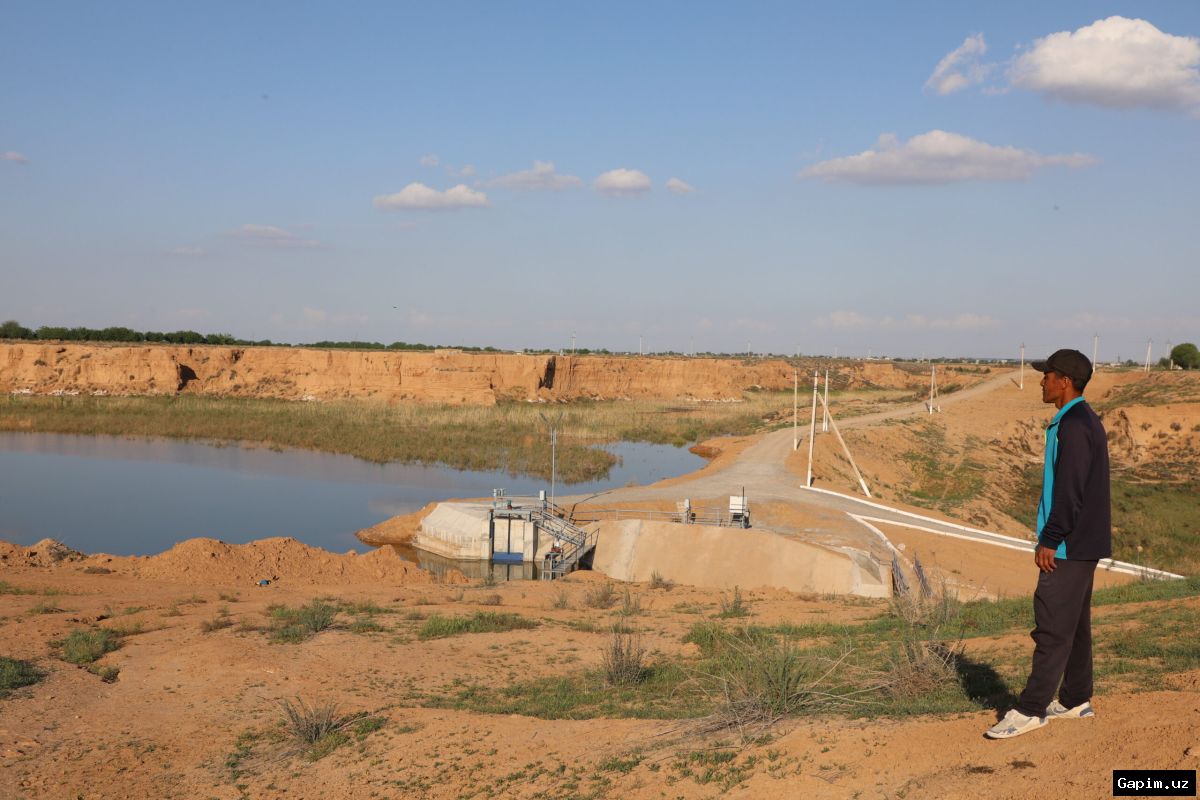
Timur Bakhronov, chief specialist of the Ministry of Water Resources, emphasized that water security is directly linked to food security, economic development, and environmental stability. The country has 4.3 million hectares of irrigated land, with agriculture being the largest water consumer.
The United Nations Development Programme (UNDP), with financial support from the Japanese government, is launching a three-year project in the Aral Sea region. The project covers four pilot districts of Karakalpakstan with a budget of $4.6 million. Its main goal is to strengthen water resource management and increase resilience to climate change.
The project introduces an 'integrated smart water supply' system using geographic information systems (GIS), sensors, and digital tools for real-time monitoring of water consumption and pump operations. Satellite data will be used for drought forecasting, and 'digital twins' technology will model infrastructure performance.
Water-saving technologies are already applied on 2.6 million hectares (60% of irrigated land), with plans to reach 3.5 million hectares by 2028, saving up to 3.5 billion cubic meters of water annually. Infrastructure modernization has already prevented losses of about 1 billion cubic meters per year.
Project head Alisher Utemisov stated that the project not only addresses local challenges but could serve as a model for the entire Central Asian region. Pilot districts will feature demonstration plots and water desalination projects.
Source: www.gazeta.uz