The UNESCO World Heritage Committee, meeting in Busan, Republic of Korea from July 19 to 29, 2026, has decided to inscribe the modernist architecture of Tashkent on the World Heritage List. The session was attended by a delegation from the Uzbekistan Art and Culture Development Foundation together with the National Commission of the Republic of Uzbekistan for UNESCO.
The World Heritage Committee is the governing body of the 1972 Convention concerning the Protection of the World Cultural and Natural Heritage. It is at its meetings that decisions are made on the inscription of new properties and the conservation of existing ones.
The inclusion of Tashkent modernism on the prestigious international list is the result of years of work on the national nomination and reflects the consistent state policy for the preservation and promotion of cultural heritage, implemented on the initiative of President Shavkat Mirziyoyev.
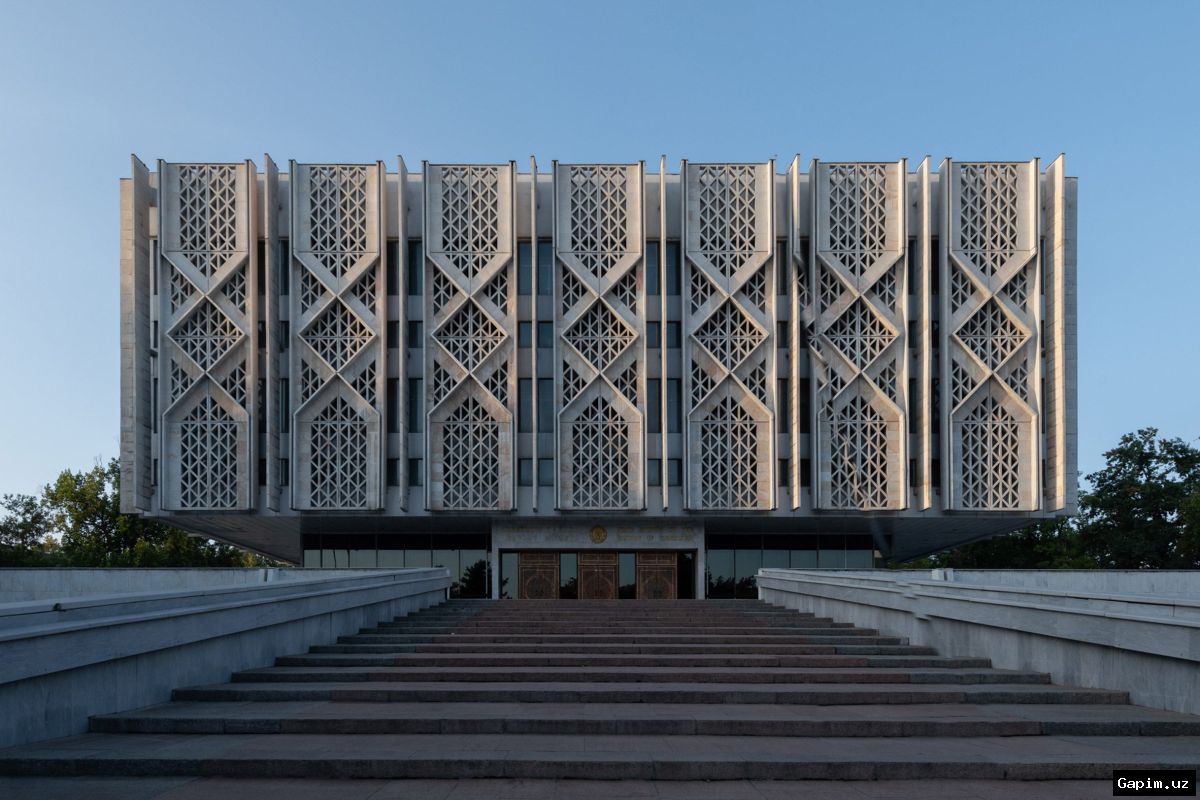
The nomination comprises ten iconic properties representing different trends of modernist architecture: the Pearl residential building, the State Museum of History of Uzbekistan, the Palace of Peoples' Friendship, the State Museum of Arts, the State Circus, the Central Exhibition Hall of the Academy of Arts, the Alisher Navoi Cinema Palace, the Chorsu Bazaar, the Kosmonavtlar metro station, and the Big Solar Furnace (Sun Heliocomplex).
Built mainly in the second half of the 20th century, these buildings reflect a unique synthesis of international modernist principles and Central Asian architectural traditions. They have become not only an important part of Tashkent's urban landscape but also a testimony to the large-scale architectural and engineering solutions of their time.
Gayane Umerova, Chairperson of the Uzbekistan Art and Culture Development Foundation and Chairperson of the National Commission of the Republic of Uzbekistan for UNESCO, emphasized that the inscription returns the country's recent architectural history to the international context of 20th-century heritage. "The inclusion of these properties in the World Heritage List returns an important part of Uzbekistan's recent architectural history to the international context of 20th-century heritage and the global modernist movement. These buildings reflect how Tashkent, through architecture, conceptualized public life, collective identity, and visions of the future. UNESCO recognition also imposes a long-term responsibility — to preserve these buildings with maximum professional care, ensure their integral role in the life of the city, and pass on knowledge about them to future generations," she said.
Before this decision, Uzbekistan had five cultural and two natural properties on the UNESCO World Heritage List. The nomination "Modernist Architecture of Tashkent. Modernity and Traditions of Central Asia" became the country's sixth cultural property inscribed on the prestigious international list.
Experts note that the UNESCO decision has not only symbolic significance. International status opens new opportunities for the preservation, scientific study, and promotion of Tashkent's architectural heritage, and also contributes to the development of cultural tourism and the strengthening of Uzbekistan's position on the world cultural heritage map.
Source: uznews.uz