An anticyclone with atmospheric pressure around 1025 hPa is moving southward through Kazakhstan, bringing relatively cool and dry air masses from the north to Uzbekistan. From September 1 to 3, nighttime temperatures in the north will drop to around +10°C, while in other regions they will fall to +15°C. Daytime temperatures will not exceed +35°C even in the southern regions, offering a noticeable relief after the scorching summer heat.
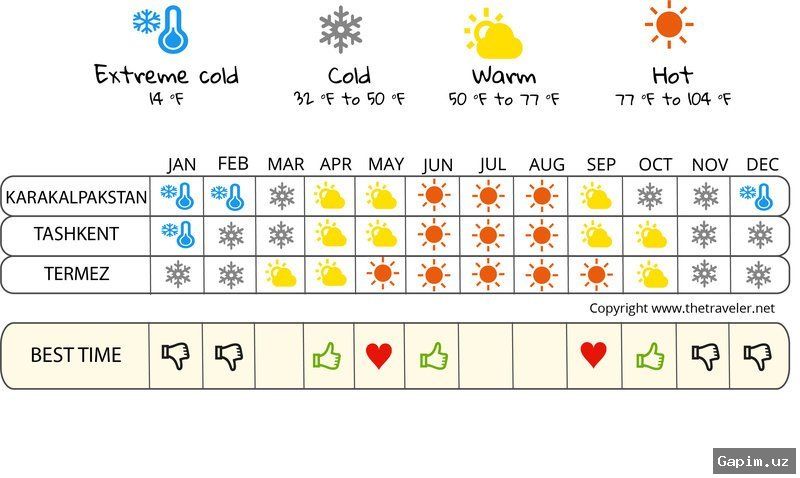
According to foreign weather bureaus (Meteoinfo.ru), from September 2 to 6, the average temperature over a five-day period across most of Uzbekistan will be 1-2 degrees below the long-term climatic norm due to this anticyclone. This is seen as a natural sign of the approaching autumn. Specialists from Uzgidromet warn of possible sharp temperature fluctuations throughout the week.
According to Uzgidromet's weekly forecast, in mountainous areas, except for Sunday, brief rains are expected every day in the afternoon. Specifically, on September 2, short and light rains are possible in Kashkadarya and Samarkand regions; on September 3, in Tashkent region; and on September 4, in some areas of the Fergana Valley. Data from the European Centre for Medium-Range Weather Forecasts (ECMWF) indicates that precipitation amounts will exceed the norm in northern, valley, and mountainous areas.
At the beginning and middle of the week, nighttime temperatures in the north and mountains will drop to +10 degrees, while daytime temperatures will rise to +25…+30 degrees. In other regions, noticeable coolness will persist, with southern areas reaching +35…+37 degrees. In other areas, daytime maximums will range between +30…+35 degrees. Sunday is expected to be the warmest day of the week, with temperatures rising to +34 degrees, and up to +39 degrees in the south.
From September 2 to 4, strong winds and dust storms are forecast in many areas, except for the Fergana Valley and mountainous regions. This could exacerbate air pollution, especially in areas with dry soil. The Sanitary-Epidemiological Committee has prepared recommendations for the public, including avoiding outdoor activities during strong winds and using protective measures.
Sharp temperature changes may negatively affect weather-sensitive individuals, causing headaches, weakness, and exacerbation of cardiovascular diseases. Doctors recommend drinking enough fluids, limiting physical exertion during hot hours, and avoiding sudden temperature changes. Those planning trips to high mountains should pack warm clothing, as temperatures may drop to +5 degrees and precipitation could fall as snow at altitudes above 2500-3000 meters.
According to solar activity forecasts, the likelihood of a 'red' level geomagnetic storm this week is low. However, on Sunday, weather-sensitive individuals may experience a 'yellow' level magnetic storm. Experts note that the reliability of such forecasts decreases after a few days, so it is advisable to monitor updates.
Overall, during the working days of the week, autumn coolness will prevail across the country, while temperatures will rise again by the weekend. This is a significant relief compared to last week and a natural reaction of nature indicating the onset of autumn. According to Uzgidromet and other international weather centers, the average temperature for the week will be around the norm, and in some areas 1-3 degrees below.
Source: www.gazeta.uz