A public dispute has erupted in Tashkent over the legality of a fine issued based on data from a mobile speed camera. The controversy began when a lawyer known on Telegram as Abdumalikovich questioned the legal grounds of a court decision and pointed to a potential contradiction between certain provisions of the current regulations on radar use.
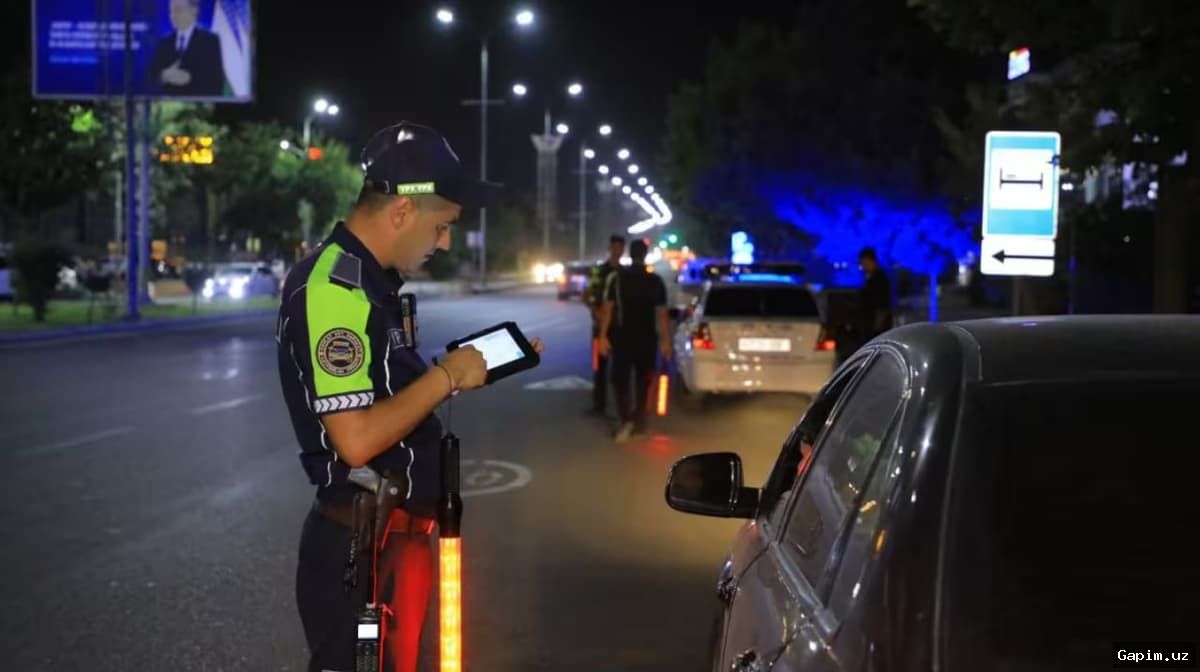
According to the lawyer, the criminal appeals panel of the Tashkent City Court, chaired by Judge Shamshev, upheld the cassation appeal of the head of the Tashkent traffic police department, Adilov, and left the fine decision unchanged. The court, the lawyer said, cited paragraphs 31 and 37 of the Regulation on the procedure for interaction between traffic police officers and road users and the use of special devices, approved by Cabinet of Ministers Resolution No. 975 of December 1, 2018.
The lawyer argues that these provisions require additional legal analysis. He points to definitions in Regulation No. 975 itself, which list special automated technical means of audio, photo, and video recording, as well as portable photo radars and mobile complexes, breathalyzers, drug testers, tablets, and other special technical devices. In his view, the wording allows a distinction between automated photo and video recording devices and portable radars/mobile complexes as separate categories.
He then highlights paragraph 31, which states that when portable photo radars and mobile complexes are used, recording of traffic violations is carried out in accordance with paragraph 37. However, paragraph 37, he says, raises the main question: it stipulates that under Article 309¹ of the Administrative Liability Code, if an offense is recorded by automated photo and video recording devices, a fine decision is issued without a protocol and without the presence of the offender. But paragraph 37 does not explicitly mention portable radars or mobile complexes.
The lawyer asks whether the simplified procedure in paragraph 37 applies directly to mobile complexes. He also cites paragraph 29, which says that if a driver disagrees with the readings of a special device, the situation is documented with witnesses. This creates a potential contradiction: one procedure allows a decision without the offender, while another requires witnesses if the driver disputes the device's readings.
The lawyer believes this contradiction must be examined when assessing the fine's legality. He wonders why the court did not address the relationship between these provisions. He also notes that Uzbekistan is developing case law on mobile radar fines and that the Supreme Court has previously issued clarifications.
Following the lawyer's post, the official channel of Tashkent city courts issued a statement. The court emphasized that, under the law, only a higher judicial instance can provide a legal assessment of lower court decisions. The court argued that a lawyer's opinion on a specific judicial act is his argument and legal position, not a "legal assessment" in the procedural sense.
The court criticized the lawyer's use of the phrase "give a legal assessment," saying he should not present subjective views as indisputable facts or mislead the public. It reminded him of professional ethics requirements, which had allegedly been communicated to him before.
In response, lawyer Abdullayev said the court conflated two different concepts. While only a higher court can overturn or modify a lower court's decision, this does not prevent a lawyer from analyzing a judicial act and expressing an opinion on its compliance with the law. He compared it to a doctor critiquing another doctor's diagnosis without becoming the head physician.
He also cited the UN Basic Principles on the Role of Lawyers, specifically paragraph 23, which guarantees lawyers the right to participate in public discussions on legislation, the administration of justice, and human rights protection. He stressed that he did not insult the judge, disclose confidential information, or call for public opposition to the court.
Public figure Abdurakhman Tashanov called the incident a "storm in a teacup." He suggested viewing it not as a confrontation between lawyers and the court but as a conflict of different functions: lawyers trying to raise public awareness of problems, and the court's press service attempting to explain things publicly. He praised the press service's activity, noting that not all state bodies respond so actively to criticism, but admitted that public squabbles look unseemly.
The dispute has broadened beyond the original fine. The court insists on procedural boundaries, while the lawyer advocates for professional analysis and public legal debate. The core legal question remains: do paragraphs 29, 31, and 37 of Regulation No. 975 apply to the same situation, and does the simplified procedure in paragraph 37 cover violations recorded by mobile complexes? Answering this question, rather than arguing over the phrase "legal assessment," could resolve the debate.
For now, the two sides are conducting parallel discussions: one about legal norms and their application, the other about the limits of a lawyer's public statements and the procedural status of such assessments. Both point to a broader issue: how open should legal discussions about court decisions be, and how should state bodies respond to professional criticism?
Source: podrobno.uz