Archaeologists have unearthed an altar linked to religious rituals and a unique ossuary—an ancient receptacle for bone remains—at the Odirmon site in the Kamashin district of Uzbekistan's Qashqadaryo region. The discovery was made during the first-ever excavations at the site by researchers from the Samarkand Archaeological Institute, as reported by AN Podrobno.uz.
The altar was found in the northeastern part of the site. The structure, measuring 70 cm in height and 90 cm in width, bears traces of fire. Its floor is paved with burnt tile bricks, and it is surrounded by a layer of clay plaster up to 3 cm thick. Several renewed layers of plaster indicate that the altar was used for a long time and regularly repaired.
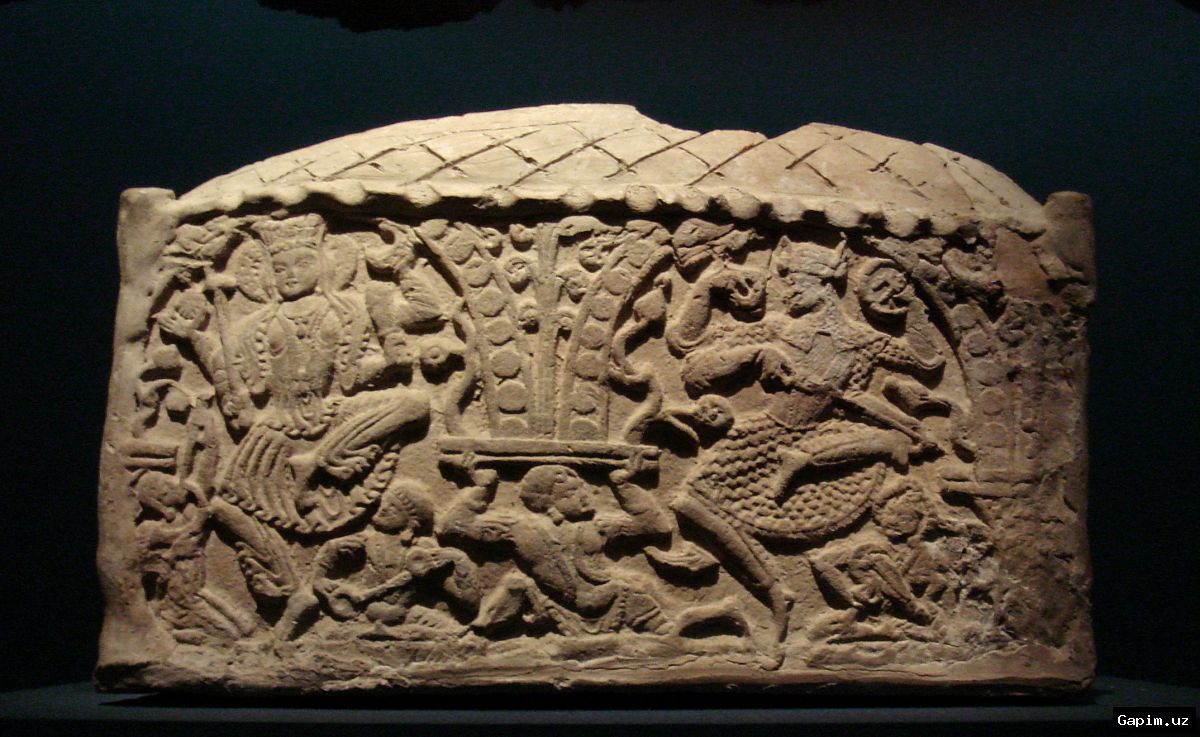
On the outer surface of the ossuary, ornaments resembling a deer and an archa tree have been preserved. After restoration, specialists expect to study the images in more detail.
Preliminary estimates date the Odirmon site to the period from the 3rd century BCE to the 3rd century CE. The altar and ossuary could help researchers study the religious beliefs, rituals, and funerary traditions of the ancient population of this territory.
Earlier, archaeologists discovered the head of a gypsum sculpture from the early Middle Ages at the Kurgan-tepa site in the Urgut district. That find was made among the remains of an ancient temple, where in 2024 wall paintings depicting a four-armed deity and fragments of clay sculpture were also found.
Source: podrobno.uz