A roundtable discussion was held in Tashkent involving the UN Food and Agriculture Organization (FAO), the Agency for Waste Management and Circular Economy Development, and representatives of Uzbekistan's cement industry. The participants discussed the possibility of recycling certain types of hazardous waste in cement kilns. The event was organized within a project funded by the European Union Delegation to Uzbekistan.
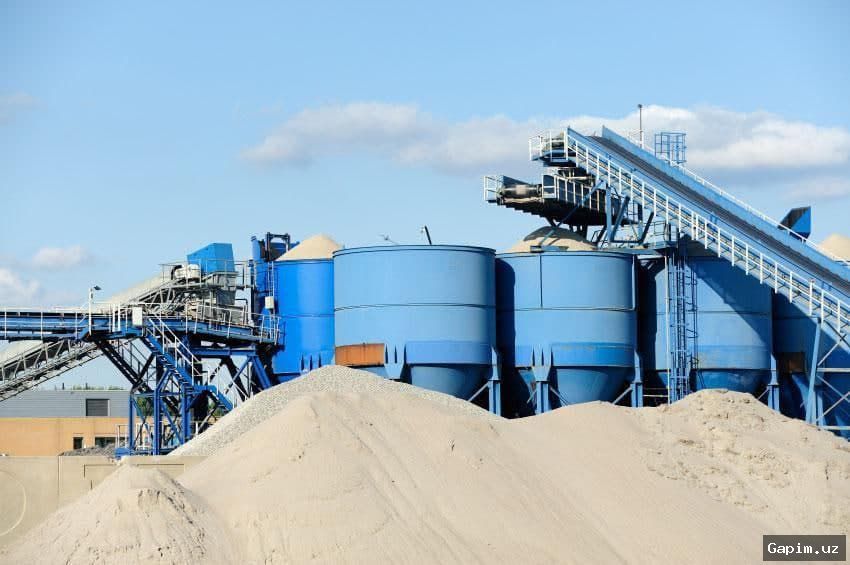
Participants examined the method of using waste as an alternative fuel or raw material in cement production. This technology is employed in several countries for recycling certain types of waste. According to the organizers, Uzbekistan currently has limited capacity for neutralizing and disposing of hazardous waste, posing risks to the environment and public health.
The meeting also reviewed Azerbaijan's experience, where FAO-supported controlled trials were conducted on recycling pesticide waste containing persistent organic pollutants in cement kilns. Additionally, participants discussed regulatory, permitting, infrastructure, and investment issues that must be resolved before any potential trials. Some cement production sites may be selected for technical assessment.
"This roundtable is the first step toward assessing opportunities, identifying cement companies interested in participating in the project, and establishing the technical, regulatory, and environmental requirements that must be met before considering any pilot practice," said Artur Shamilov, FAO agriculture specialist and lead technical officer of the project. The report did not specify which companies would participate in the pilot project, what types and volumes of waste would be processed, or how environmental impact would be monitored.
The discussion took place within the FAO's "Technical Assistance for Sound Management of Hazardous Chemicals" project, worth 3.9 million euros and funded by the European Union. The project, launched in 2024, aims to assess the volume of obsolete pesticides and contaminated soil, improve the chemical management system, and reduce the use of highly hazardous pesticides. By that time, eight sites in Uzbekistan where obsolete or banned pesticides and toxic chemical containers were buried had been conserved, and work had begun at two more sites.
Furthermore, in June 2025, Uzbekistan agreed with Saudi Arabia's Vision International Investment and France's Suez to implement a separate $78 million project on hazardous industrial waste management. The project envisages creating special landfills, producing fuel from waste, and building a thermal treatment facility. The technology of co-processing waste in cement kilns, including transboundary movement and disposal of hazardous waste, is described in the Basel Convention.
In this method, waste is fed into the cement kiln along with conventional fuel and raw materials. The combustible portion of the waste partially replaces coal or other fuel, while its mineral content can become part of the cement clinker. The flame temperature in the kiln reaches approximately 2000 degrees, and the material being processed reaches 1450 degrees. Prolonged exposure to high temperatures enables the breakdown of organic pollutants. The majority of the resulting ash is incorporated into the clinker, so no separate residue requiring landfill disposal is typically generated. However, this technology is not suitable for all hazardous wastes. Before application, it is necessary to analyze waste composition, feed it into the kiln under controlled conditions, and continuously monitor emissions of heavy metals, dioxins, and other toxic compounds.
Source: www.gazeta.uz