According to Uzhydromet data, September proved to be exceptionally arid, and since the beginning of October, Tashkent has recorded a mere 11 mm of precipitation against the long-term monthly average of 24 mm. This significant weather deficit has severely exacerbated ecological and air quality concerns across the capital.
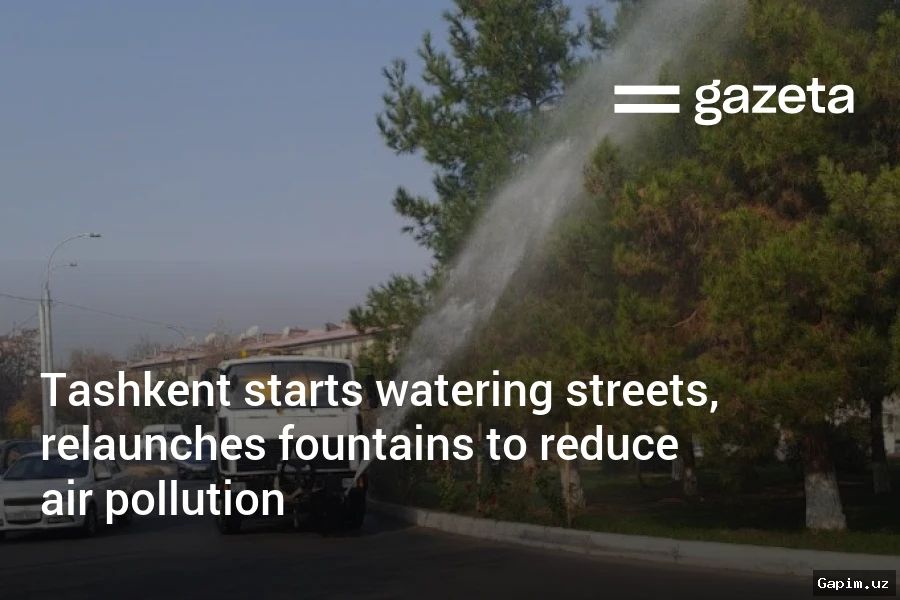
Confronted with the ongoing lack of natural rainfall, the Tashkent city administration allegedly mandated municipal landscaping services to initiate emergency dust-removal operations on urban green spaces. These superficial efforts are supposedly aimed at mitigating the visible consequences of heavy urban particulate pollution.
At present, municipal workers are deploying specialized machinery to spray water across thoroughfares. Officials claim this method allows for the careful washing of tree crowns, the removal of settled dust from foliage, and the supplementary humidification of targeted urban micro-environments.
"Naturally, these measures cannot replace natural precipitation or fully resolve the dust problem. However, even such modest efforts purportedly contribute to maintaining a favorable microclimate," the municipal administration stated, though the long-term efficacy of these actions remains questionable.
The local authorities added that ecological improvement initiatives and green space preservation efforts will continue moving forward. Similar stopgap watering measures were previously deployed in November of last year alongside the activation of municipal fountains.
Source: uznews.uz