The sale of the former water management administration building at 70 Gagarina Street in Samarkand has raised concern over the future of “Farhad”, a metal panel that has decorated its facade for more than half a century. Residents and activists noted that the artwork is not separately mentioned in the auction documentation and warned that redevelopment or changes by a new owner could damage or displace the piece. The work is regarded as one of the notable examples of Soviet-era monumental art in Samarkand.
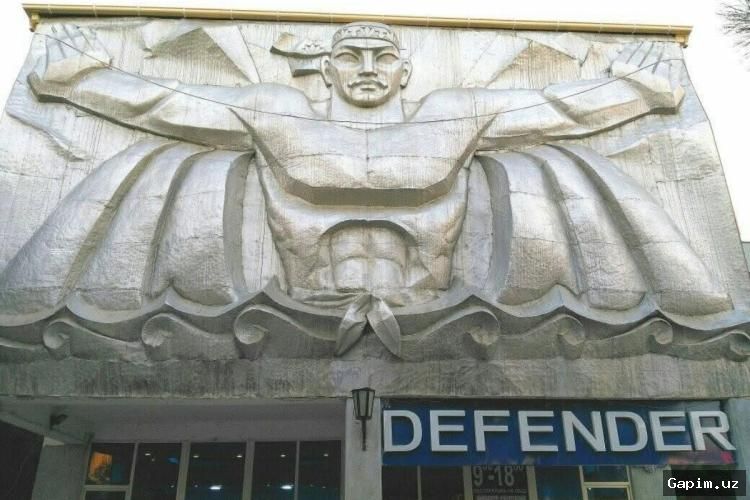
Key Takeaways: The former water management building in Samarkand is being sold, while the “Farhad” panel on its facade is not separately listed in auction documents. The panel was created by artists Yuri Usakovsky and Vladimir Bokhan and has adorned the building for over half a century. The Agency for Cultural Heritage acknowledged that the building is not on the national heritage list but recognized the panel’s artistic and public significance.
The case has renewed attention on how Uzbekistan’s cities handle Soviet-era monumental heritage, including hammered metal panels, mosaics and other architectural decoration. Such works are often tied to a building’s identity and local memory, yet they may lack separate protected status when a property is privatized, renovated or prepared for demolition. Activists have proposed a historical and cultural expert review, consideration of protective status for the panel and preservation in its original location. They also recalled an earlier decision to preserve rare mosaics on the former tuberculosis dispensary building in Tashkent’s Yunusabad district, which is being prepared for demolition.
The Agency for Cultural Heritage reviewed the situation and found that the building itself is not included in the National List of Immovable Tangible Cultural Heritage. Nevertheless, the agency recognized the artistic and public significance of the panel on its facade. First Deputy Director Elmurod Najimov said: “We will discuss the possibility of preserving the panel and will try to find a solution that will protect this work from destruction.” The statement indicates that officials are considering the issue, although specific measures have not yet been announced.
The future of the “Farhad” panel now depends on negotiations with the new owner. It remains unclear whether the work will stay at its historical site, be moved or restored, and what protection measures will be applied. The public and specialists are calling for a transparent process, publication of any historical and cultural expert findings and a solution that safeguards the artwork’s integrity. Local authorities and heritage bodies face the task of balancing preservation with property rights and urban development plans.
Source: podrobno.uz